
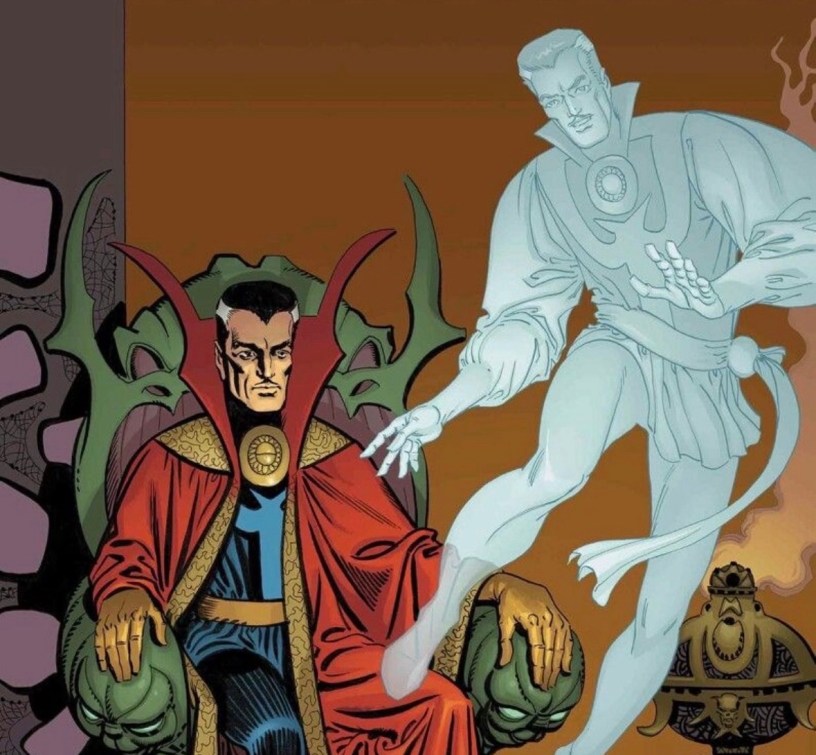
I’ve argued about this over coffee, over beer, and, once, over a box of moldy Bronze Age back issues that smelled like an attic and victory. Ranking Doctor Strange artists is like ranking flavors of weird dreams. There’s no single right answer. There’s just what haunts you when you close your eyes and see the Sanctum’s window pulsing like a third eye. So here’s my methodology, such as it is: I’m weighing historical impact, the quality of the actual pages, how much the art rewired the way I “see” magic, and, yes, the emotional residue those runs left on me. Biases ahead. I’m owning them.
Also, this is art we’re talking about, not lab data. A lot of worthy names aren’t on this list. You can tell me I’m wrong. I’ll still sleep fine with the Cloak of Levitation tucked under my pillow.
Alright. Reverse countdown time.
5) Marshall Rogers
Yes, I’m putting Rogers at five, and no, that’s not a knock. It’s like saying the fifth ring of Saturn is “less majestic” than the fourth. Rogers does something deceptively rare in Strange history: he turns architecture into a co-writer. His panels have spine and lattice, staircases that behave, windows that align, city blocks that actually sit on foundations—and then he punctures that order with a clean, surgical weirdness. Portals irrupt into carefully drafted rooms. Geometry misbehaves by choice, not by mess. That’s the magic trick: control that invites chaos.
Rogers’ mastery of perspective gives the sorcery weight. You believe the sanctum’s walls because they’ve been measured, so when a glyph opens a throat in the air, the effect is twice as shocking. He composes with precision, then lets a cloak scythe across the grid, a blood-red accent slashing the orthodoxy. If Ditko gives you the sensation of falling through symbols, Rogers gives you the tension of a scalpel hovering over blueprints. It’s not lush. It’s not baroque. It’s a tuned instrument, and when it shrieks, the room shakes.
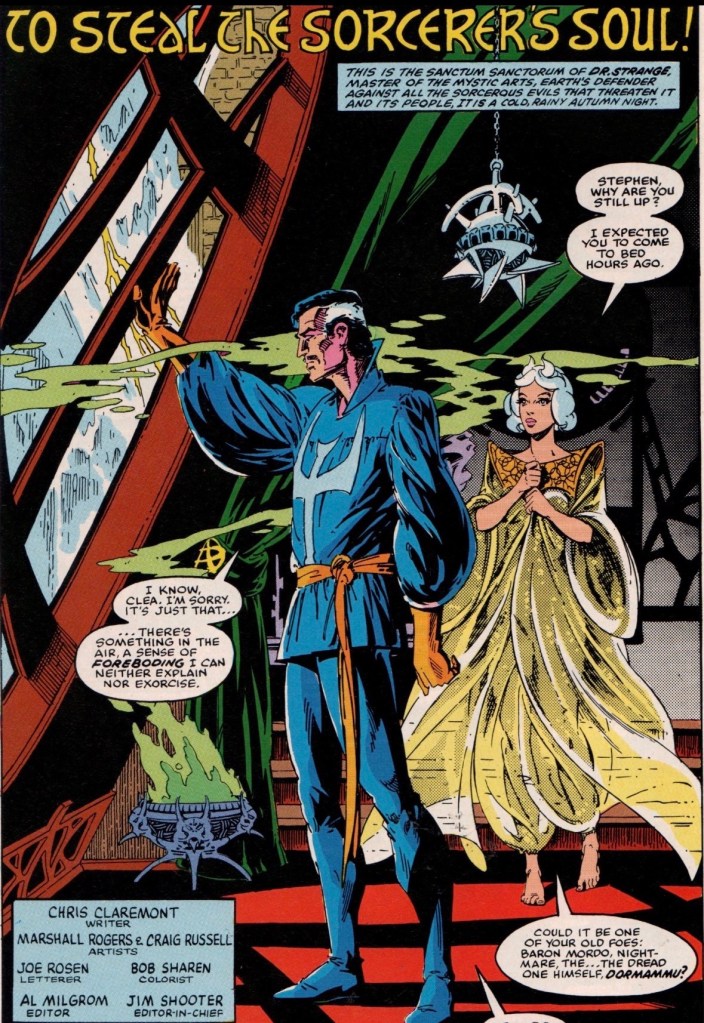
Personal confession: I return to Rogers when I want discipline. When my brain’s a clutter drawer, I crack one of his issues and let the angles and planes snap me back into focus. His Strange feels like a professional—less sorcerous bohemian, more metaphysical engineer. Not my favorite flavor every day, but essential in the rotation.
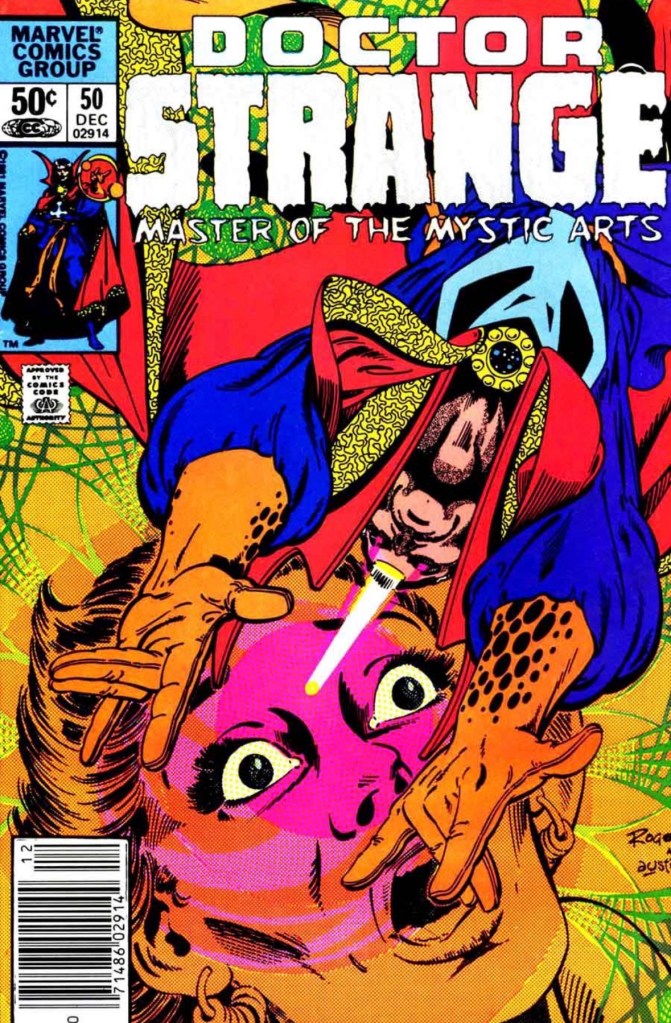
4) Paul Smith
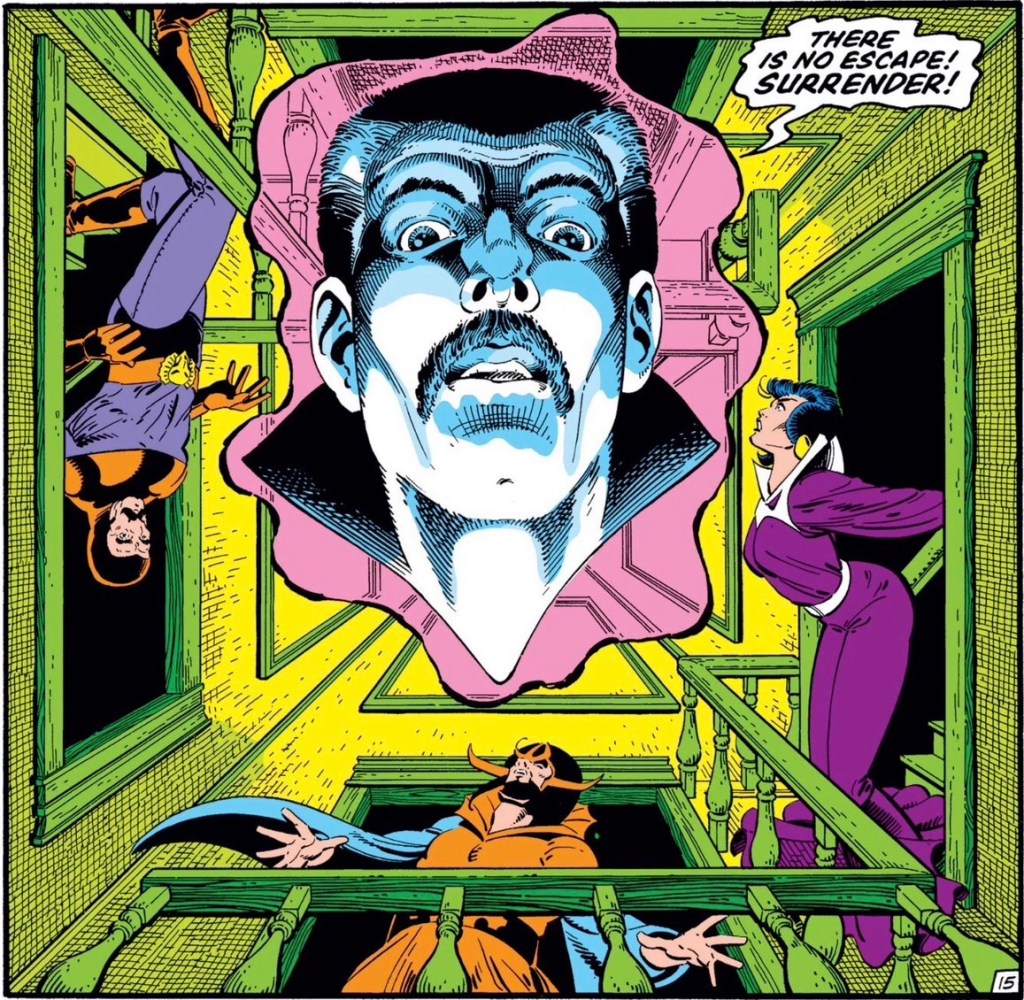
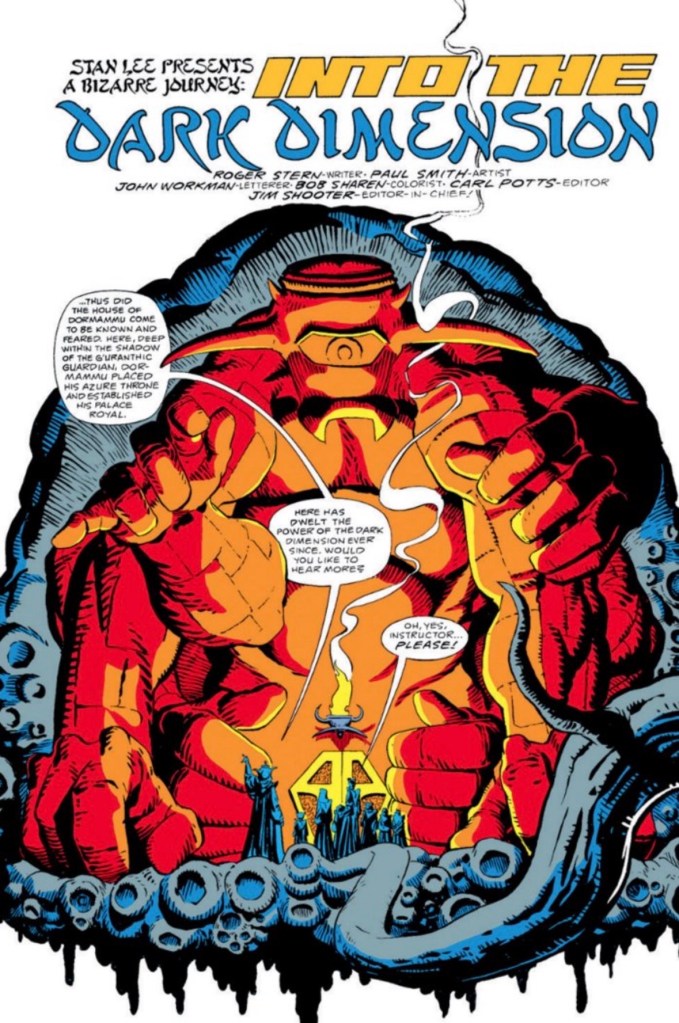
Paul Smith is the whisper that somehow carries across a stadium. Minimal line. Maximum intent. He makes restraint feel luxurious. Where other artists filigree their way into awe, Smith cuts to the quick and leaves the page breathing. Cloaks drape with the confidence of tailor’s chalk. Faces communicate at a glance. Panels are staged so the magic doesn’t have to elbow its way through visual clutter; it glides in and sits where it belongs.
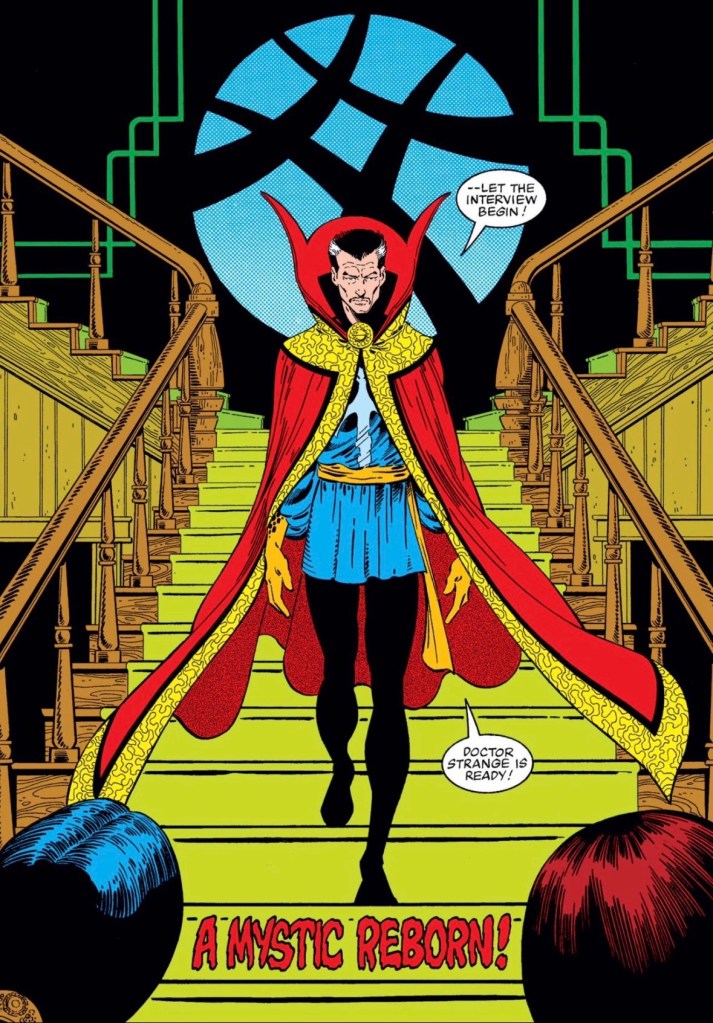
Smith’s greatest asset might be his sense of negative space. He knows when to shut up and let silence do the spellcasting. A corridor with one wrong-angled shadow. A hand in repose before it blossoms into a gesture. The calm before the sigil. And because he saves the fireworks for when it matters, the explosions actually explode. Smith is proof that “clean” doesn’t mean “cool-less.” It means you’re in the hands of someone who knows what each line is for.
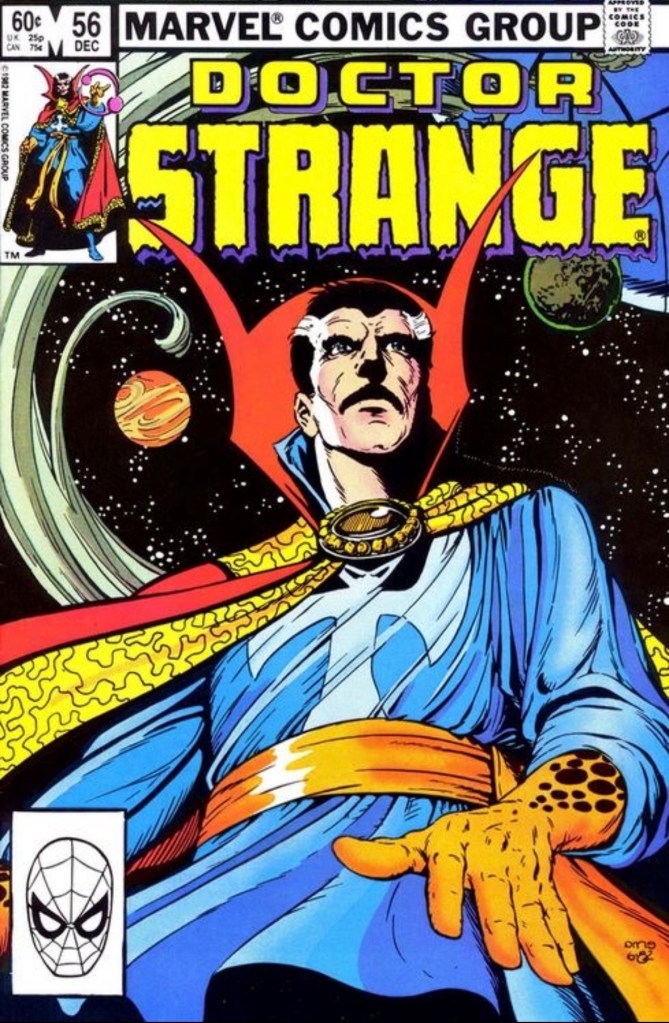
I learned a lot about pacing from those issues. The beat structure, the breath control, the way a panel can be a full stop or a comma. Smith turns the page into music with rests. And then, when the score demands, he hits the high note without cracking it. Elegant, intelligent, sneakily potent. He’s the sorcerer who smiles politely and only then moves the mountain.
3) Steve Ditko
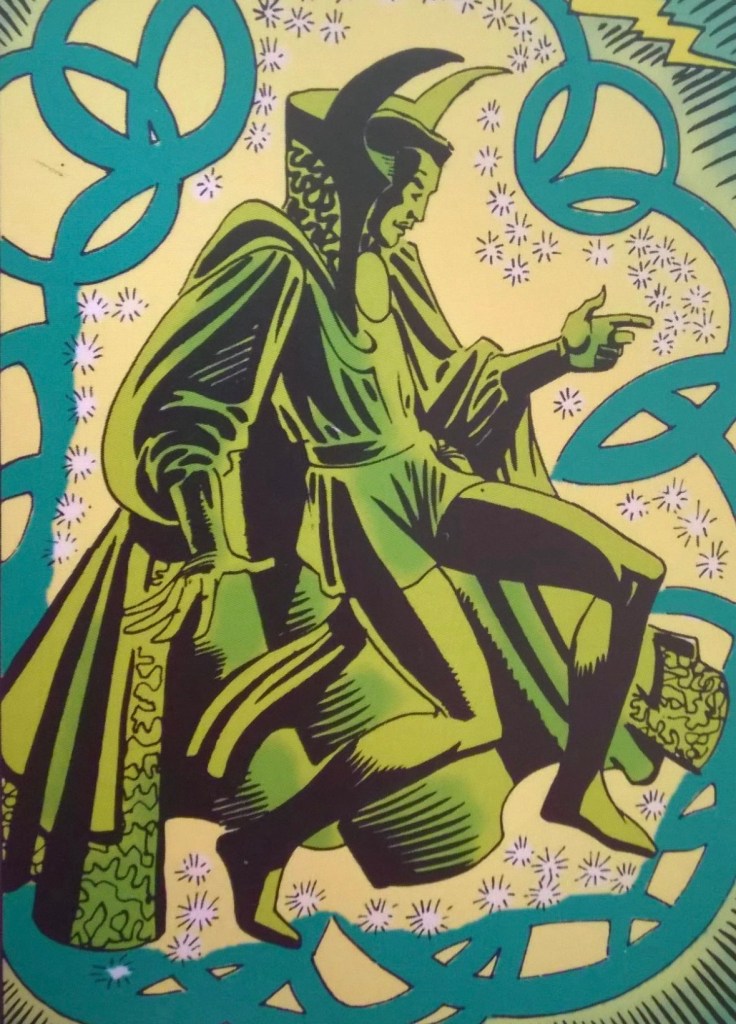
You thought I’d put Ditko at one, didn’t you? Most days I’m tempted. But this is about favorites, not canon law. Ditko is the cornerstone the house is built on—the language that everyone else learned to speak or deliberately mispronounce. He didn’t illustrate “magic” so much as invent a graphic grammar for the unseeable. Negative-space voids where the rules are different. Rigid, balletic body language that makes Strange feel like a monk and a blade. Abstract geometries posing as landscapes, eyes and flames serving as punctuation in a sentence the universe writes in real time.
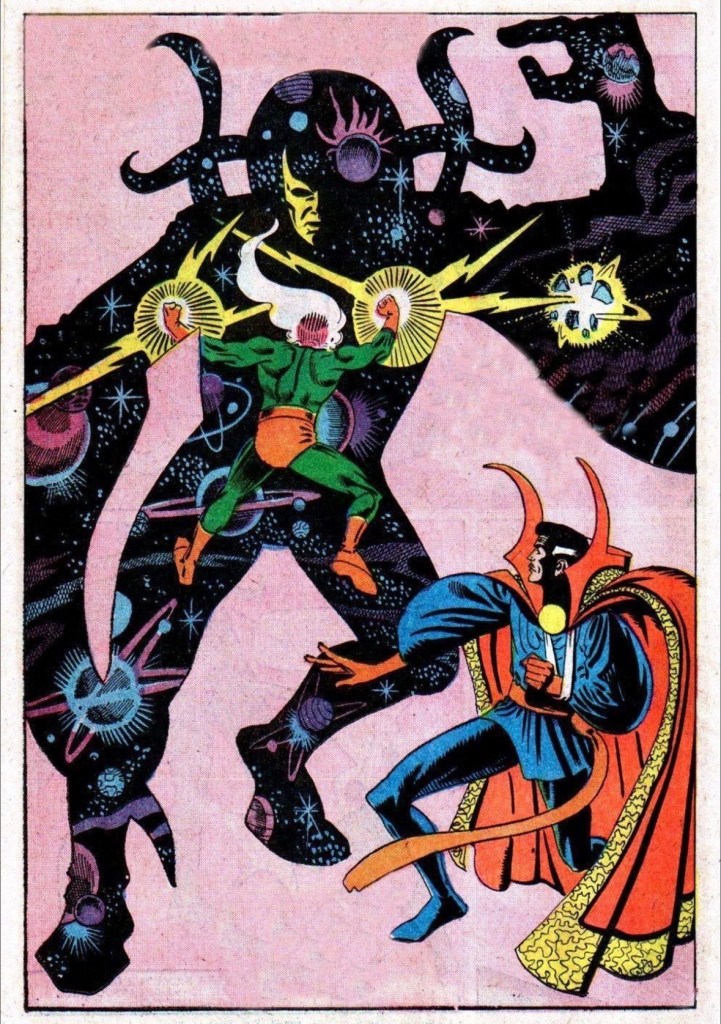
What I love most about Ditko is his refusal to sand the edges. He lets the abstraction stay alien. No sugar, no handholding. The figure-ground contrasts feel like a ritual all by themselves: human outlines against ideograms of elsewhere. He makes the liminal feel like a room with its own weather. This isn’t “psychedelic” in the touristy sense; it’s metaphysical modernism rendered with a draftsman’s severity. You can feel the weight of choice in every line.
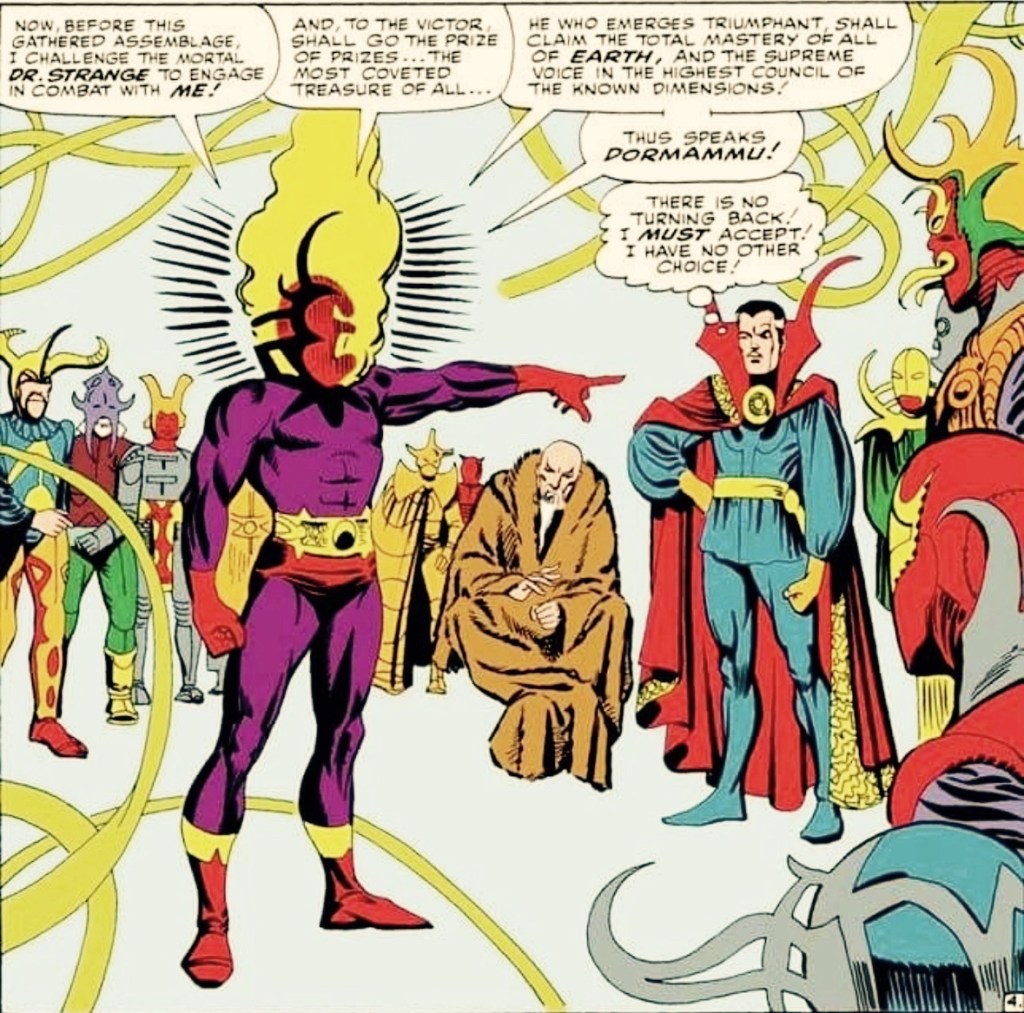
And yet, I’m slotting him at three because the two artists above don’t just build on Ditko—they move me, today, in a way that’s more visceral. Ditko set the lattice of possibility. The rest of this list shows what grows on it. He’s still the groundwater. He’s still the origin point. But favorites are about the present tense, and right now, this is where he sits for me.
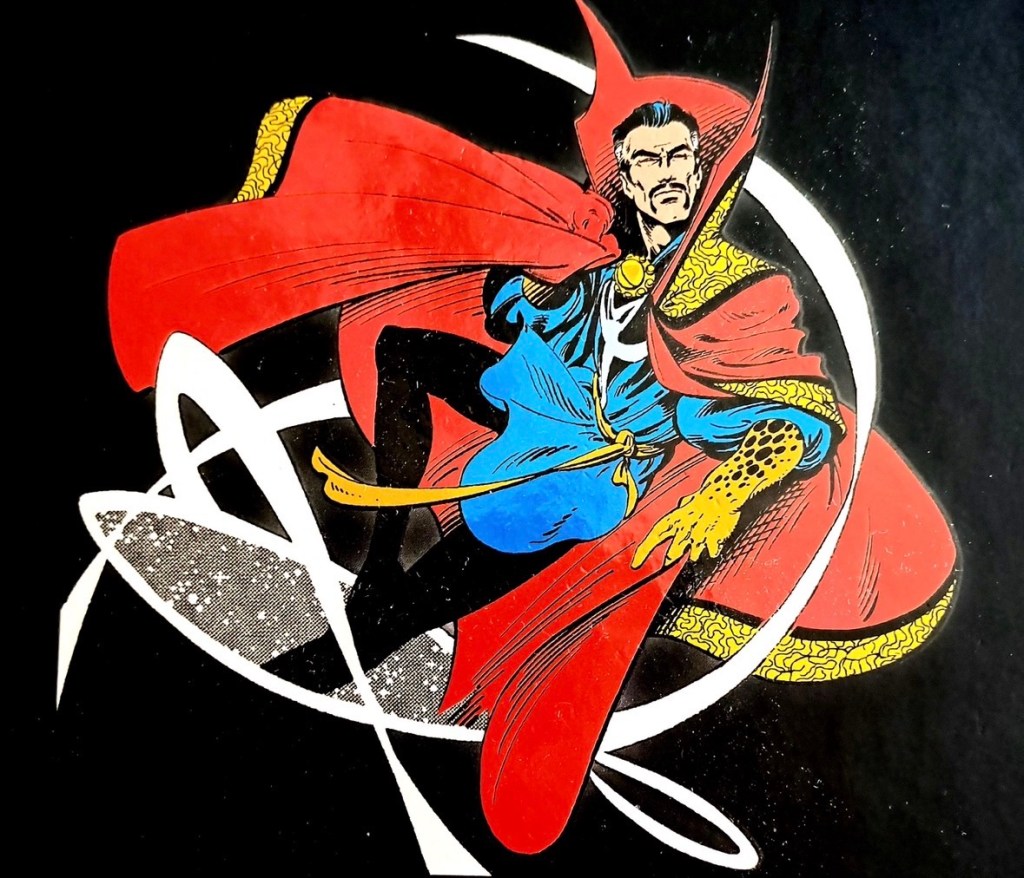
2) Gene Colan
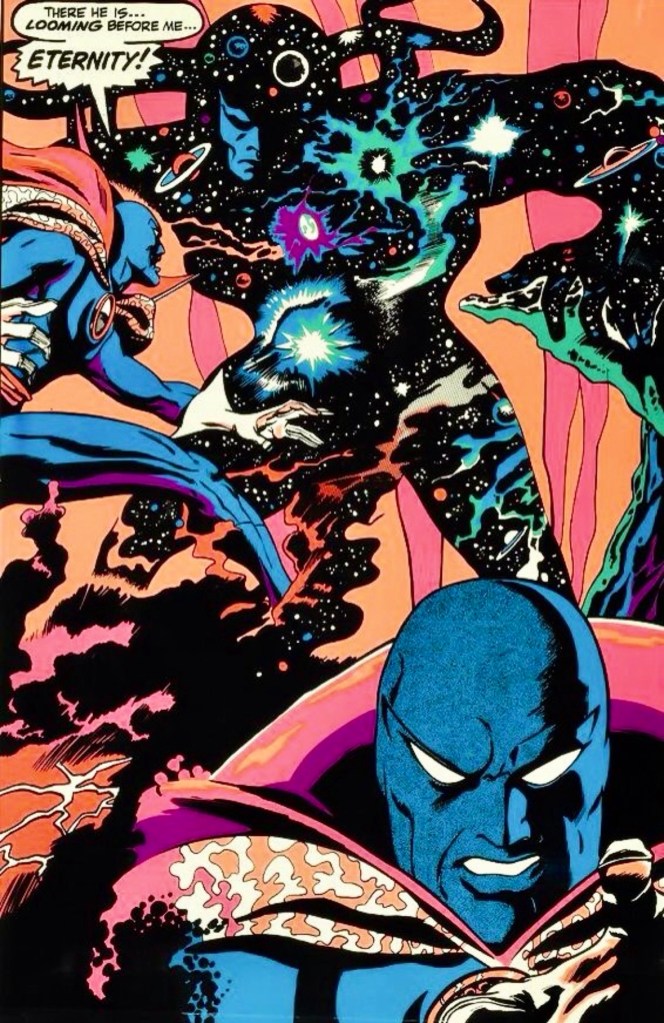
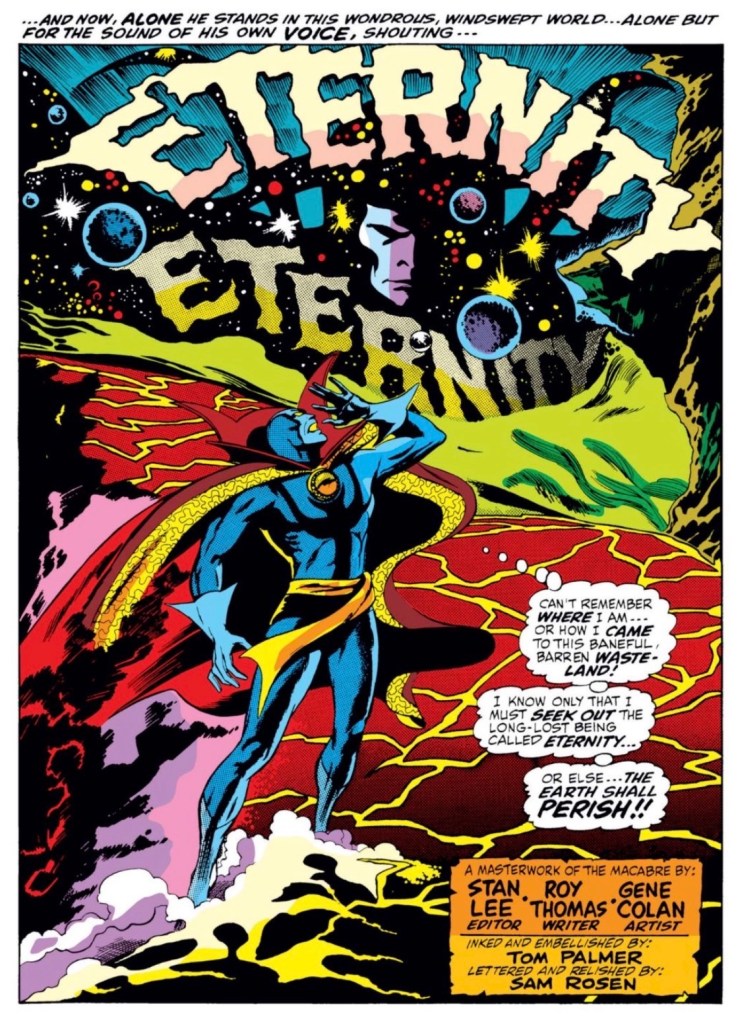
Gene Colan is the storm that rolls in at 2 a.m. and rearranges the furniture of your house while you’re asleep. His Strange is noir-saturated, cigarette-smoke fluid, all soft edges and hard dread. The shadows have their own pulse. The motion is river-slick. Colan replaces Ditko’s abstract cartography with cinematography—tilted angles, slurred transitions, bodies that seem to liquefy as the astral form peels away like silk dipped in ink.
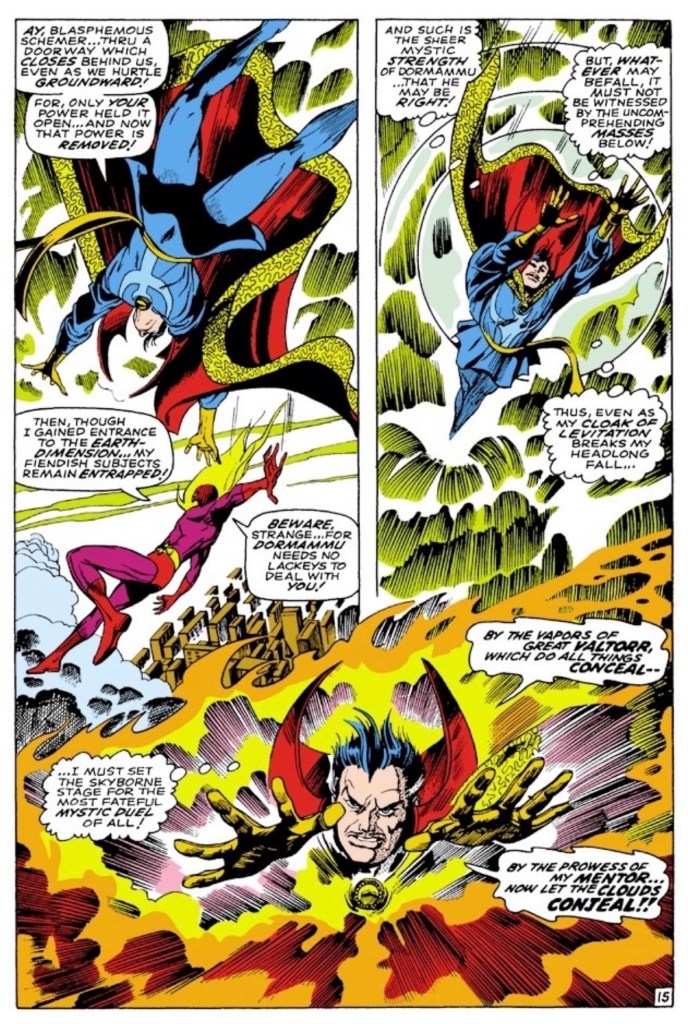
Add Tom Palmer’s inking and you get alchemy. Palmer turns Colan’s already slithery forms into glistening anatomy, demons varnished in nightmare gloss. What grabs me, issue after issue, is the cost. In Colan’s hands, magic is not a fireworks budget; it’s a bruise you live with. The world of Doctor Strange becomes humid and heavy, not a museum of curiosities but a street at midnight where the gutter water knows your name.
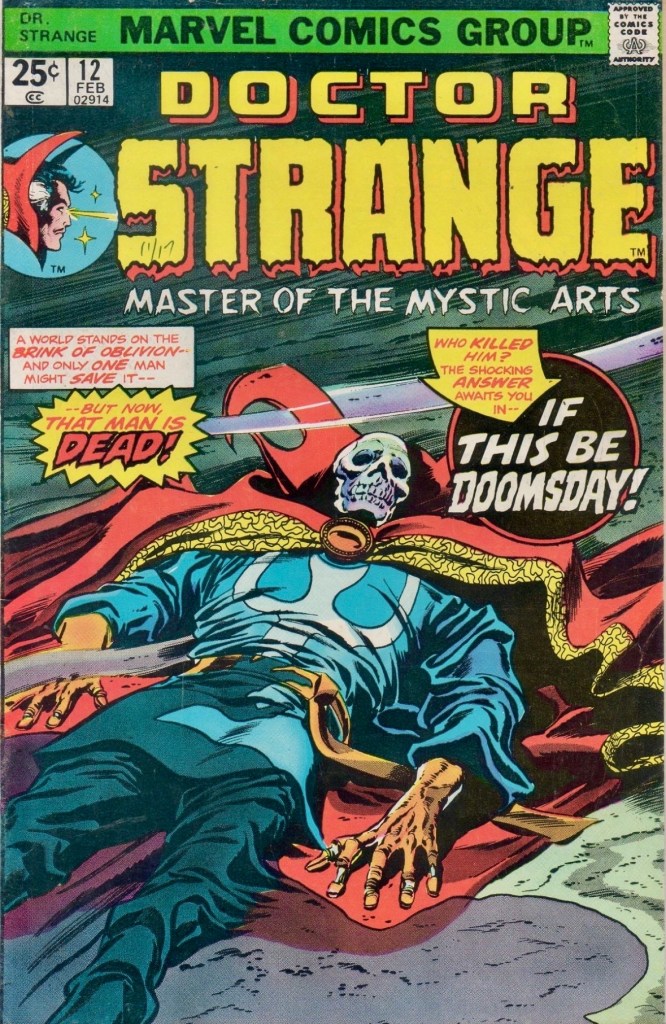
There’s a sensuality to his horror that rivals the best Gothic cinema. Candles sweat. Cloth clings. Eyes burn like coals left too long in the grate. And the astral projection—good grief—the way Strange sloughs off himself is both intimate and grotesque, like watching a chrysalis unzip in real time. Colan makes the mystic arts feel tactile and dangerous. You can smell the sulfur and old wood. He invites you to sit in the dark, and then he proves you were never alone there.
1) Frank Brunner
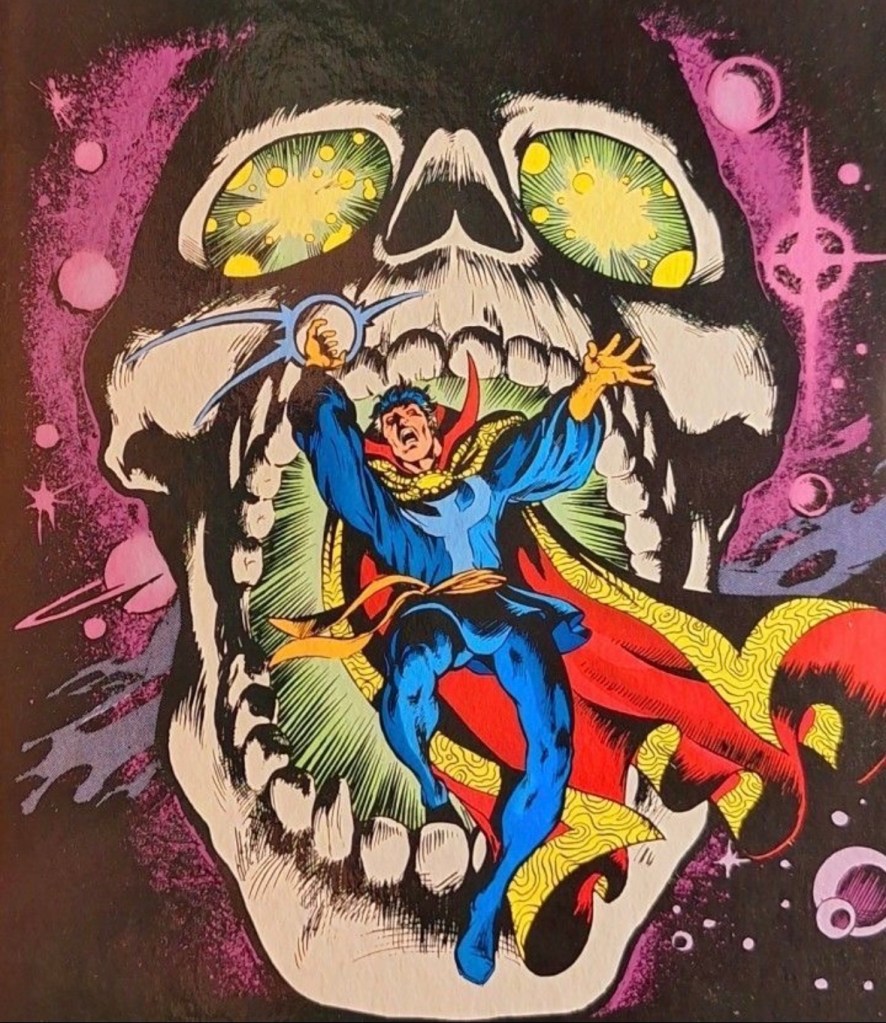
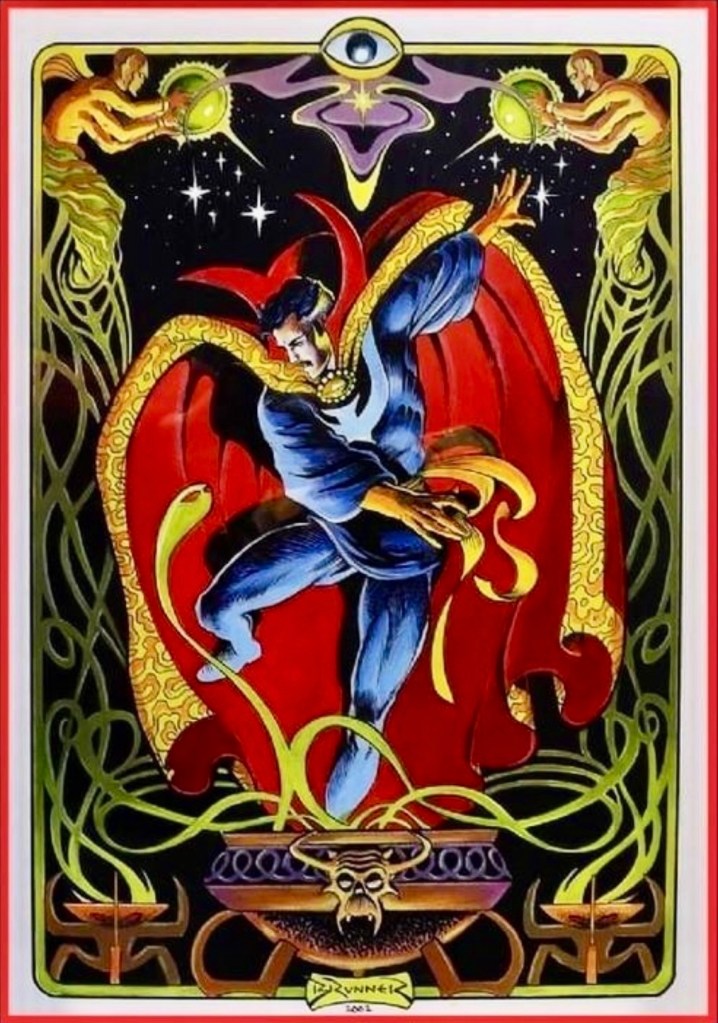
Here’s the hill I’ll gladly haunt: Frank Brunner is the most intoxicating Doctor Strange artist. The Englehart-Brunner run is short, yes, but it’s a cathedral flash-burned into the retina of the Bronze Age. Brunner takes the grammar Ditko invented and writes psalms with it—ornate, luminous, deliriously readable psalms. The line is lacework. The textures are operatic. Faces are chiseled and lit like icons carried through starlight. And yet, somehow, the storytelling is clear as a bell. Ornate does not mean muddy. Baroque does not mean bloated. Brunner walks that tightrope in ballet slippers.
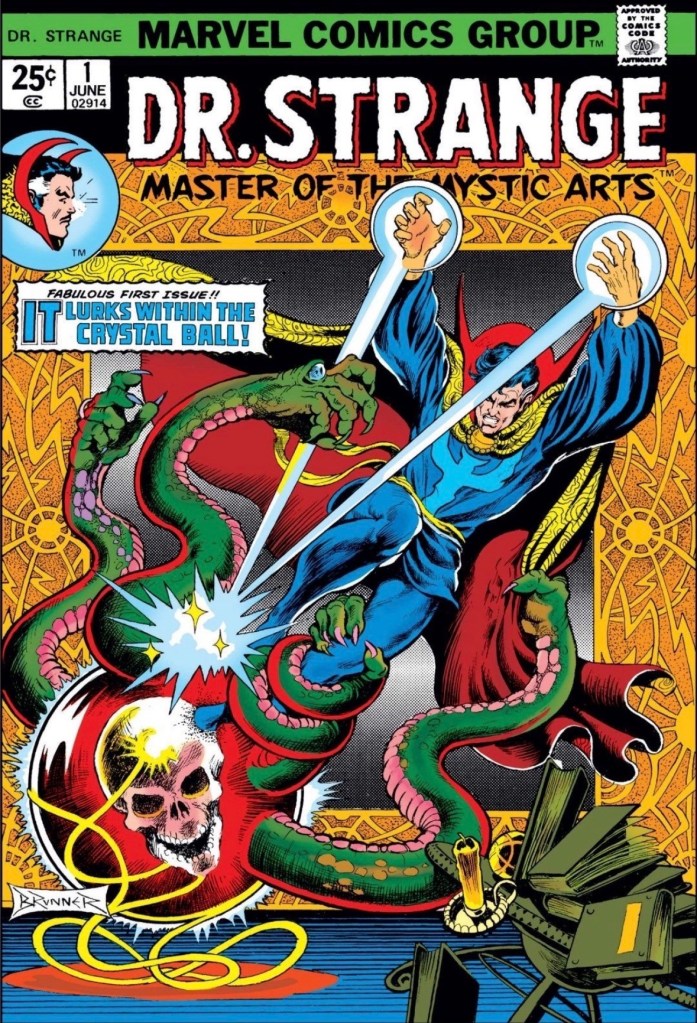
The audacity of those issues still electrifies me. Mythic stakes handled with absolute sincerity. The Sorcerer Supreme mantle treated like a blade that cuts the bearer as much as it protects them. Symbolism isn’t wallpaper; it’s scaffolding. Motifs recur like incantations—serpentine coils, mirror doubles, mandala gates—and they’re deployed to move the narrative, not just decorate it. Every flourish has a job. Every panel has blood in it.
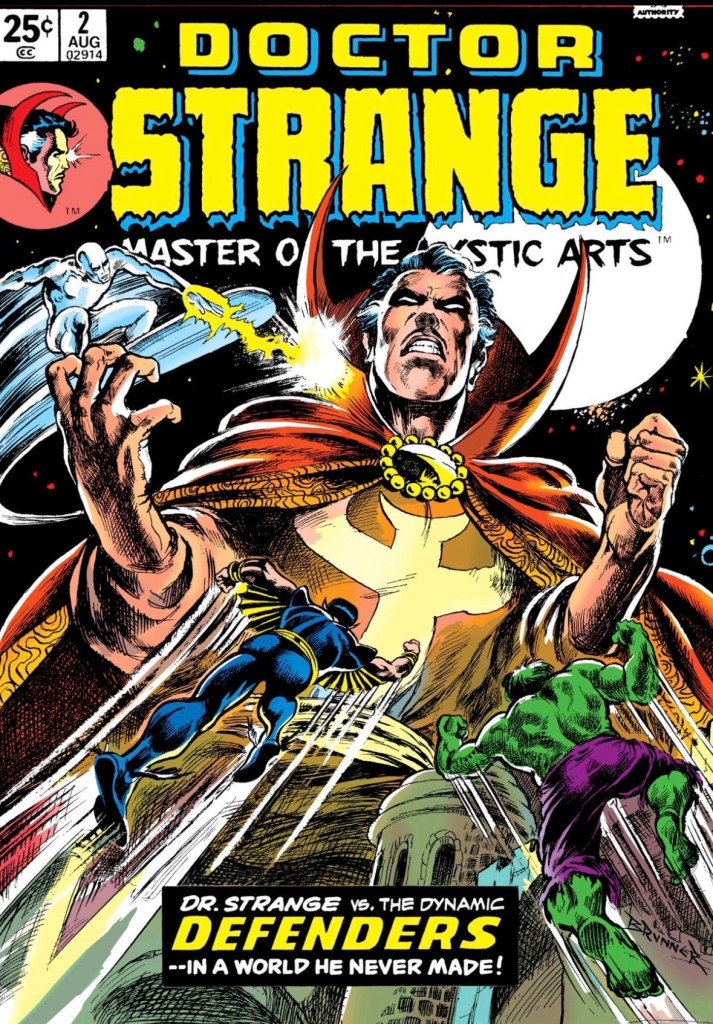
I came to Brunner in fragments—art books, posters, whispers at cons—and then finally hit the issues at scale. It felt like stepping into a chapel built by a spider that taught itself art history. There’s rapture in the line. Luxuriance without indulgence. And the action snaps. Under all that ornament, the kinetic design crackles. Punch a portal. Swing a cloak. The page moves. That’s the difference between “pretty” and “alive.”
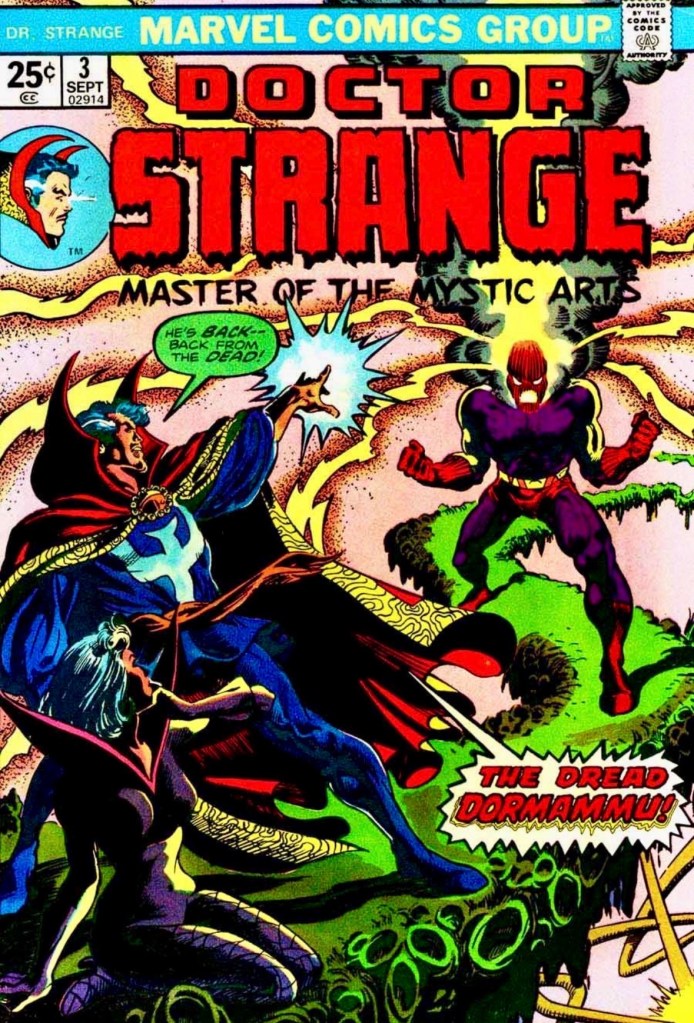
Why number one? Because his pages make me feel the most. Because when I close the book, the afterimage hangs in the air like incense. Because he pulls the ineffable into high relief without draining it of strangeness. Because Doctor Strange, under Brunner, is simultaneously a man and a myth blooming in the same breath. That’s the trick I never get over.
The Common Thread
What ties these five together isn’t style but approach: they treat the page as a ritual space. Rogers builds the altar. Smith clears the air. Ditko carves the sigils. Colan lights the candles and lets the smoke pool. Brunner sings the hymn that makes the room glow. Different liturgies. Same temple.
The Quibbles You’re Already Typing
- “Where’s [insert beloved artist here]?” On a different list, probably a great one. This isn’t a census. It’s just my opinion.
- “Ditko at three is sacrilege.” Maybe. But even relics get reordered on my shelf when my mood swings. Damn. Maybe I shouldn’t have called him a relic…
- “Rogers at five?” Today, yes. Tomorrow I might swap him with Smith and then argue with myself over breakfast. That’s half the fun.
If you’ve never tried Strange, pick any of these runs. Watch your breathing change. If you know them by heart, pick the one you think you’ve outgrown and give it a fresh night. They keep mutating as you do.
Because that’s the truth of Doctor Strange’s best art: it doesn’t just show you magic. It performs it. Panel by panel. Page by page. Decades later and still casting spells on our eyes and minds.
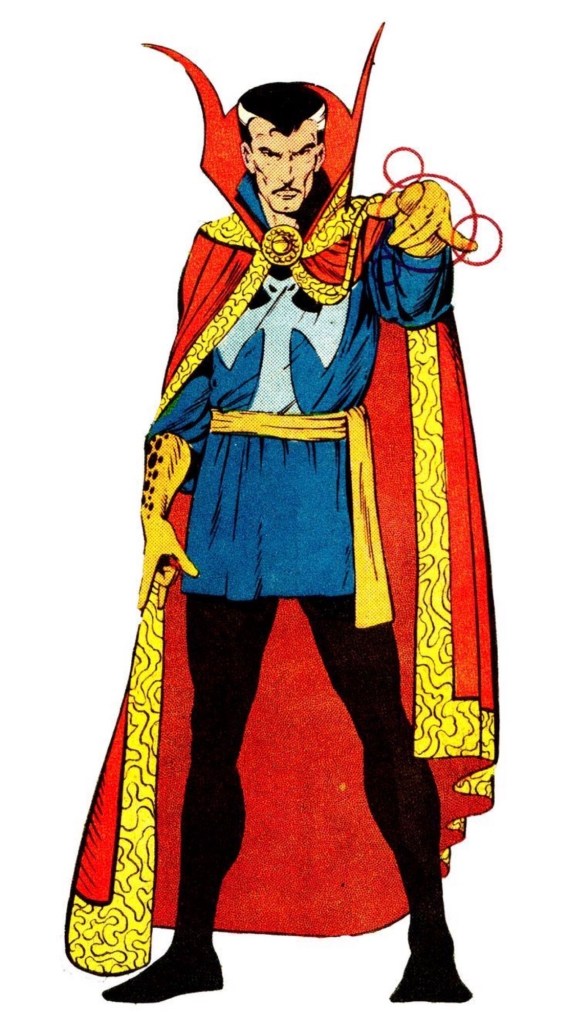
Footnote on sources: dates, runs, and creator pairings referenced here draw from my research notes on favorite Strange artists and their key issues. Consider it my personal Orb of Agamotto for receipts.
Discover more from Into the Weird
Subscribe to get the latest posts sent to your email.
