
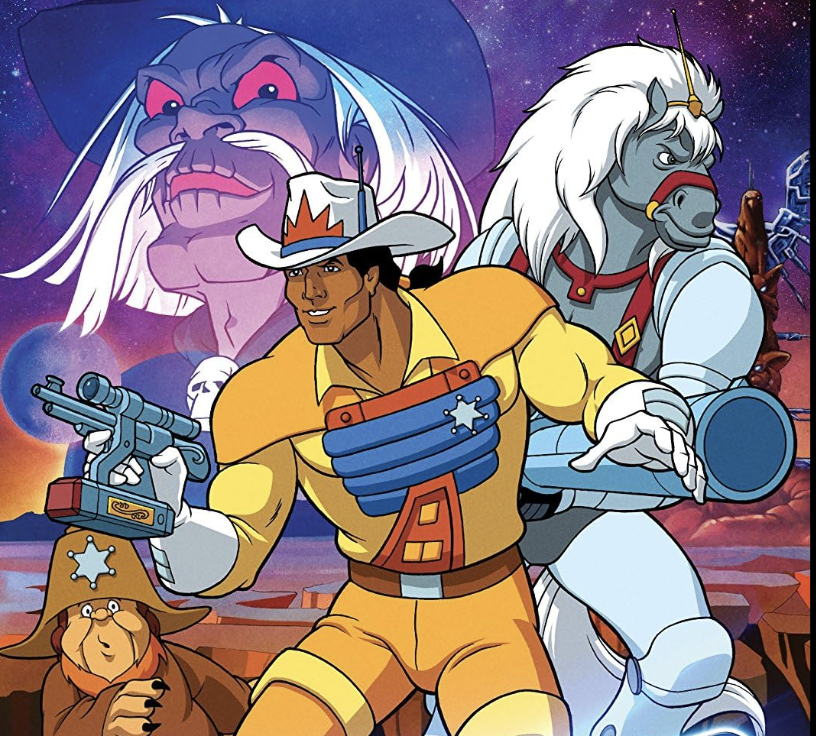
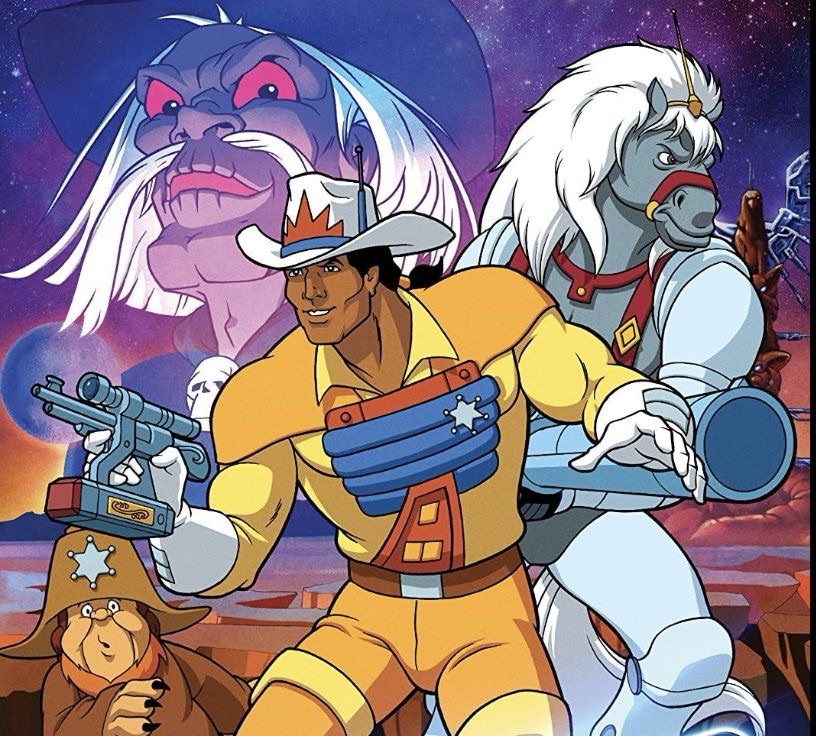
Remember the days when Saturday mornings were reserved for cartoons that transported us to other worlds? Well, one particular show that stands out in my memory is Filmation’s BraveStarr. This gem from the late ’80s masterfully blended sci-fi with Western themes, creating a universe that was both futuristic and reminiscent of the Wild West. It was also one of the few cartoons that my dad would watch with me (he was a massive fan of Westerns, both film and fiction). It goes without saying that it soon became one of my favorites, and developed into a brief obsession from 1987 until the end of the show’s run in 1988. Sadly, it would be Filmation’s final show, as they closed up shop in 1989.
But enough of that; let’s get into the cartoon itself, starting with its opening theme, which I love and never tire of, even after 65 episodes…
The Premise of BraveStarr
Set in the 23rd century on the distant planet of New Texas, BraveStarr follows Marshal BraveStarr, a Native American lawman endowed with mystical powers: the Eyes of the Hawk, Ears of the Wolf, Strength of the Bear, and Speed of the Puma. These abilities allowed him to combat the nefarious outlaw Tex Hex and his eclectically evil gang, who were constantly scheming to control the valuable mineral, Kerium.
The show wasn’t just about action; it delved into themes of justice, environmentalism, and cultural respect. Each episode concluded with a moral lesson, a hallmark of Filmation productions, aiming to impart values to its young audience. Whether this worked for me I can’t say, but I’d like to think so.

BraveStarr: The Legend
Before the TV series graced our screens, there was BraveStarr: The Legend, an animated feature film released in 1988. This movie served as an origin story, detailing how BraveStarr became the marshal of New Texas and his initial confrontations with Tex Hex and the malevolent spirit, Stampede. The film provided depth to the characters and set the stage for the adventures that would unfold in the series.

Episodes that Linger in my Mind
BraveStarr featured several standout episodes that showcased its unique blend of science fiction and western elements. Here are five of the most memorable ones (in my opinion):
“The Price” (Season 1, Episode 26)
This episode stands as one of the most impactful animated episodes of the era, tackling the serious subject of drug addiction. A drug dealer named Dealer arrives in Fort Kerium selling a narcotic called “Spin.” A young boy named Jay tries the drug despite his friends’ warnings, becoming addicted. Despite BraveStarr’s intervention, Jay takes an overdose and dies. The episode concludes with BraveStarr standing over Jay’s grave delivering a solemn message about the dangers of drugs. This episode was revolutionary for children’s animation as it didn’t provide a happy ending and showed the actual death of a child character.
“Eye of the Beholder” (Season 1, Episode 16)
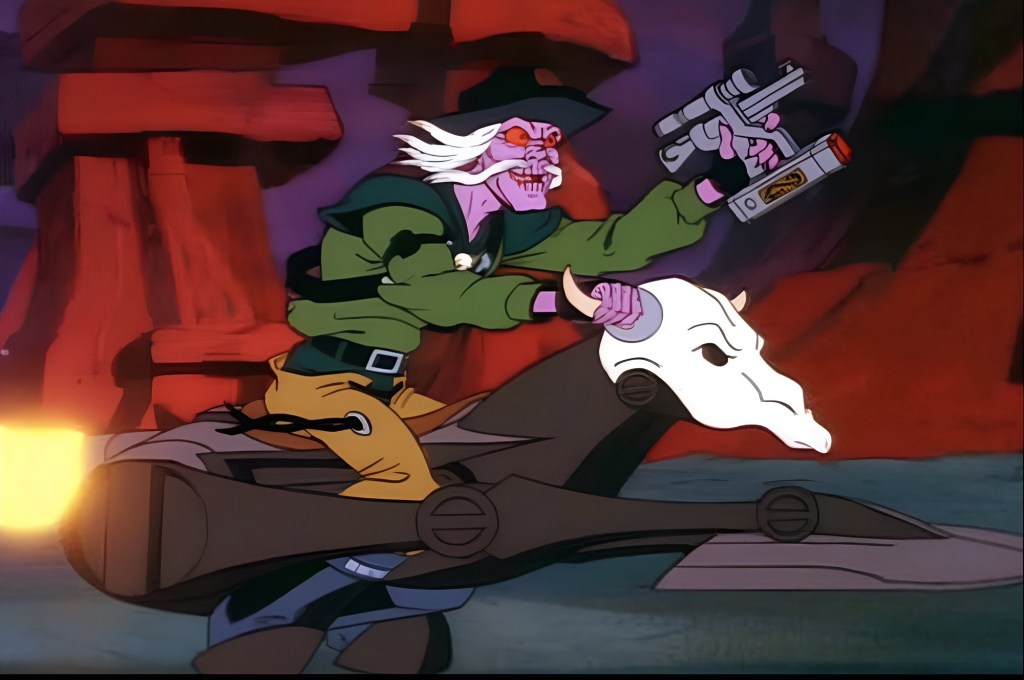
This episode reveals a more complex side to the villain Tex Hex. A blind woman named Ally Kingston arrives on New Texas with a large shipment of kerium intended for research to cure blindness. When Tex Hex kidnaps Ally, he unexpectedly finds himself drawn to her, as she reminds him of a woman he once loved before his pursuit of power. Tex even risks his life to save Ally during an avalanche. The episode provides rare backstory for Tex Hex, showing his regret over abandoning love for greed. As Ally leaves New Texas, she tells Tex that he doesn’t have to be evil, suggesting he has a choice about his path in life.
“BraveStarr and the Law” (Season 1, Episode 9)
Ranked as the #1 episode by fans, this story tests BraveStarr’s commitment to the law when it conflicts with personal loyalty. Tex Hex uses fraud to claim ownership of a kerium deposit located under Star Peak, the home of BraveStarr’s mentor Shaman. Faced with this unjust but technically legal situation, BraveStarr resigns as Marshal, planning to protect his mentor regardless of the law. The episode explores the conflict between legal obligation and moral duty, with BraveStarr ultimately finding a lawful resolution that upholds justice.

“Sherlock Holmes in the 23rd Century” (Two-Part Episode)
This ambitious two-part episode was designed as a potential pilot for a spin-off series. It begins with Sherlock Holmes battling Professor Moriarty at Reichenbach Falls in 1893, but instead of dying, Holmes is transported through a time portal to the 23rd century. In this steampunk-inspired future London, Holmes acquires an alien sidekick named Dr. Wt’sn and meets descendants of his brother Mycroft and Inspector Lestrade. BraveStarr arrives seeking Holmes’ help to find a missing alien child. Together, they must stop a revived Moriarty who plans to conquer Earth using the hypnotic alien child and punk rock music. The episode is praised for its creative premise and faithful adaptation of Holmes lore.
“Strength of the Bear” (Season 1, Episode 65)
The final episode of the series provides a fitting conclusion to BraveStarr’s journey. Unable to rescue a trapped miner, BraveStarr discovers he has lost his “Strength of the Bear” power. Seeking guidance from Shaman, he learns he must reconnect with the animal spirits to regain his abilities. Alone in the badlands, BraveStarr encounters a frail blind man named Ursian and risks everything to protect him from Stampede’s henchmen. Ursian then reveals himself as the human embodiment of the animal spirits and restores BraveStarr’s powers. The episode reinforces the series’ central message that BraveStarr’s true strength comes from within, not from his supernatural abilities.

These episodes showcase the series’ willingness to tackle complex themes, develop nuanced characters, and deliver meaningful stories that went beyond typical children’s animation of the era.
The Toy Line
Now, let’s talk about the toys, which I loved almost as much as the show itself. Produced by Mattel, the BraveStarr toy line was nothing short of impressive. The figures stood at a towering 8 inches, making them larger than many other action figures of the time. Each character was intricately detailed, capturing the essence of their animated counterparts.

What made these toys unique were their unusual (for the time) action features and accessories. Marshal BraveStarr came equipped with his signature weapons, and each figure was packaged with Kerium nuggets, tying them back to the show’s central plot element. The line also included vehicles like the Stratocoach and playsets such as Fort Kerium, allowing fans to recreate their favorite scenes from the show.
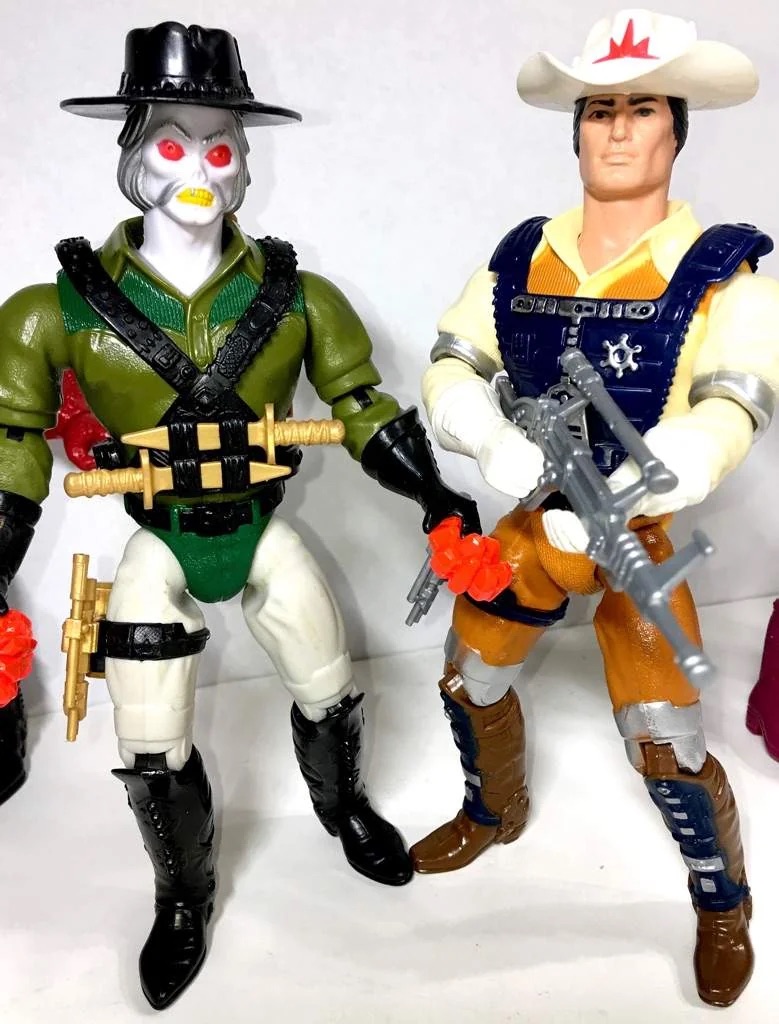
Despite the detailed craftsmanship and the backing of an animated series, the toy line faced stiff competition and didn’t achieve the commercial success Mattel had hoped for. Nevertheless, for those of us who owned them, these figures were treasured possessions that fueled countless imaginative adventures.
Reflecting on BraveStarr’s Legacy
Looking back, BraveStarr was ahead of its time. It dared to combine genres in a way that was unconventional, offering a narrative that was ridiculously entertaining and action-packed. Also, the show’s commitment to delivering moral lessons without being preachy (a cue taken from the Masters of the Universe cartoon) is something that stands out, especially when compared to today’s programming.
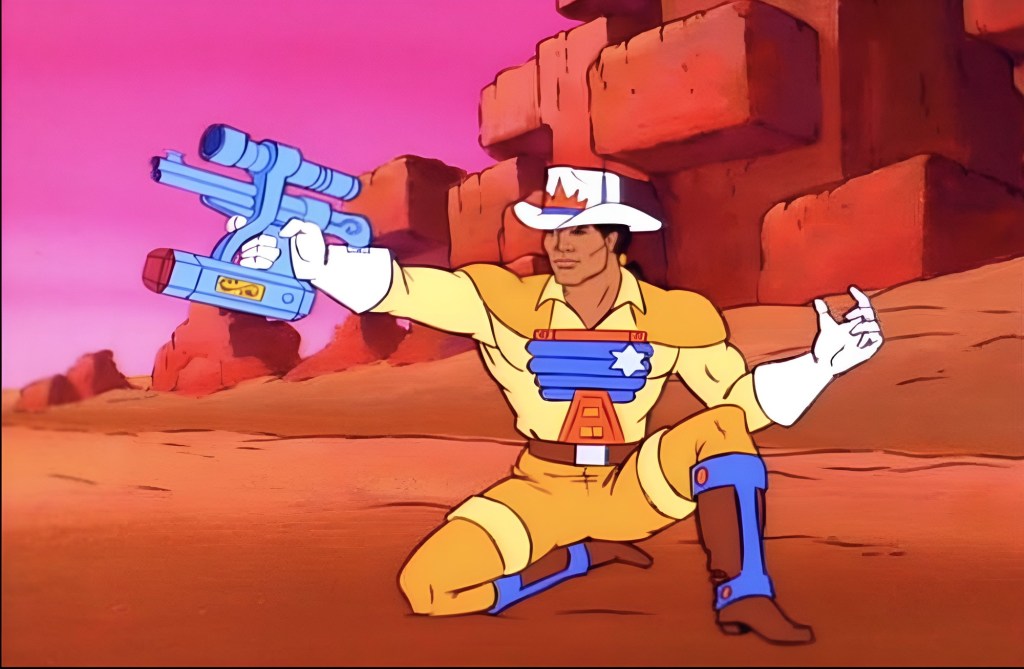
While it may not have enjoyed the prolonged success of its peers, BraveStarr holds a special place in my heart for its unique blend of storytelling, cultural representation (which I only came to appreciate now that I’m older), and crazy world-building.
For a deeper dive into the history of BraveStarr and its impact, check out this superb documentary below, Weirdos:
Thanks for reading! If you have any memories of BraveStarr to share, please leave some comments, and we’ll start a discussion. Until then, I’m off to New Texas, to relive my childhood. See you around… ‘pardners.’
Discover more from Into the Weird
Subscribe to get the latest posts sent to your email.
