
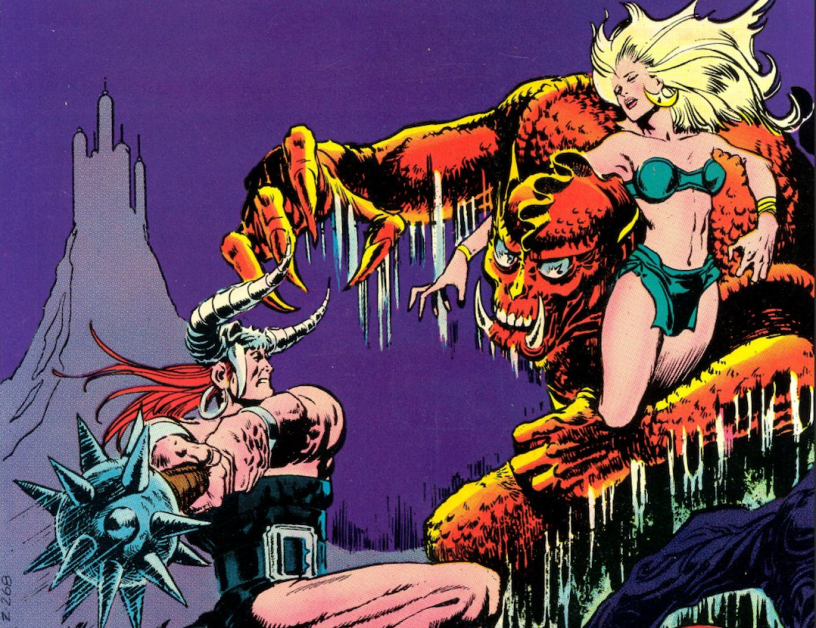
Alright, weirdos, settle in. We’re about to take yet another trip back to the Bronze Age of Comics, specifically to the weirdest, wildest, and most unique corner of that era. We’re talking about a series that, for me, wasn’t just another title on the spinner rack; it was my very first taste of fantasy comics, a six-issue fever dream that kickstarted a lifelong love affair with swords, sorcery, and stories that that took ‘epic’ to a whole new level.
And the comic that epitomized all of this? DC Comics’ Beowulf: Dragon Slayer.
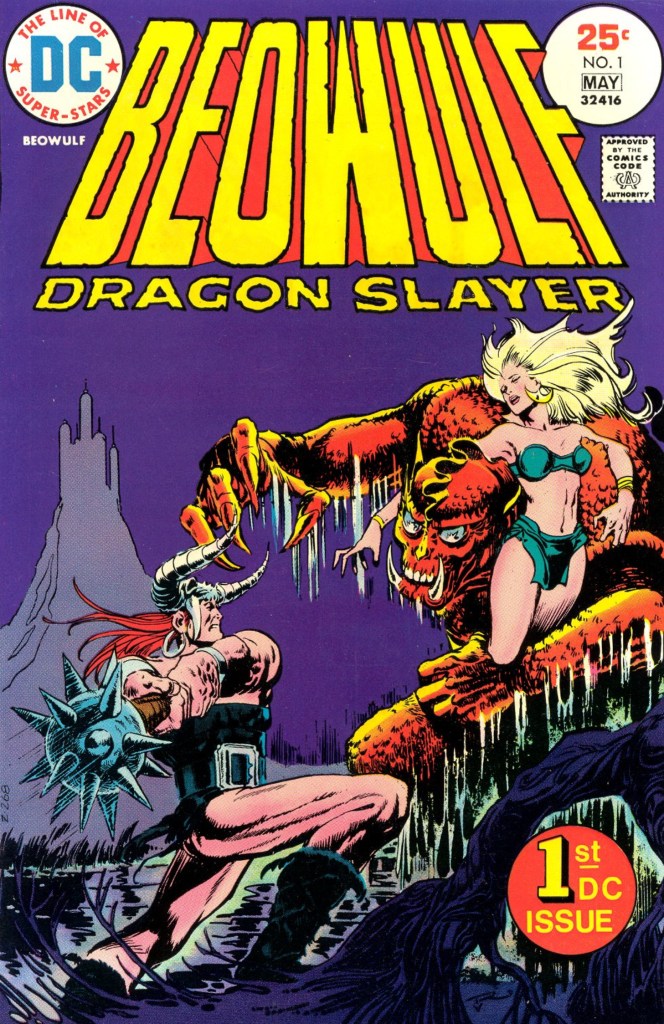
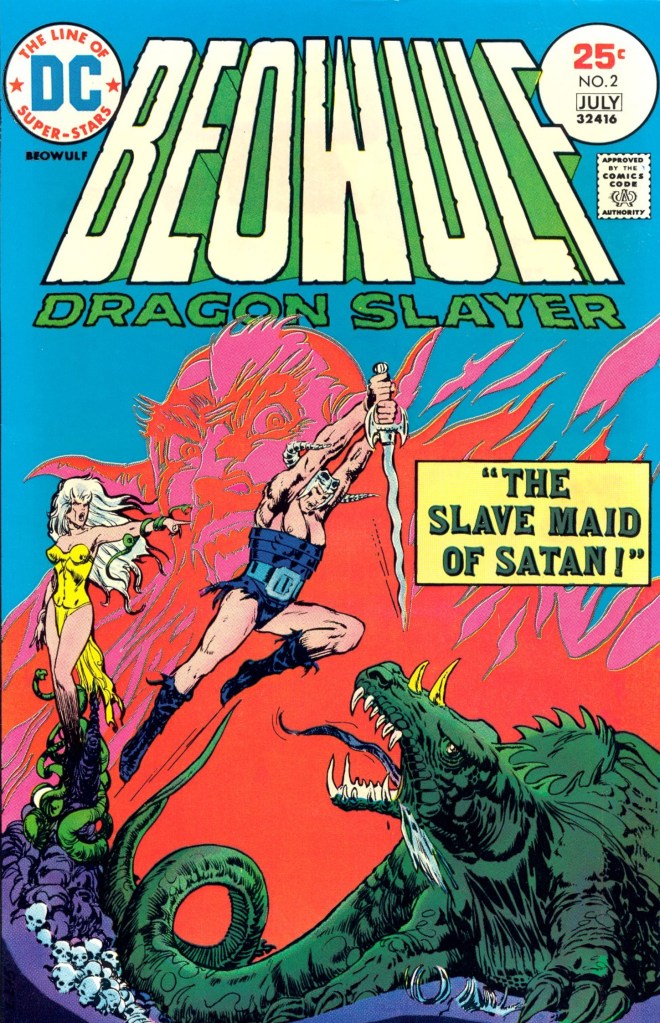
Now, if you’re only familiar with the ancient epic poem, prepare yourself. Because while this comic shares a name and a protagonist with the legendary Geatish hero, it takes the concept and runs with it… straight into the nearest dimension-hopping, vampire-battling, alien-infested wormhole it can find. And I wouldn’t have it any other way.
An Unlikely Beginning: Finding Issue #6 First
My introduction to this magnificent madness wasn’t typical. You see, I didn’t pick up issue #1, bright-eyed and ready for a faithful adaptation. No, my journey began, as strange as the comic itself, at the end.
I was just a kid, religiously browsing the limited comic selection at my local convenience store – the kind with a dusty metal spinner rack near the candy aisle. Among the Superman and Batman titles, a cover stopped me cold. It was dynamic, a bit rough around the edges, but full of energy. There was a powerful-looking warrior, a fierce woman, and… was that the Minotaur? The title read Beowulf: Dragon Slayer. It was issue #6. The final issue.

I had no idea what was going on. The dialogue hinted at previous adventures that seemed utterly insane: fighting Dracula, visiting Atlantis, encountering beings from the stars. The art, by Ricardo Villamonte, was gritty and dynamic, perfectly capturing the chaotic energy of the story. I bought it, utterly baffled but completely captivated. What was this comic? Who was this Beowulf who fought mythological creatures and space aliens?
That single, final issue ignited a quest. A real-world hunt through every drugstore, every corner store, every fleamarket that might possibly carry back issues. This was long before the internet made finding old comics easy. You had to dig. You had to ask. You had to get lucky. And for months, Beowulf: Dragon Slayer became my white whale.

Slowly, issue by issue, I pieced together the story. Finding #1 was a revelation – finally seeing the beginning, the initial hook that grounded it (briefly!) in the familiar epic. Tracking down #2, #3, #4, and #5 felt like discovering lost treasures. Each new issue I found only deepened the delightful sense of “What in the world is happening?!” that the series specialized in. By the time I had all six issues lined up, I felt like I possessed some ancient, forbidden knowledge. This wasn’t like any other comic I’d ever seen.
The Bronze Age Boom: Why Beowulf Battled More Than Dragons
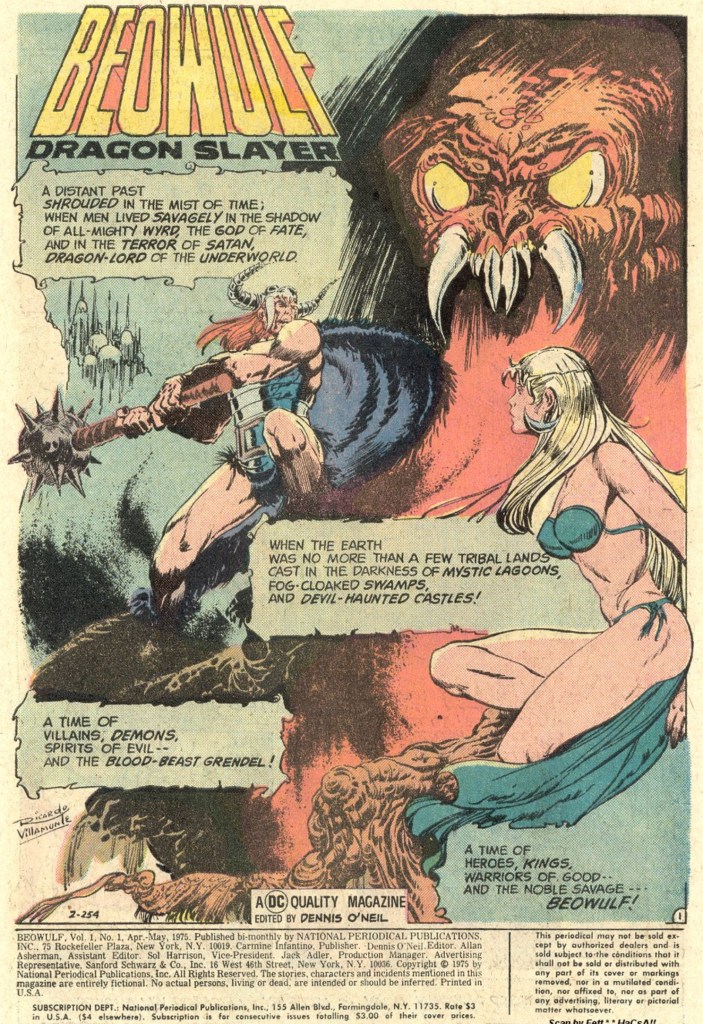
To understand Beowulf: Dragon Slayer, you have to look at the comic book landscape of the mid-1970s. Marvel Comics was having massive success with Conan the Barbarian, proving that there was a hungry market for fantasy and sword-and-sorcery outside of the superhero genre. DC, naturally, wanted a piece of that action.
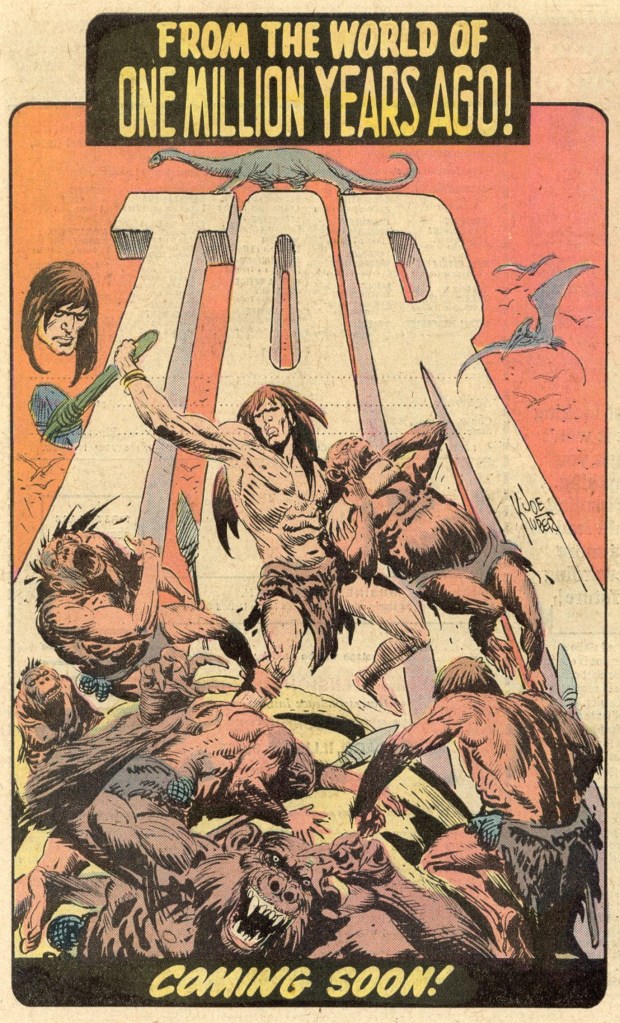
They launched several titles in this vein: Warlord (which became a huge hit), Tor (by the great Joe Kubert), Claw the Unconquered, Stalker, and an adaptation of Fritz Leiber’s Fafhrd and the Gray Mouser in Sword of Sorcery. Beowulf: Dragon Slayer was part of this push. The idea was to take “English Literature’s first and greatest hero” and give him the barbarian comic treatment.


But while Conan largely stayed within the bounds of Robert E. Howard’s Hyborian Age pulp fantasy, and Warlord built its own consistent fantasy world, Beowulf went… everywhere. It was as if writer Michael Uslan and artist Ricardo Villamonte were given the keys to the mythological and sci-fi toy chests and told to just empty them out onto the page.
The Masters of the Mayhem: Uslan, Villamonte, and O’Neil
The creative team behind Beowulf is fascinating in hindsight. Michael Uslan, the writer, was incredibly young at the time, just in his early twenties. He was also deeply passionate about comics and folklore. You can feel that enthusiasm and a lack of creative inhibition in every issue. He wasn’t afraid to throw anything at Beowulf. This series was a clear precursor to his later career as the driving force behind bringing a serious, darker Batman to the big screen. He understood the core appeal of a character and wasn’t afraid to interpret it boldly.
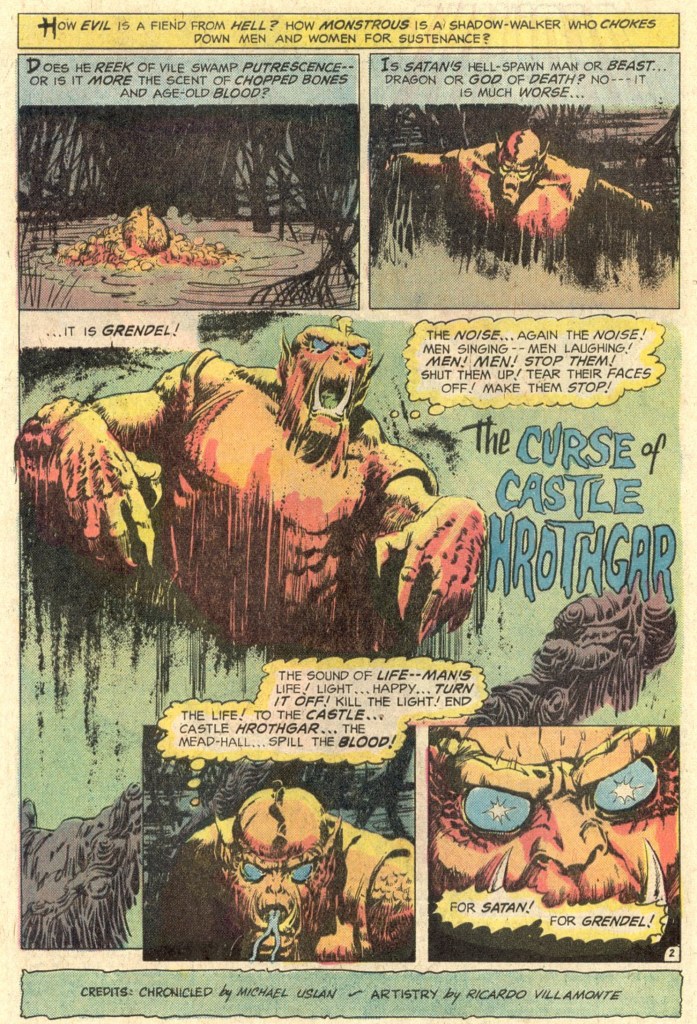
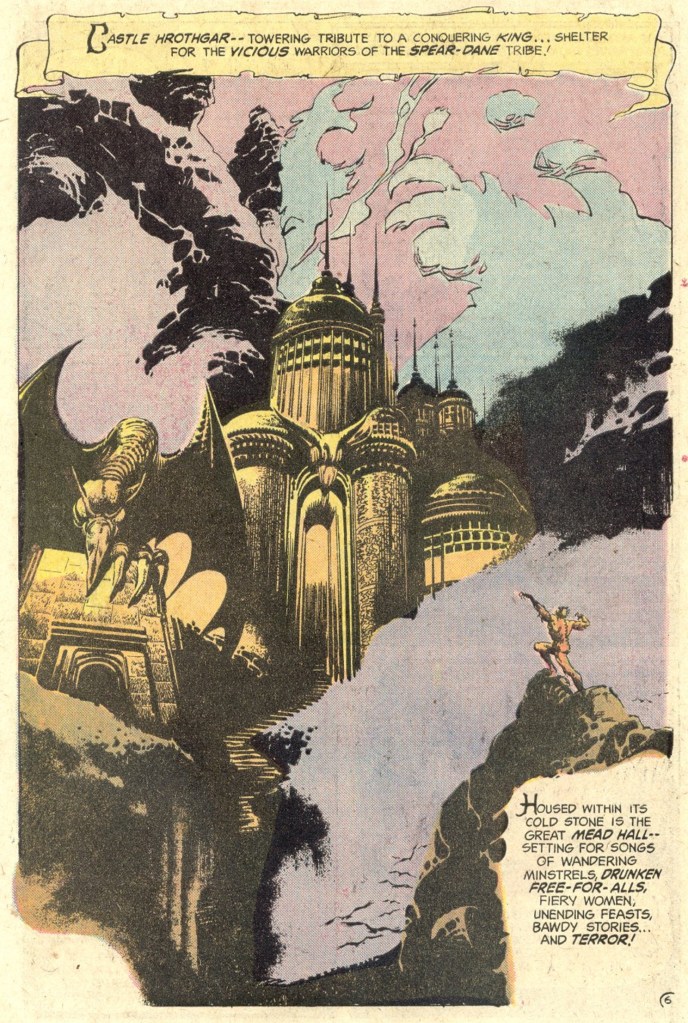
Ricardo Villamonte provided the art. His style was distinct – detailed, sinewy figures, expressive faces, and a real knack for drawing monstrous and bizarre creatures. His panel layouts were often dynamic, pulling you through the action. While maybe not as polished as some of his contemporaries, his energy was perfect for the frenetic pace and outlandish concepts Uslan was throwing at him. He made the weirdness feel real within the context of the comic.
And, last but definitely not least, there was legendary editor Denny O’Neil, known for his groundbreaking, realistic superhero work like Green Lantern/Green Arrow and Batman. His presence hints that even amidst the absurdity, there was an attempt to craft compelling stories and characters. Together, this team created something truly unique, even in an era of genre experimentation.
A Plot That Defied Explanation (and Gravity): From Heorot to Hyperdrive
So, what actually happened in these six issues? Buckle up. Issue #1 starts relatively grounded, introducing Beowulf and his men, their journey to King Hrothgar’s mead-hall, Heorot, to battle the monster Grendel. We meet Wiglaf and Hondscio. So far, so epic, right? WRONG.
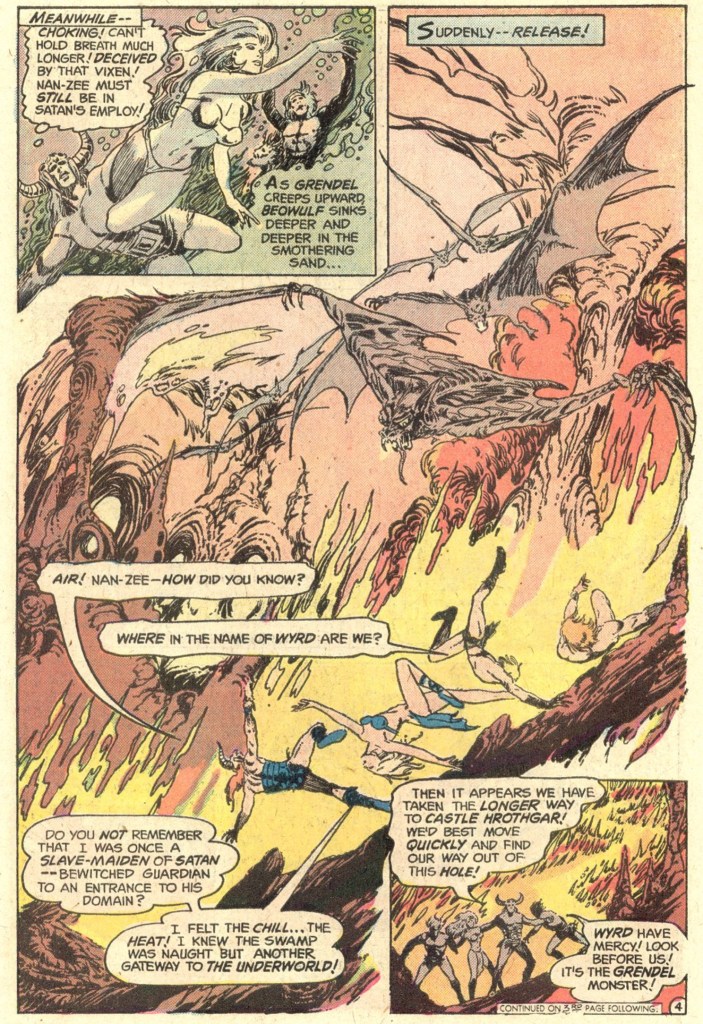
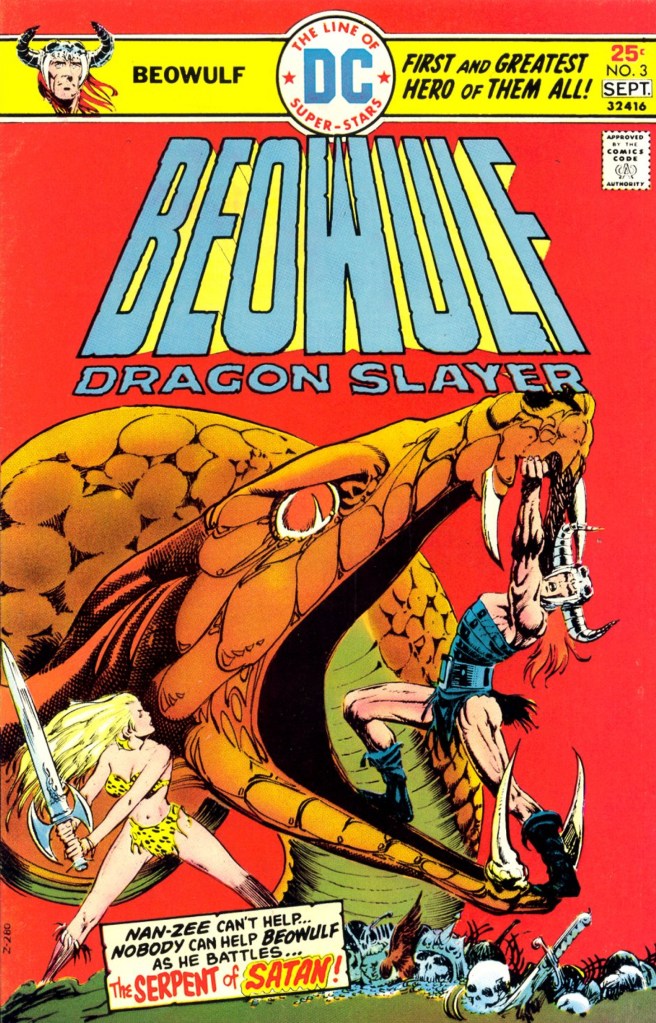
Almost immediately, Beowulf is detoured into the Underworld and has to rescue a captive warrior named Nan-Zee from demons under the control of none other than Satan himself. Yes. The Devil. First issue. Nan-Zee, by the way, is a tough, capable fighter who becomes Beowulf’s main companion (and romantic interest) throughout the series, very much in the mold of the strong female characters appearing in S&S comics of the time.
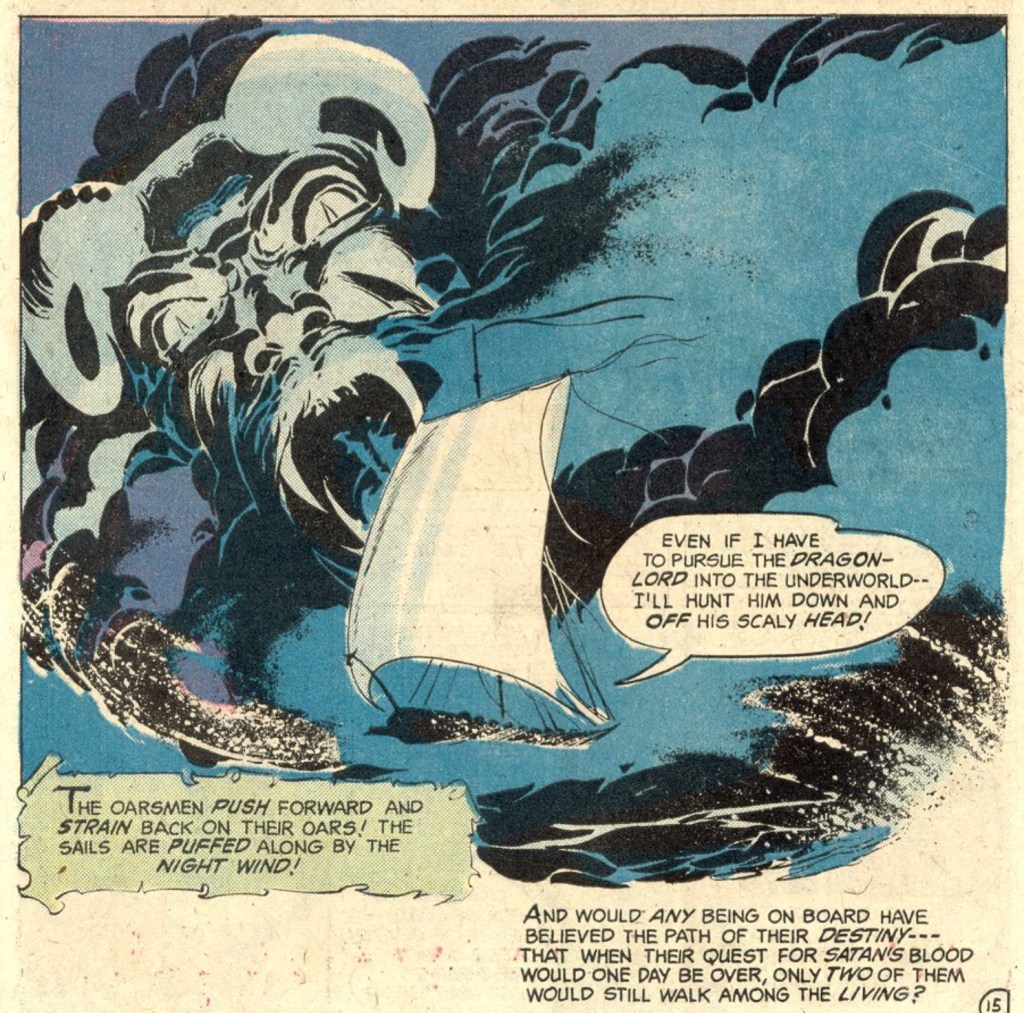
From there, the plot spirals. Beowulf learns that the only way to truly defeat Grendel is with the nectar of the “Zumak Fruit.” This kicks off a quest that takes up most of the remaining issues. But this is no simple travelogue.
Along the way, they stumble into a land where they encounter Dracula. Not a Dracula-esque vampire, but the Dracula, complete with Wallachian hordes! A major fight ensues, and in a moment that still makes me scratch my head, Satan pulls Beowulf out of the fight just as he’s gaining the upper hand, sends him back to Heorot briefly (where Grendel kills Hondscio), then zaps him back to the desert battle, which is just ending. Dracula dies (temporarily), and Satan immediately resurrects him as a lord of the undead, explicitly stating Dracula is now above Grendel in his hierarchy!
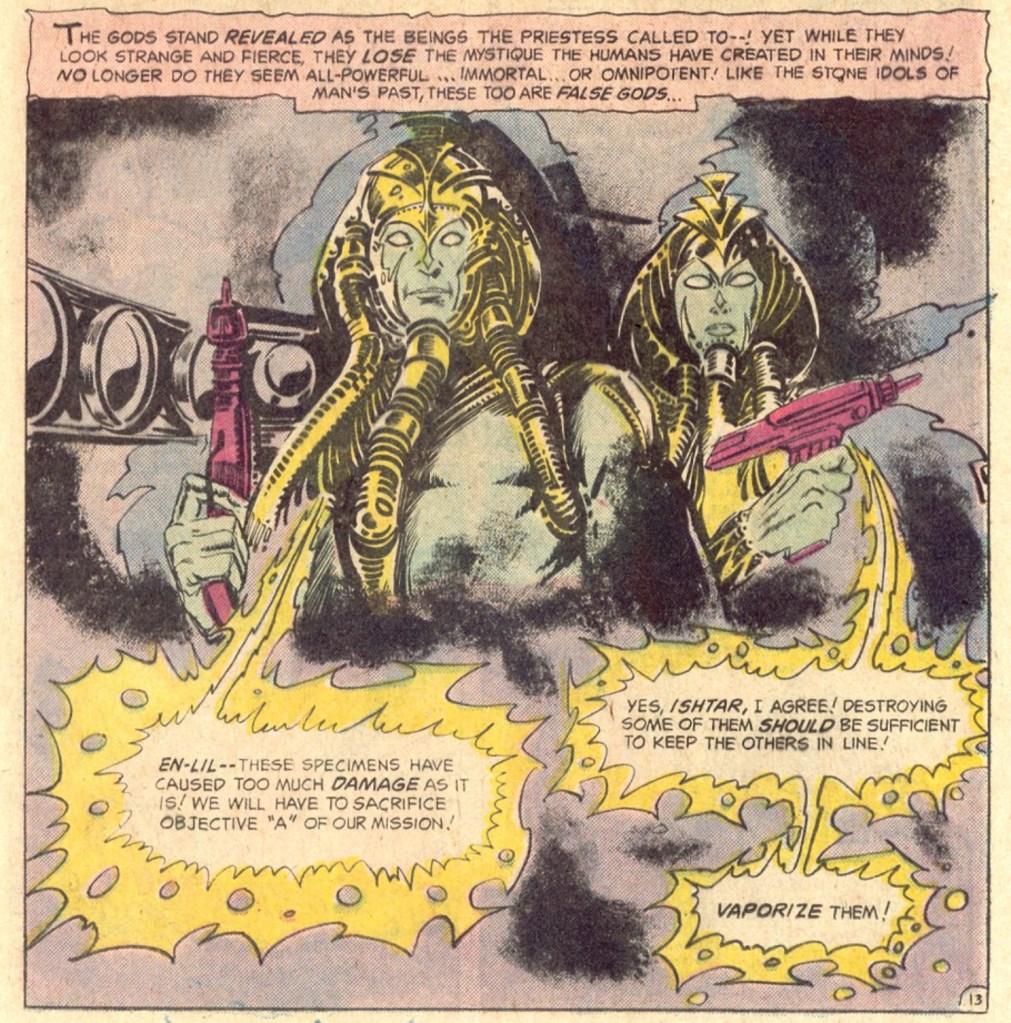
But wait, it gets weirder. The quest for the Zumak Fruit leads them to a place that resembles Stonehenge, where they are attacked by druids wielding… science. Yes, advanced technology. These druids are serving aliens, who have been capturing powerful warriors from Earth’s history! Beowulf and Nan-Zee find themselves on a spaceship orbiting Earth, among frozen warriors from different eras. They fight the aliens, crash the spaceship… directly into Atlantis, which, naturally, sinks as a result!
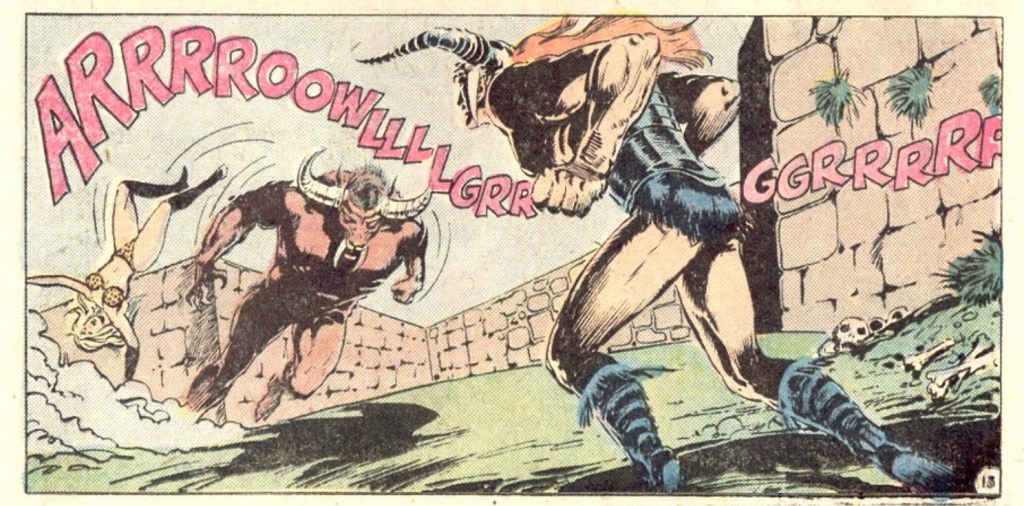
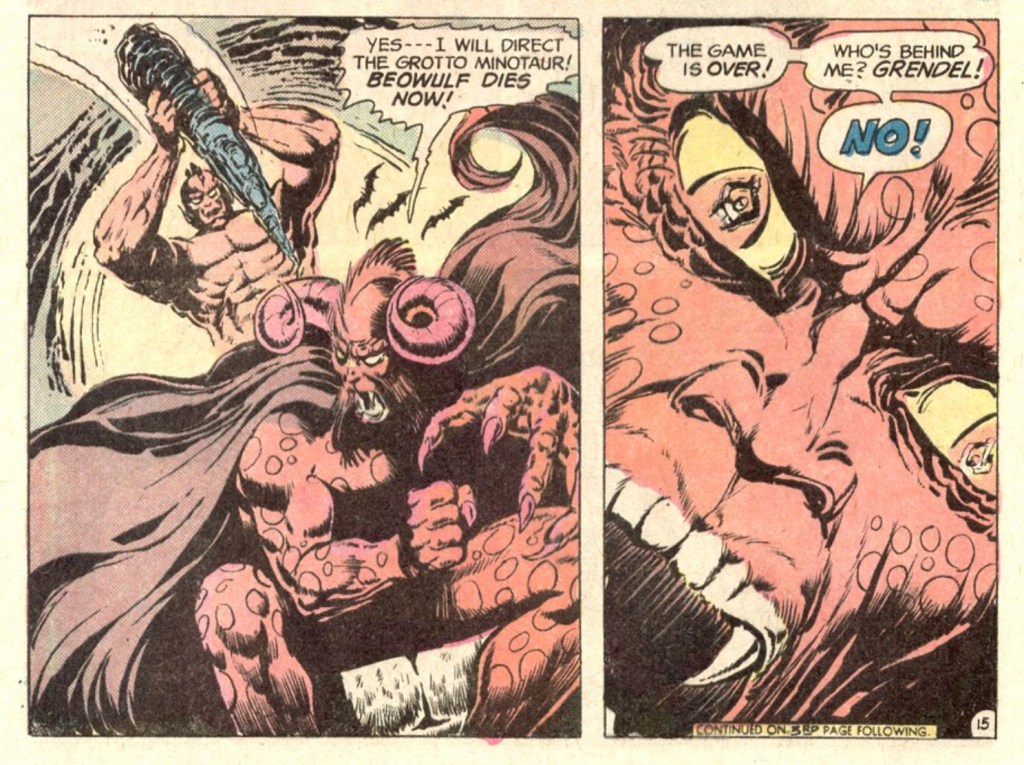
Washed ashore with one surviving frozen warrior (who turns out to be Ulysses, promptly whisked away by Athena back to his own time), Beowulf and Nan-Zee finally make it to Crete, where the Zumak Fruit is said to be found in the labyrinth of King Minos. Here, they face the Minotaur. And who is controlling the Minotaur? You guessed it… Satan, making a final stand before Beowulf can get the fruit.

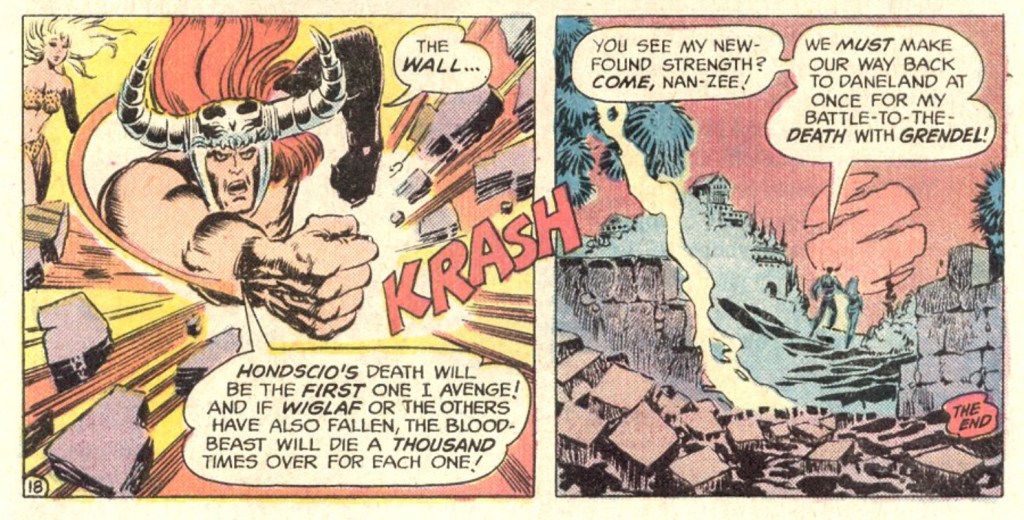
In the chaotic finale of issue #6, Beowulf brutally beats the Minotaur to a pulp, and eats the Zumak fruit, gaining strength equal to that of Grendel. While all this is happening, Grendel, enraged that Satan favored Dracula over him, brutally kills Satan with a giant stalactite. (Yes, Grendel kills the Devil in this comic). After literally punching his way out of the Labyrinth, Beowulf, with Nan-Zee in tow, prepare to finally return to Daneland to face Grendel, who has now claimed Satan’s throne in the underworld.
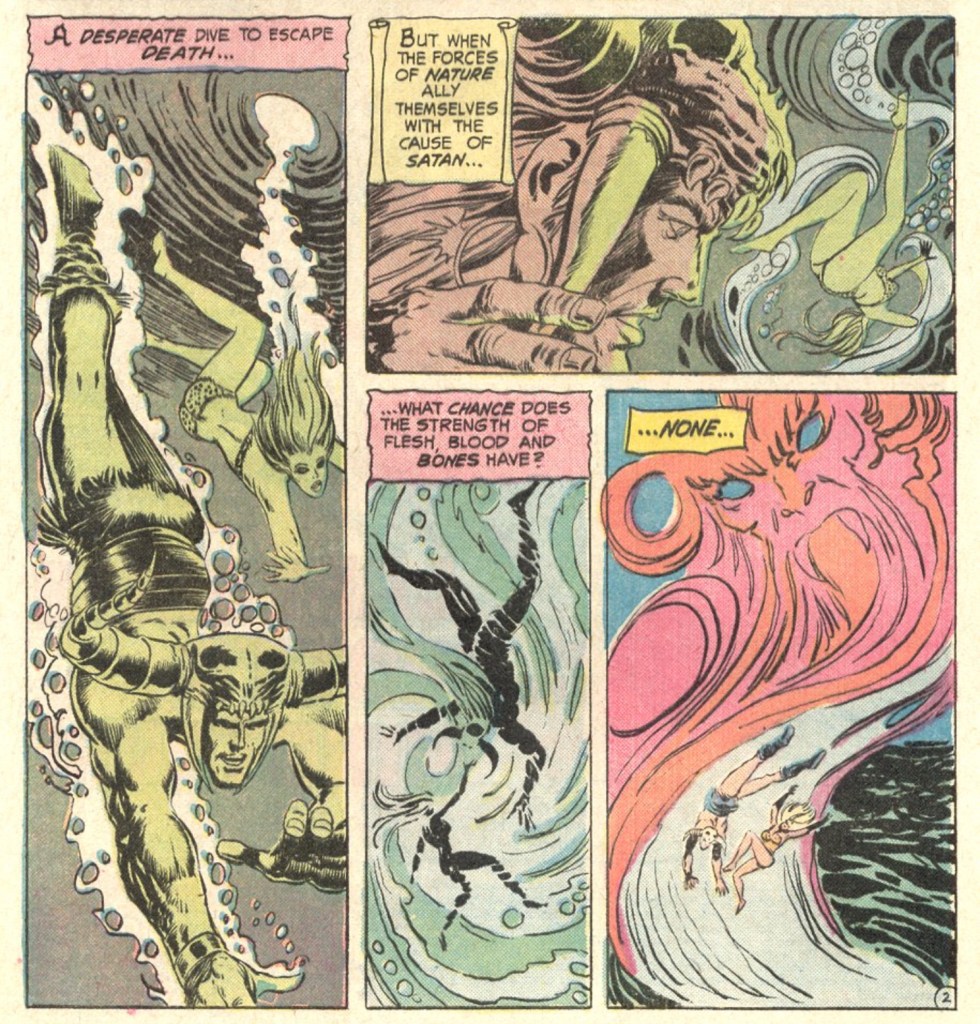
And that’s where it ends. Abruptly cancelled, leaving the final confrontation for a never-published issue #7.
This was – and I’m not exaggerating here – one of the most disappointing and upsetting events in my young life. To leave us on that high a note, and we never get to see the ultimate battle between Beowulf and Grendel, which the whole story hinges on and teased us with since the beginning? Devastating.
Why Did It Stick? More Than Just Monsters
So, why did this utterly bonkers series resonate so deeply with a young me? Why was this my introduction to fantasy comics? Part of it was the sheer density of imagination. It didn’t just give you Grendel; it gave you Grendel and Satan and Dracula and Aliens and Atlantis and the Minotaur. As a kid, that felt like getting ten comics for the price of one. It expanded my idea of what a comic book story could be. It wasn’t bound by the rules of superhero physics or even traditional fantasy logic.
Villamonte’s art, while sometimes stiff in anatomy, had a raw, kinetic energy. His monsters were genuinely monstrous, his action scenes felt impactful, and he captured the bizarre settings with a sense of awe and wonder. His depiction of the alien technology alongside mythological creatures was visually striking.
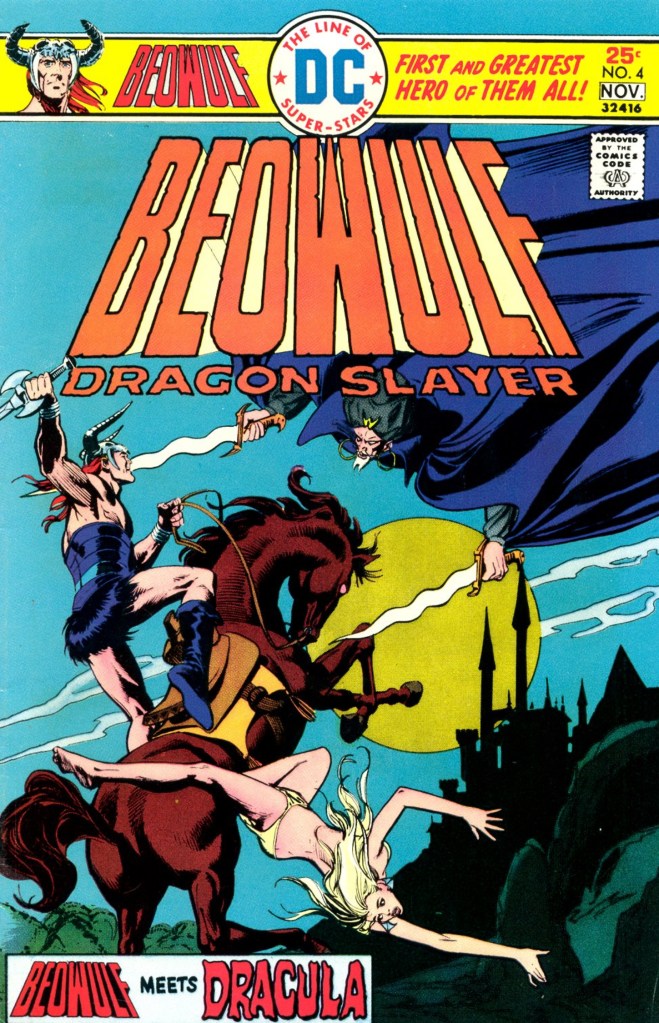
But perhaps the most unique insight comes from placing it squarely in the 1970s. This was a decade fascinated by the paranormal, by ancient mysteries, by theories linking ancient civilizations to extraterrestrials (Chariots of the Gods was a massive bestseller around this time). The inclusion of aliens and Atlantis wasn’t just random; it tapped into the cultural zeitgeist. The embrace of horror icons like Dracula, and the overt use of religious figures like Satan, reflected the loosening restrictions of the Comics Code Authority and the growing popularity of horror comics. Beowulf: Dragon Slayer was, in a strange way, a perfect storm of 1970s speculative fiction tropes colliding head-on with classical literature.
It didn’t take itself too seriously, which was key. Despite the epic names and high stakes, there was an underlying sense of pulp adventure. You weren’t getting Old English poetry; you were getting a rollercoaster ride.
A Fond Farewell (Too Soon)
Beowulf: Dragon Slayer didn’t find the audience that Warlord did, and it was cancelled after six glorious, confusing issues. The abrupt ending, right before the final confrontation, was frustrating as a reader who had hunted down the whole run, but in a way, it adds to the legend of the series – forever incomplete, forever on the cusp of an epic (and undoubtedly weird) finale.

This series was my gateway drug into the world of fantasy comics. It showed me that comics could be about more than capes and superpowers; they could take you to ancient lands, pit heroes against impossible odds, and mix and match concepts with fearless abandon. It’s a quirky footnote in DC’s history, a product of a specific time, and a testament to the boundless creativity that can flourish when creators aren’t afraid to get really weird.
If you ever stumble upon these six issues in a back issue bin, pick them up. Prepare to be baffled. Prepare to be entertained. Prepare to see Beowulf, Dragon Slayer, take on everything but the kitchen sink. And if you’re anything like me, you just might find your own unlikely entry point into the fantastic.
Until next time, keep digging for those hidden gems, weirdos. You never know what forgotten comic oddities you might happen upon.

Discover more from Into the Weird
Subscribe to get the latest posts sent to your email.
