
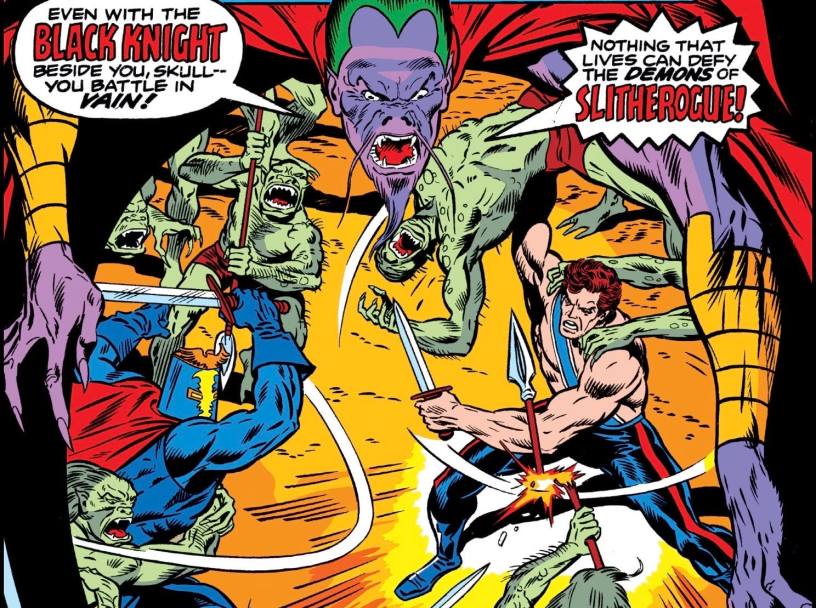
When I was a kid frequenting the comic book-selling corner stores in the small town where I grew up in South Africa, I had one of those moments that brands itself into your brain forever. I’d blown most of my allowance on snacks and treating my friends—because I was a generous idiot—and I was left with 25 cents (it might have been more, but certainly not enough for two comics back then). So I walked into the corner store, spun that beautiful spinner rack around a couple of times, and my hand stopped on something that would crack my seven or eight-year-old mind open like an egg.
Skull the Slayer No. 5, from 1976. The cover had this demon-looking sorcerer glaring down into what appeared to be a gigantic scrying pool or crystal ball, and inside it two warriors were battling demons or orcs or trolls or whatever the hell they were. One was obviously a knight—I’d learn later this was the Black Knight, but not Dane Whitman, a totally different Black Knight from Marvel’s usual continuity. The other was the star of the show: Skull, known as the Slayer. And that Marvel corner box? Oh man. Skull standing there with a spear, dressed in those weird futuristic pants and blue boots, belt strapped diagonally across his chest, with a giant Tyrannosaurus leering behind him. Classic.
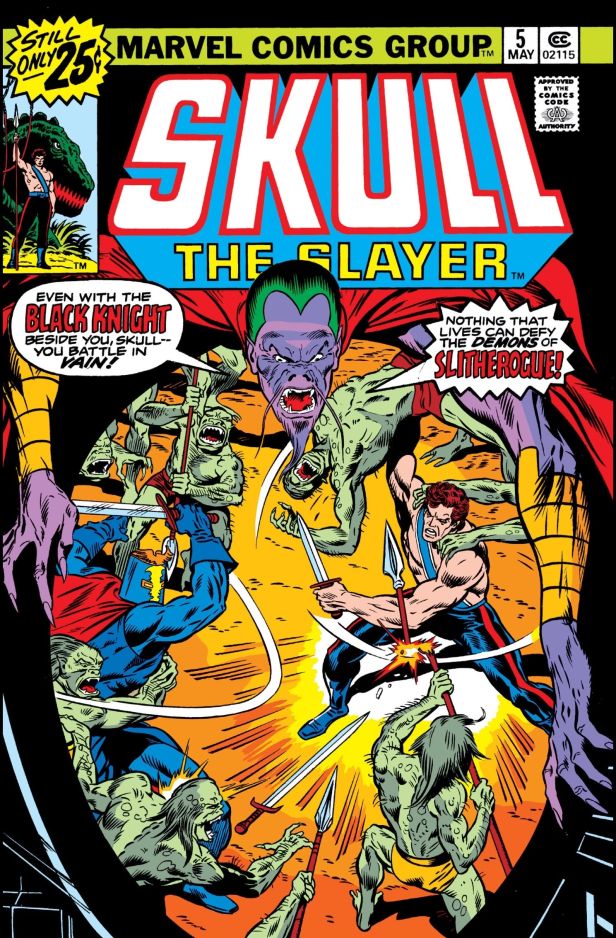
This comic was packed with action. Merlin, the ancient wizard of Camelot. Skull fighting alongside the Black Knight against demons and a villain named Slitherogue. His friends getting resurrected after being killed in previous issues I knew nothing about. It married Arthurian mythology with demons, robots, aliens, devils, and dinosaurs. What more could a kid ask for?
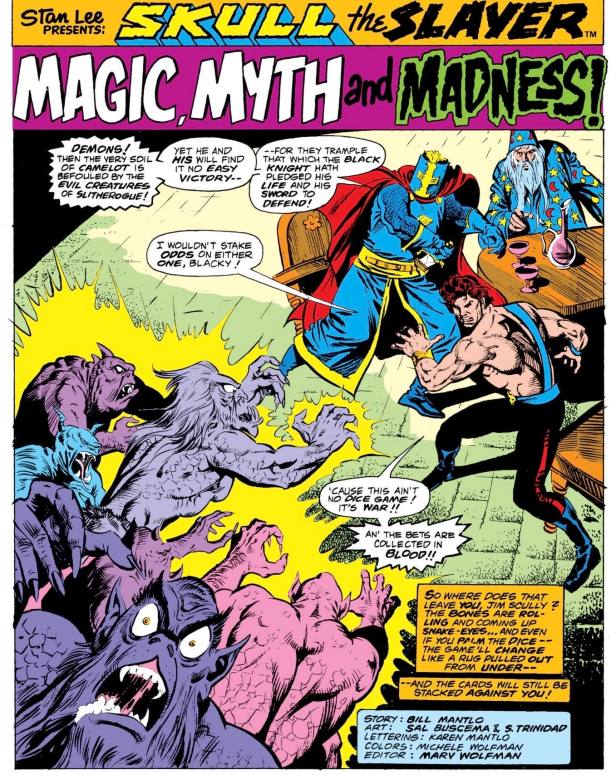
I must have read that issue a hundred times over the years until my original copy was literally in tatters. I eventually collected the entire series—not a huge undertaking since there weren’t many issues total, wrapping up in Marvel Two-In-One with the Thing. But that first issue? It played with my imagination like nothing else. It’s only recently that I bought myself a near-mint copy on eBay, because some memories are worth preserving.
And that’s my history with Skull the Slayer. Now let me tell you why this short-lived, eight-issue series from 1975-1976 is one of the most gloriously unhinged things Marvel ever published.
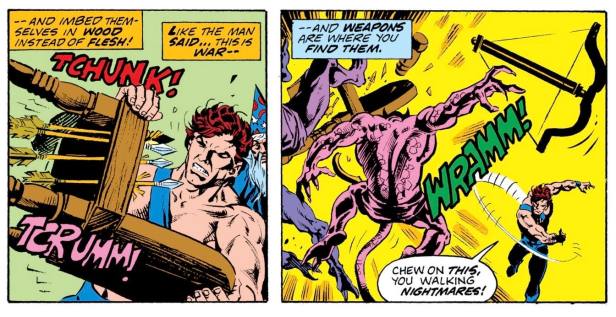
The Premise: Vietnam, Dinosaurs, and the Bermuda Triangle Walk Into a Bar
There’s something about Marvel Comics of the 1970s that just hits different. The House of Ideas was throwing everything at the wall—kung fu heroes, cosmic weirdos, horror icons, and hell, even a stuntman named Human Fly. Skull the Slayer, spearheaded by the legendary Marv Wolfman, is pure ’70s Marvel madness distilled into pulp perfection.
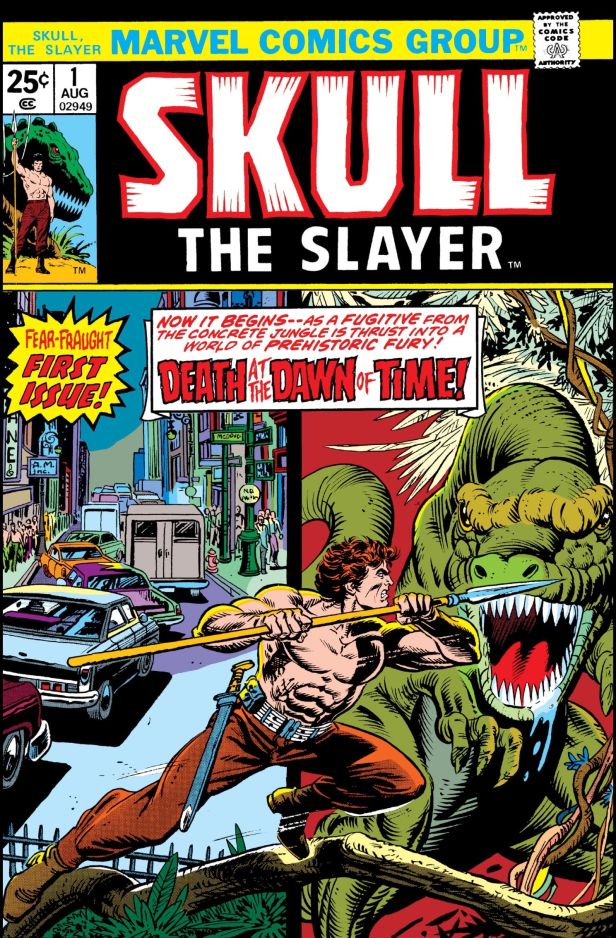
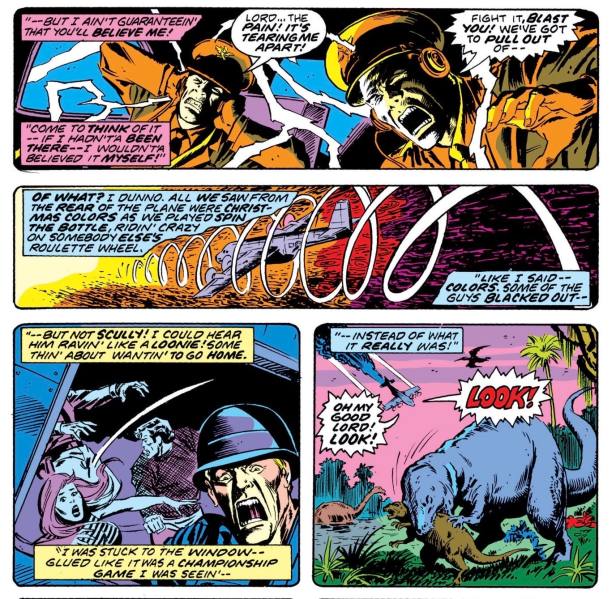
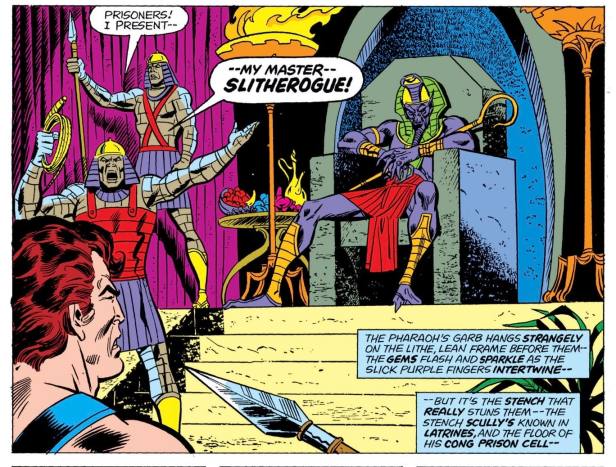
The setup? Jim Scully is a Vietnam vet and former POW whose life has gone completely to hell. His wife left him, his parents died of grief, and his junkie brother attacks him in a drug-fueled rage, only to end up dead. Blamed for the death, Scully’s on the run, a man with nothing left to lose. He’s captured in Bermuda and tossed on a plane with a ragtag group—Dr. Raymond Corey, Ann Farrow Reynolds, and Jeff Turner. Then bam, their plane goes down in the Bermuda Triangle. But instead of crashing into the ocean, they’re sucked through a time warp into a prehistoric world filled with dinosaurs, ancient aliens, and a mysterious tower that screws with time itself.
Oh, and Scully finds this weird belt on an alien corpse that gives him superhuman strength.
Yeah. It gets weird, guys.
Jim Scully: A Broken Hero Who Punches His Demons (And Dinosaurs)
What makes Skull the Slayer so damn cool is how Marv Wolfman takes this gonzo premise and grounds it in something raw and human. Jim Scully isn’t your typical Marvel hero. He’s not a wise-cracking Spider-Man or a noble Captain America. He’s a broken man, haunted by war and betrayal, carrying a chip on his shoulder the size of a brontosaurus.
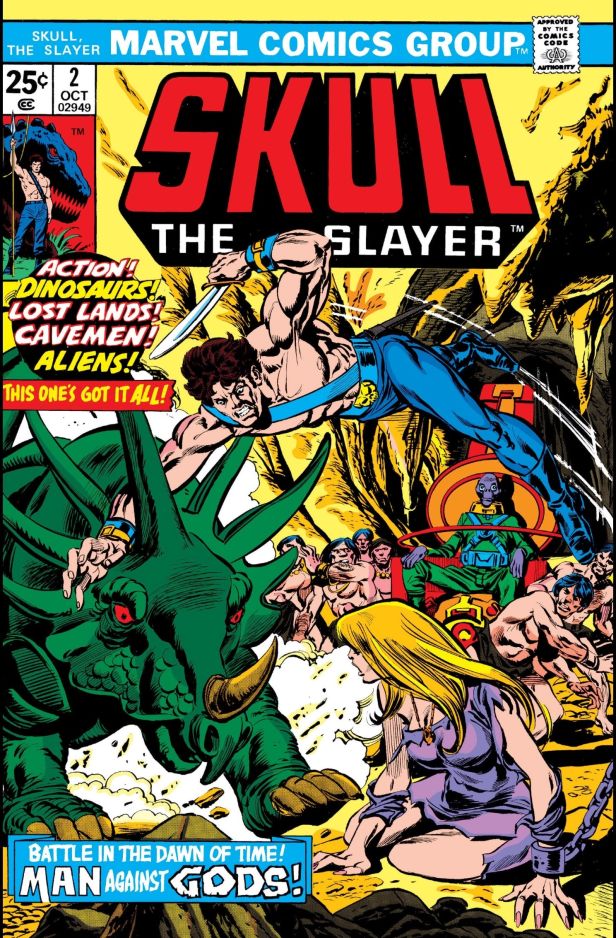
Wolfman doesn’t shy away from Scully’s pain—his Vietnam trauma, his fractured family, his simmering rage. There’s a grit to this character that feels like it was ripped from a ’70s war movie, and it gives the series an edge that sets it apart from the spandex-clad superheroics of the era. When Scully dons that glowing belt and starts punching dinosaurs, it’s not just badass—it’s cathartic. This is a guy channeling his demons into every fist he throws.
That’s what hooked me as a kid, even if I didn’t fully understand it at the time. Scully wasn’t invincible or perfect. He was angry and damaged and real. And he was trying to survive what they called a time tower, fighting through its levels like an insane video game, battling monstrosities that turned out to be automatons. It all tied into the Bermuda Triangle somehow. Truly heady stuff.
Marv Wolfman’s Pulp Playground: Kitchen-Sink Storytelling at Its Finest
Let’s talk about Wolfman’s writing, because holy hell, it’s a rollercoaster. The man was clearly having the time of his life, tossing every idea he could into the mix and somehow making it work. In one issue, Scully’s battling a brontosaurus with his super-powered belt glowing like a disco ball. In the next, he’s stumbling into that tower where each level exists in a different time period—ancient Egypt one minute, robot dinosaurs the next.
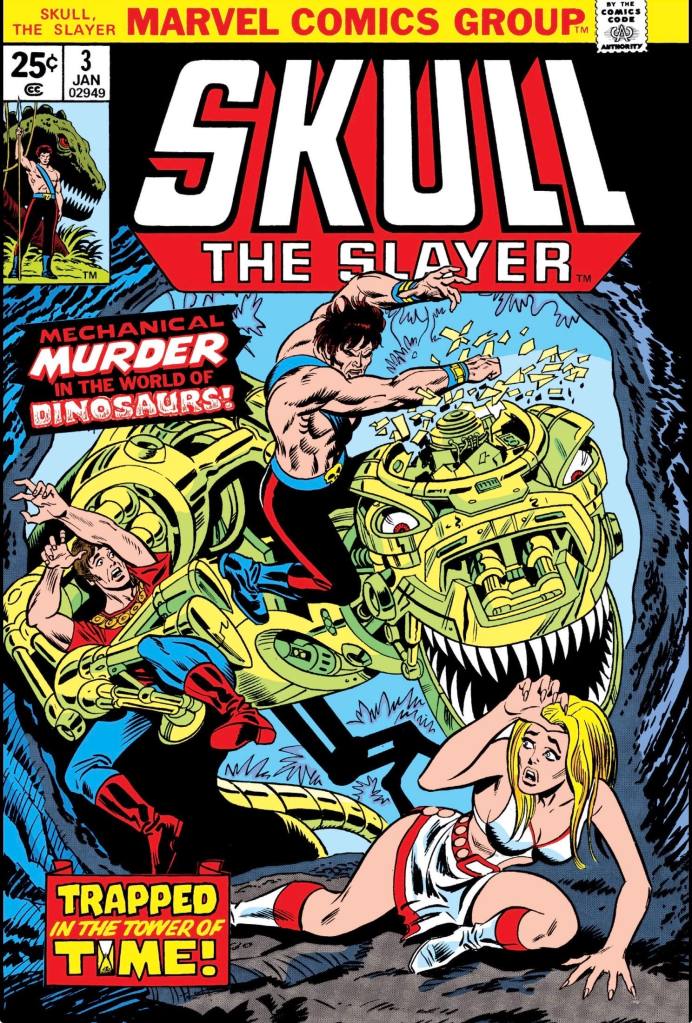
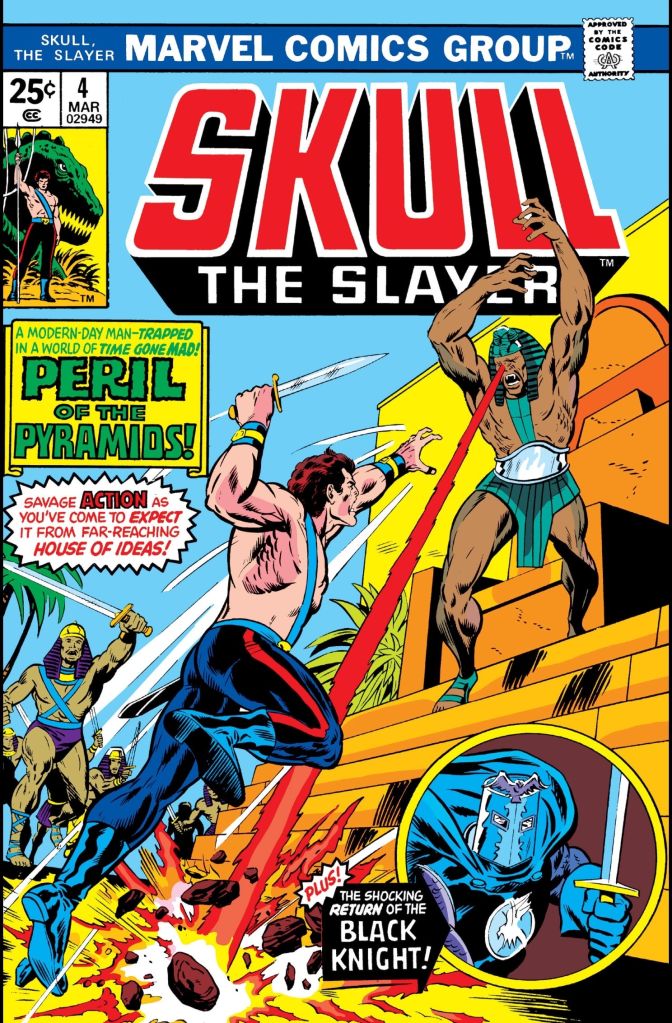
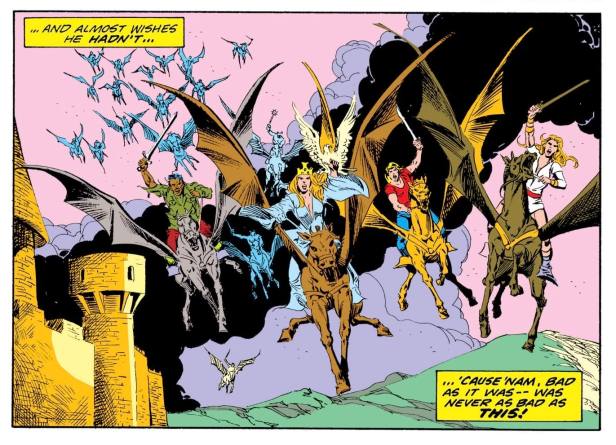
By issue #4 (written by Steve Englehart but still carrying Wolfman’s DNA), Scully’s in a pseudo-Camelot, teaming up with Merlin and the Black Knight to fight a time-traveling demon named Slitherogue. That’s the issue I first read, and now you understand why it melted my brain. This is unapologetic, kitchen-sink storytelling where anything could happen, and it usually did. Wolfman wasn’t just writing a comic; he was building a pulp playground.
The Supporting Cast: More Than Just Dinosaur Fodder
What’s wild is how Wolfman balances this insanity with actual character work. The supporting cast—Corey, Ann, and Jeff—aren’t just window dressing. They’re flawed, bickering, and constantly at odds with Scully’s brusque leadership. Dr. Corey, the scientist, is skeptical of Scully’s rough edges, and their feud adds real tension. Wolfman’s dialogue crackles with personality, giving each character a distinct voice.
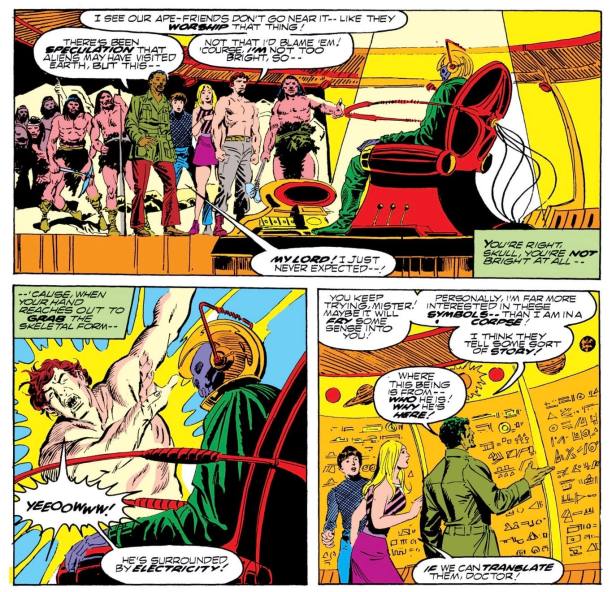
Ann’s got this fiery independence, Jeff’s a bit of a dreamer, and Corey’s the intellectual who’s always one step away from losing it. It’s like Lost meets Jurassic Park, but with a ’70s Marvel twist. Wolfman’s ability to make you care about these people, even as they’re dodging velociraptors or alien tech, is what elevates Skull the Slayer from a quirky footnote to a cult classic.
Why It Got Cancelled (And Why That’s a Damn Shame)
The series wasn’t perfect. Let’s be real—its short eight-issue run shows why it fizzled out. Wolfman only wrote the first three issues before handing the reins to Steve Englehart and later Bill Mantlo, and you can feel the shift. The story starts to lose focus, jumping from one crazy idea to the next without the tight cohesion Wolfman brought. By issue #8, with Skull caught up in an Incan city under attack by time-displaced warriors, it’s clear the series was struggling to find its footing.
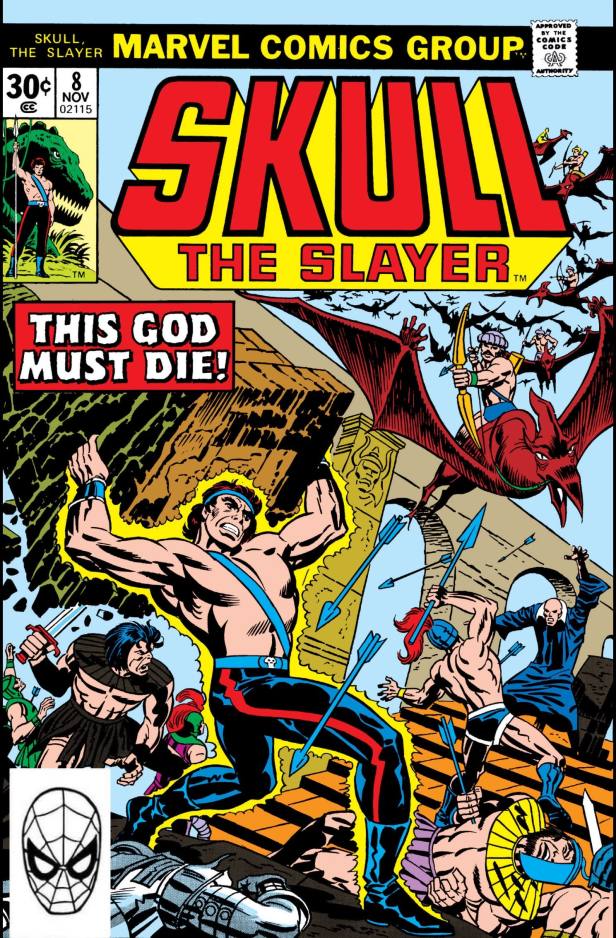
Marvel was chasing trends in the ’70s—dinosaurs were hot after The Land That Time Forgot, and the Bermuda Triangle was a pop-culture obsession—but Skull the Slayer never quite found its audience. It was too weird for the superhero crowd, too grounded for the pulp fans. Still, those eight issues are a testament to Wolfman’s fearless creativity.
The Marvel Two-In-One Finale: A Rushed but Fitting End
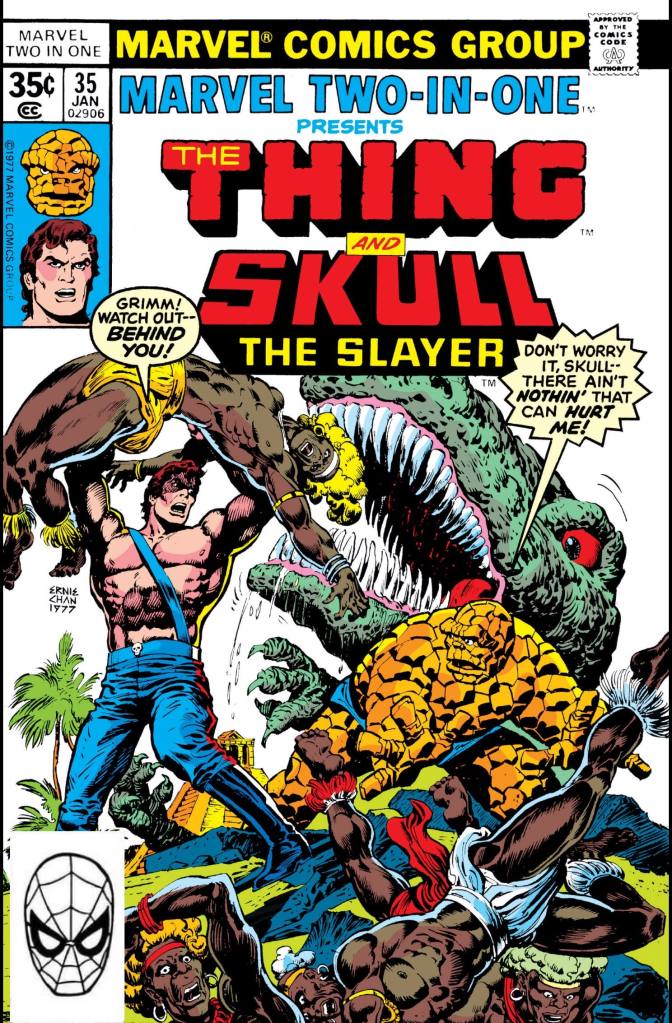
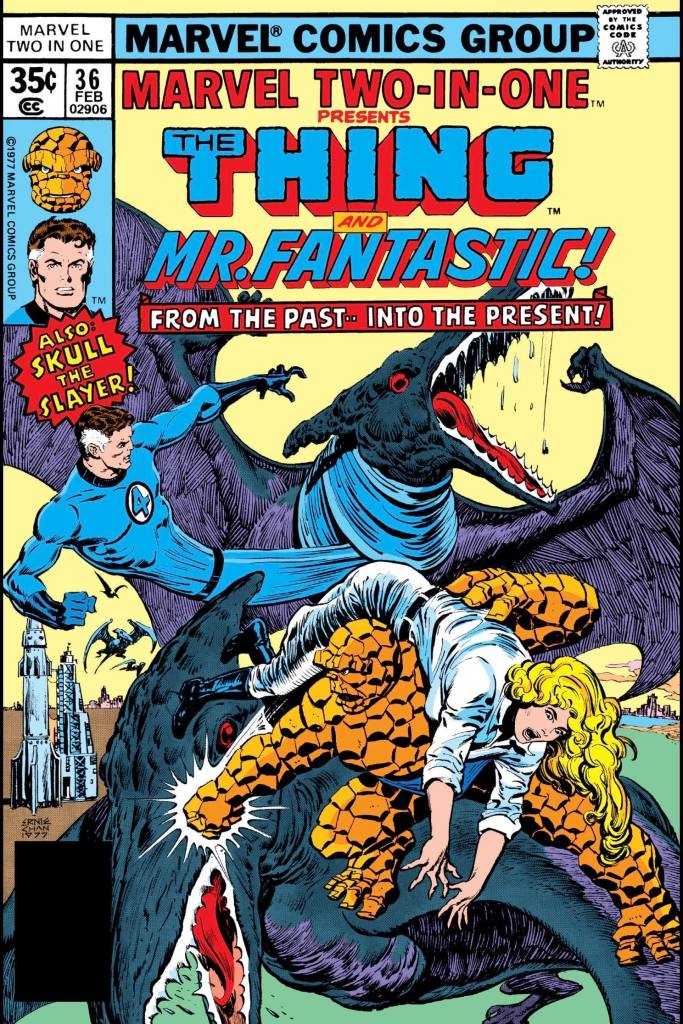
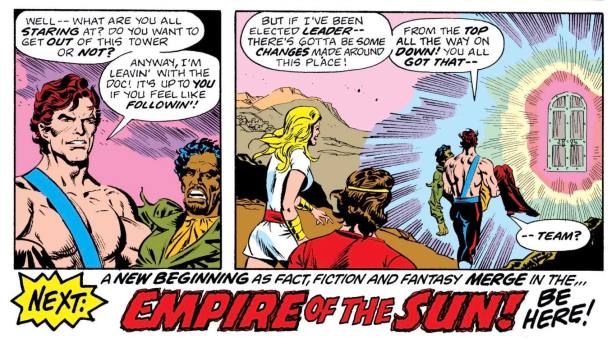
Wolfman came back to give Skull a proper send-off in Marvel Two-In-One #35-36, teaming him up with the Thing and Mr. Fantastic. It’s a bittersweet coda, with footnotes glossing over massive plot gaps and a rushed resolution that screams “we canceled this, but here’s an ending anyway.” Yet even that feels fitting for a series this chaotic. Skull and his crew escape the prehistoric world, but it’s not a clean victory. They’ve been through hell, and Wolfman makes sure you feel the weight of it. Ernie Chan’s dinosaurs in those issues are a visual treat, too—massive, toothy beasts that leap off the page.
What Could Have Been
Looking back, I can’t help but wonder what could’ve been if Wolfman had stayed on longer. He’s talked about his original pitch involving an entire Manhattan office building getting zapped to the dinosaur age, which sounds like something straight out of 2000 AD. That kind of ambition is what makes Skull the Slayer so special. Wolfman wasn’t afraid to swing for the fences, to take a broken-down vet and throw him into a world where time itself is the enemy.
It’s the same fearless energy he brought to Tomb of Dracula (where he co-created Blade) and later to The New Teen Titans and Crisis on Infinite Earths. The guy’s a legend for a reason—he knows how to make the absurd feel human.
Why Skull the Slayer Still Matters
Skull the Slayer is the kind of comic I keep coming back to, not just for the nostalgia but for the sheer audacity of it. It’s a time capsule of a weirder, wilder Marvel, where a Vietnam vet could punch dinosaurs and battle time-traveling demons without anyone batting an eye. Marv Wolfman’s writing is the glue that holds it all together—gritty, emotional, and completely nuts in the best way possible.=
If you’ve never read it, track down the trade paperback or dig through the back issue bins. It’s a trip worth taking. And if you’re like me, you’ll find yourself grinning at the glorious chaos of it all, wishing Marvel would take a chance on something this unapologetically weird again.
Here’s to Skull the Slayer, my unsung hero of the ’70s Marvel jungle—long may he slay.
Discover more from Into the Weird
Subscribe to get the latest posts sent to your email.

This sounds worth searching out
LikeLike
Yeah, it’s absolutely insane, but worth checking out.
LikeLike
I’ve never read Skull the Slayer, but I’ve heard of it. Thanks for sharing your memories of the series, and how it was a happy part of your childhood. Reminds me of how in 1985 when I was nine years old I discovered Rom Spaceknight from Marvel, a great, imaginative series that immediately hooked me, and how several years later I went back and put together a complete run of the book. I enjoy revisiting the entire 75 issue run of Rom every few years.
LikeLike
Thanks for reading, Ben. Yeah, I’ve probably got even fonder memories of ROM. Man, I loved that book back in the day.
LikeLiked by 1 person