
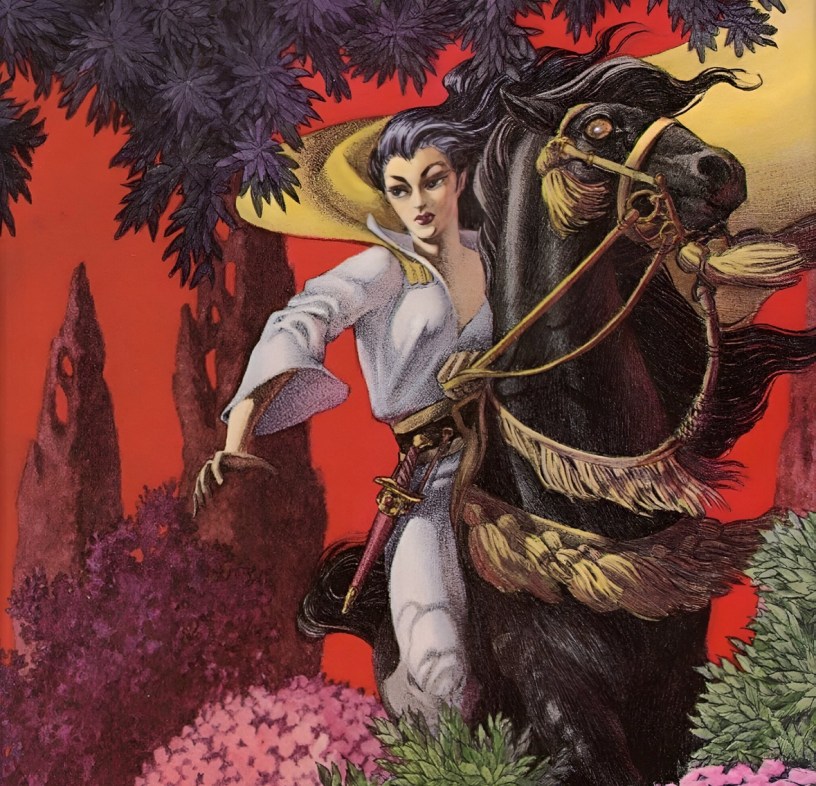
There are books you read once and forget. There are books you read twice and appreciate. And then, weirdos, there are books that seep into your marrow, books that become old friends you visit time and again when the world grows too… mundane.
For me, Jack Vance’s Dying Earth series fits firmly into this last category—four volumes of linguistic pyrotechnics and fantastical invention that I’ve returned to so many times I’ve lost count.
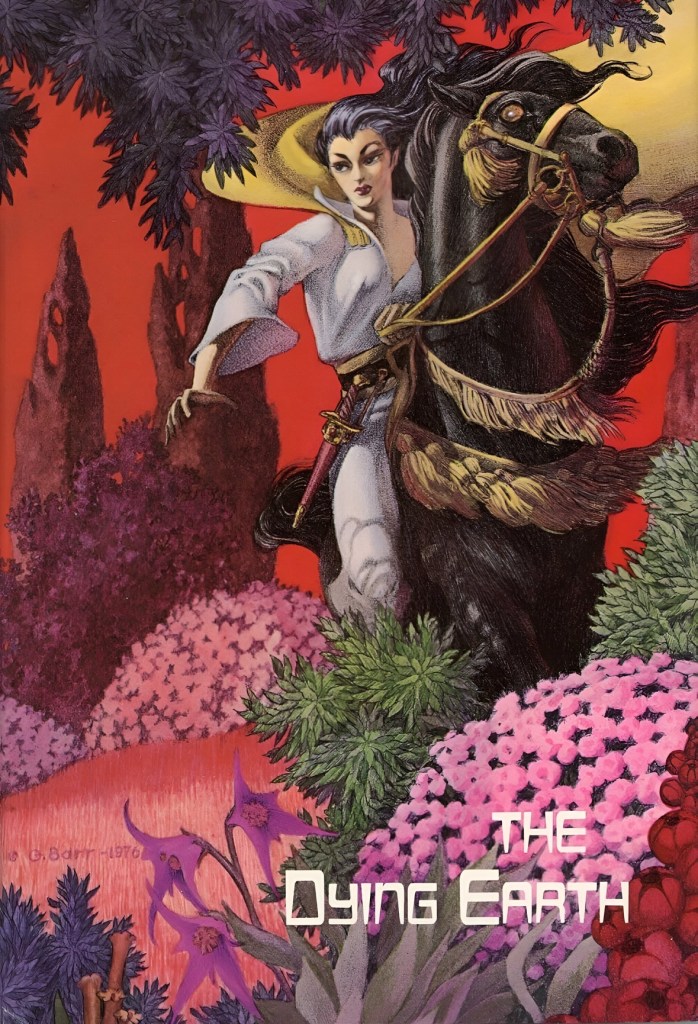
I vaguely remember the day I stumbled upon them—it was a weekday afternoon in 1992 in a cramped second-hand bookstore in Johannesburg, South Africa, where the scent of old paper hung in the air like incense. There they were, nestled between forgettable fantasy paperbacks: The Dying Earth, The Eyes of the Overworld, Cugel’s Saga, and Rhialto the Marvelous. Their spines were cracked, their covers faded, but something about them—perhaps the peculiar titles or the strange illustration of a bloated red sun—made me gather all four and carry them to the counter.
Little did I know I was about to embark on a love affair that would span decades.
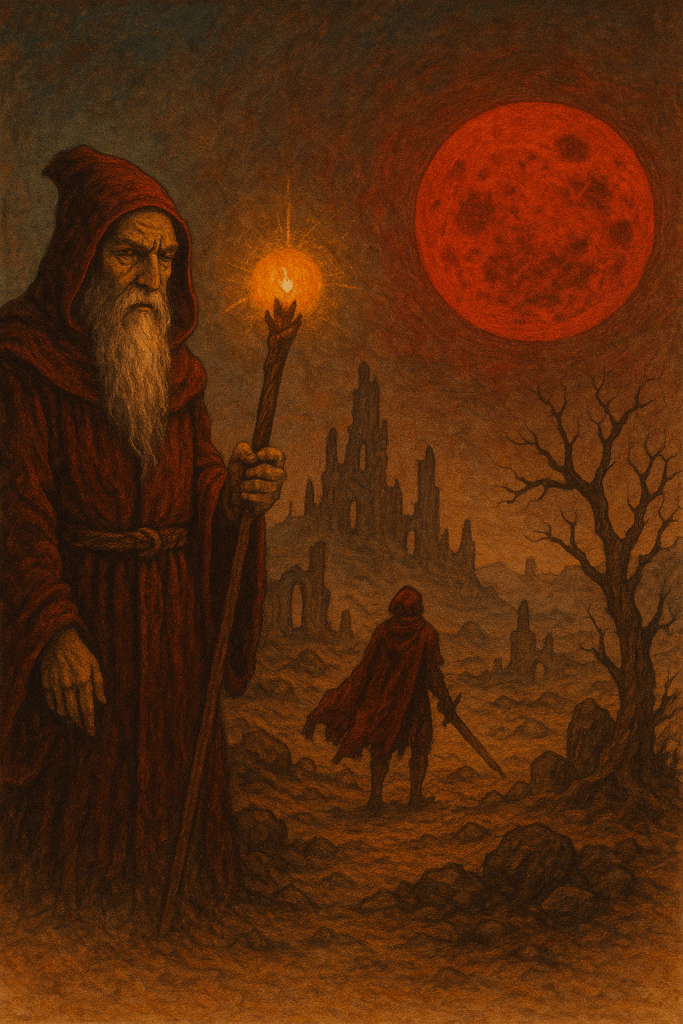
The Dying Earth (1950)
Vance’s first foray into his most famous creation is not a novel in the traditional sense but rather a collection of interconnected stories set in a remote future where science has become indistinguishable from magic, and where the sun—ancient, swollen, and ruddy—hangs precariously in the sky, threatening final extinction at any moment.
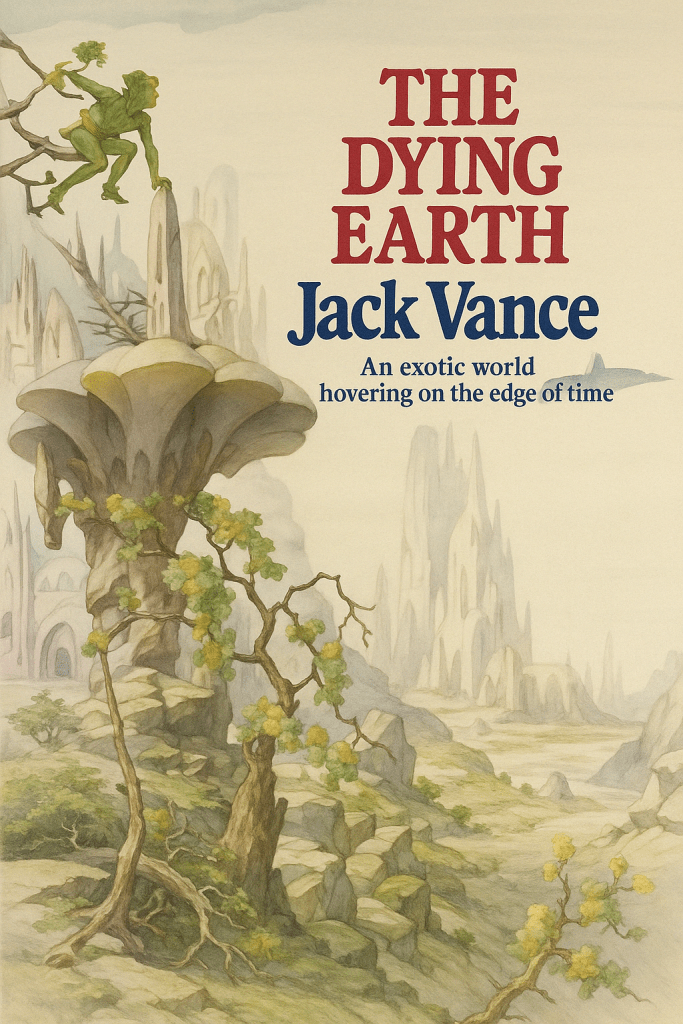
The stories introduce us to wizard-protagonists like Turjan of Miir, who grows new humans in vats; Mazirian the Magician, who hunts the beautiful Turjan-created T’sais through twisted forests; and the immortal Pandelume, who possesses knowledge beyond mortal comprehension. But perhaps most memorable is the tale of Liane the Wayfarer, a narcissistic adventurer who meets his match in the form of a mysterious woman with an unusual cottage. And finally, we meet Guyal of Sfere, a young man with an insatiable thirst for knowledge who journeys to the Museum of Man.
What sets this book apart isn’t just its setting—though the notion of a fantastical Earth in the planet’s final era was revolutionary—but Vance’s prose. His language is ornate yet precise, archaic yet accessible, with dialogue so stylized it borders on parody yet somehow works perfectly. Characters speak in elaborate circumlocutions, deploying vocabulary that would make lexicographers swoon.
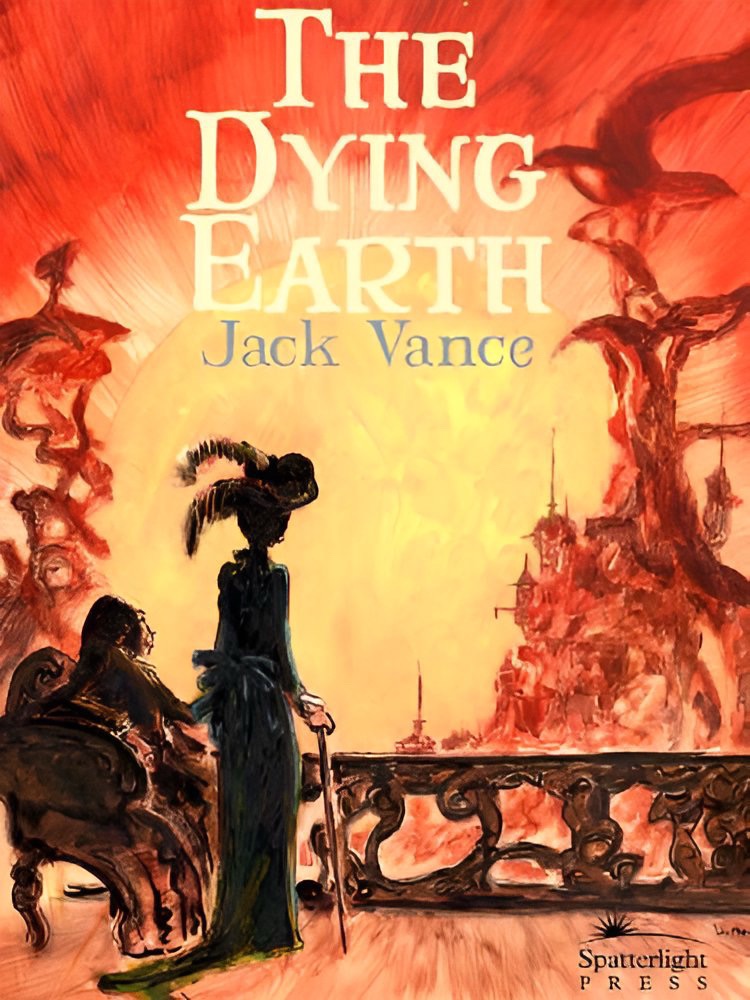
Upon first reading, I was simultaneously bewildered and enchanted. Here was fantasy unlike anything I’d encountered—not medieval European pastiche, not sword-and-sorcery muscle fantasy, but something wholly original. The world felt ancient, decadent, amoral, and utterly fascinating. I’ve returned to this volume perhaps more than any other, savoring Vance’s linguistic flourishes and the fatalistic charm of a world where even impending apocalypse is treated with casual indifference.
The Eyes of the Overworld (1966)
Sixteen years after The Dying Earth, Vance returned to his creation with a more cohesive novel centered on what would become his most enduring character: Cugel the Clever. Self-styled as clever, but in reality merely cunning and perpetually undone by his own arrogance, Cugel is a thief, a liar, a cheat, and somehow, despite all this, utterly compelling.
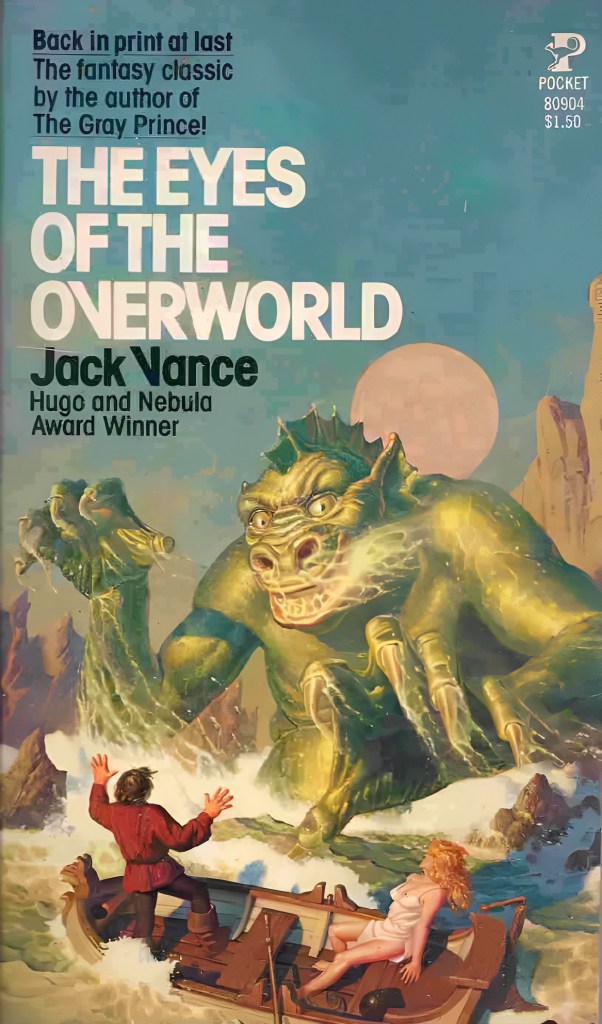
The novel begins with Cugel attempting to burgle the manse of Iucounu the Laughing Magician. Caught in the act, he is tasked with retrieving magical violet lenses called “Eyes of the Overworld” that allow the wearer to perceive the Overworld—a realm of idealized beauty superimposed on the decaying Earth. As punishment and insurance, Iucounu attaches a vicious alien creature called Firx to Cugel’s liver, which causes excruciating pain when Cugel deviates from his mission.
What follows is a picaresque journey as Cugel is magically transported to the distant northern region of Cutz, then must make his way back to exact revenge. Along the way, he encounters bizarre societies, each with their own peculiar customs and beliefs.
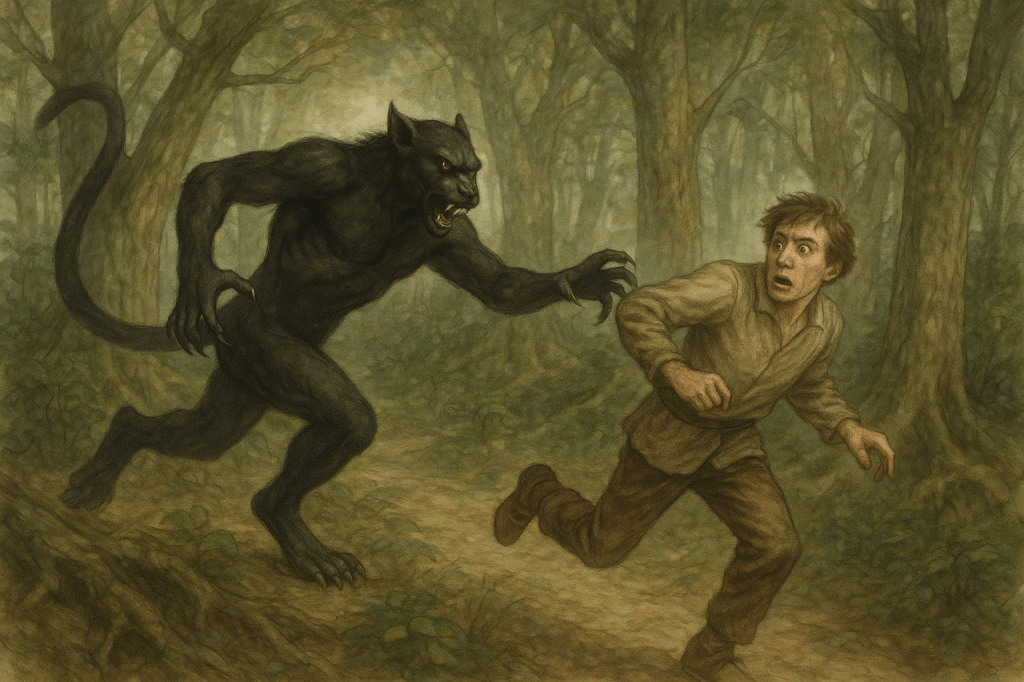
Throughout these episodic adventures, Cugel schemes, cheats, and betrays his way through every encounter, yet finds himself repeatedly outmaneuvered by fate and his own shortcomings. His self-interest knows no bounds—he abandons companions to certain death, swindles innocents, and even sells a young woman into slavery to secure his own passage home. Yet Vance’s masterful characterization makes this despicable protagonist fascinating rather than repulsive.
The novel showcases Vance’s gift for creating self-contained episodes that function almost as short stories while still advancing the overall narrative. Each chapter presents Cugel with a new challenge, a new society with customs to exploit. The structure allows Vance to exercise his satirical wit, using these fantastical cultures to comment obliquely on human foibles and social absurdities.
When Cugel finally returns to Almery and confronts Iucounu, the confrontation doesn’t go as planned. In a fitting conclusion to a tale of perpetual misfortune, Cugel finds himself once again cast to the far reaches of the world, setting up the events of the sequel, Cugel’s Saga.
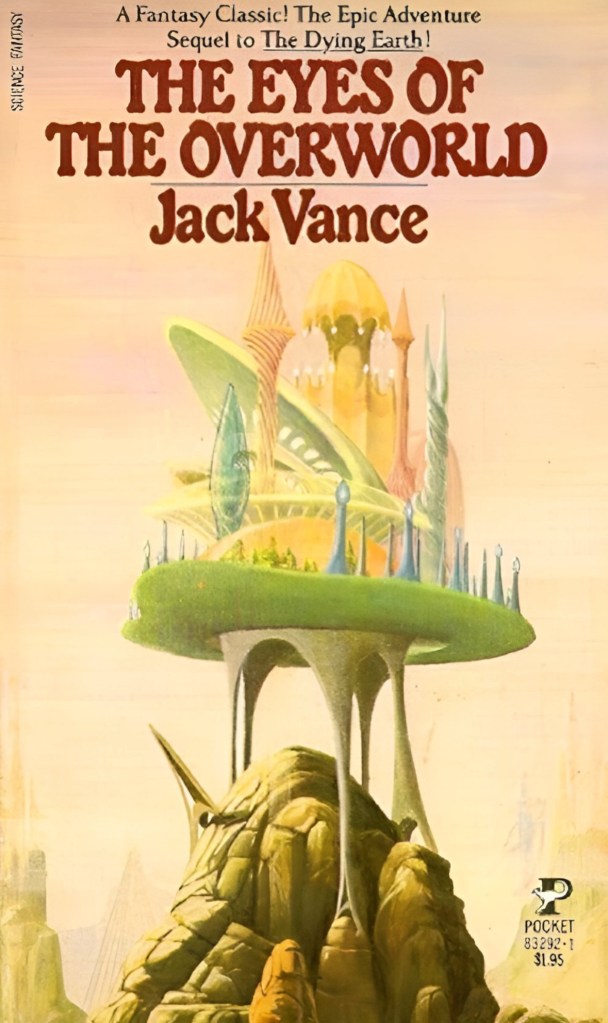
The novel is rife with Vance’s mastery of episodic storytelling—each chapter presents Cugel with a new challenge, a new society with peculiar customs to exploit. The Eyes of the Overworld refines the distinctive dialogue of the first book, creating exchanges that are simultaneously hilarious and profound:
“I do not look through magic cusps,” said Cugel. “True.” The elder shrugged. “It is a matter I prefer to overlook. I dimly recall that I inhabit a sty and devour the coarsest of food — but the subjective reality is that I inhabit a glorious palace and dine on splendid viands among the princes and princesses who are my peers. It is explained thus: the demon Underherd looked from the sub-world to this one; we look from this to the Overworld, which is the quintessence of human hope, visionary longing, and beatific dream. We who inhabit this world — how can we think of ourselves as other than splendid lords? This is how we are.”
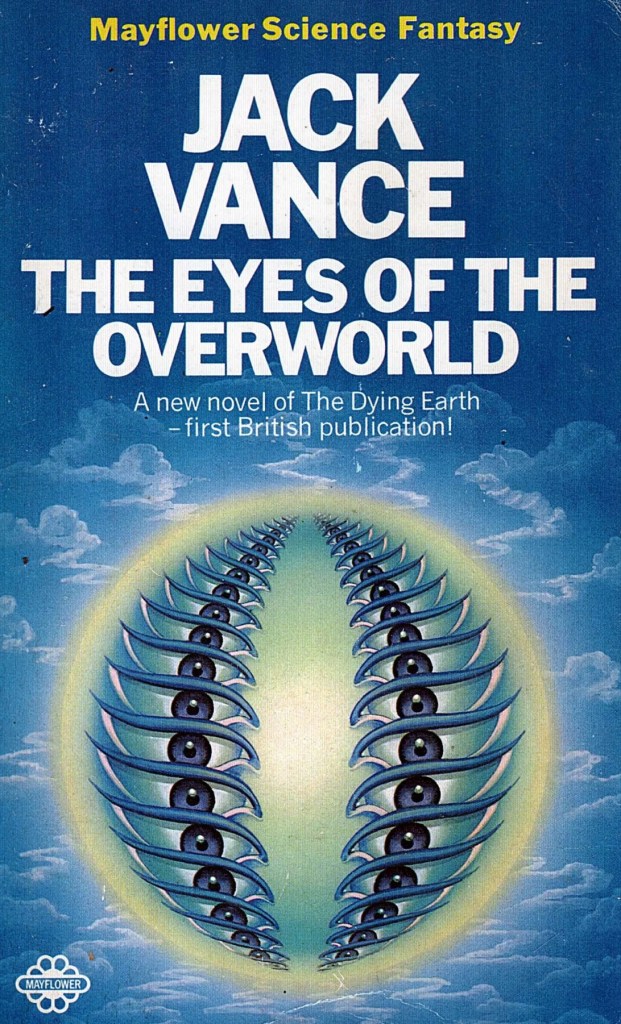
I remember reading this volume in a single sitting, utterly captivated by Cugel’s misadventures and the novel’s dark humor. Each time I revisit it, I find new layers of wit and social commentary beneath the fantastical veneer. It remains my favorite of the four, a perfect crystallization of Vance’s uniquely sardonic worldview.
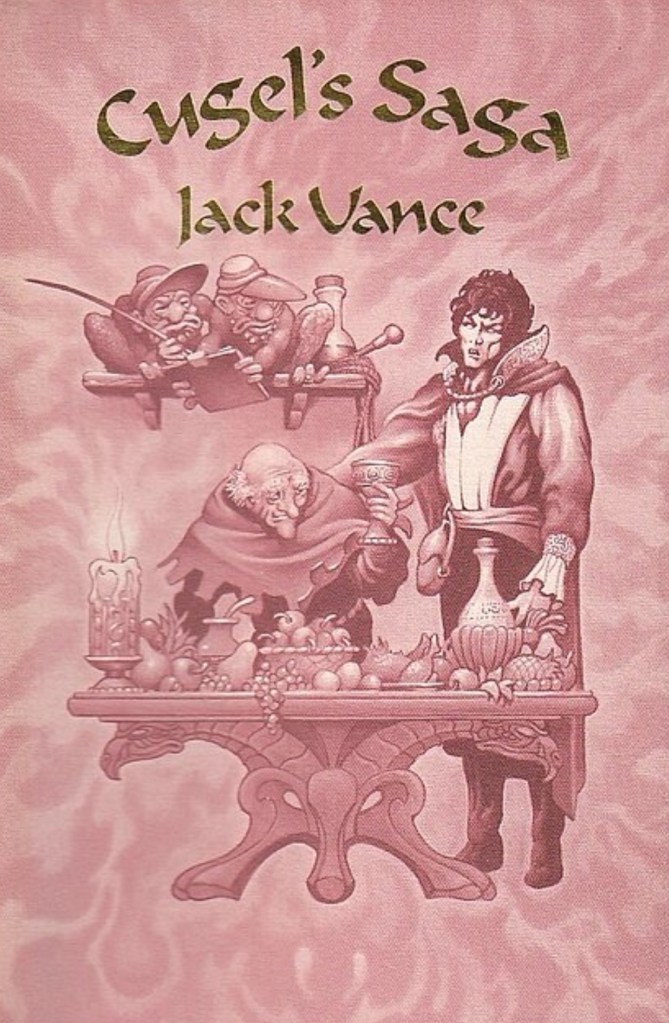
Cugel’s Saga (1983)
Almost two decades passed before Vance continued Cugel’s story. Beginning precisely where The Eyes of the Overworld left off, with Cugel once again displaced by the magic of Iucounu and dispatched to a distant shore, Cugel’s Saga charts another meandering journey home.
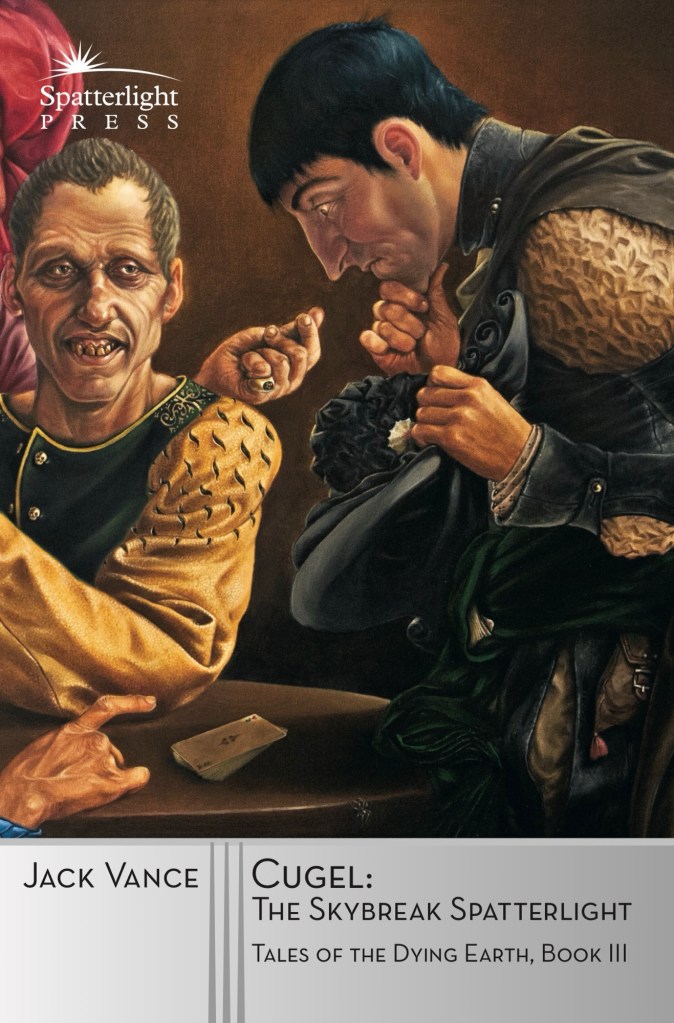
Cugel’s journey begins at Flutic, the manse of Master Twango, where he gains employment as a supposed “supervisor” but is actually treated as a menial worker. The primary business at Flutic involves diving into a muddy pit to recover valuable scales from Sadlark, an entity that crashed to Earth from the higher realms long ago. True to form, Cugel schemes to avoid the actual labor while attempting to steal as many valuable scales as possible. Though his plans initially succeed, he is double-crossed by fellow workers Yelleg and Malser, leaving him with only a single scale—the rare and powerful Skybreak Spatterlight.
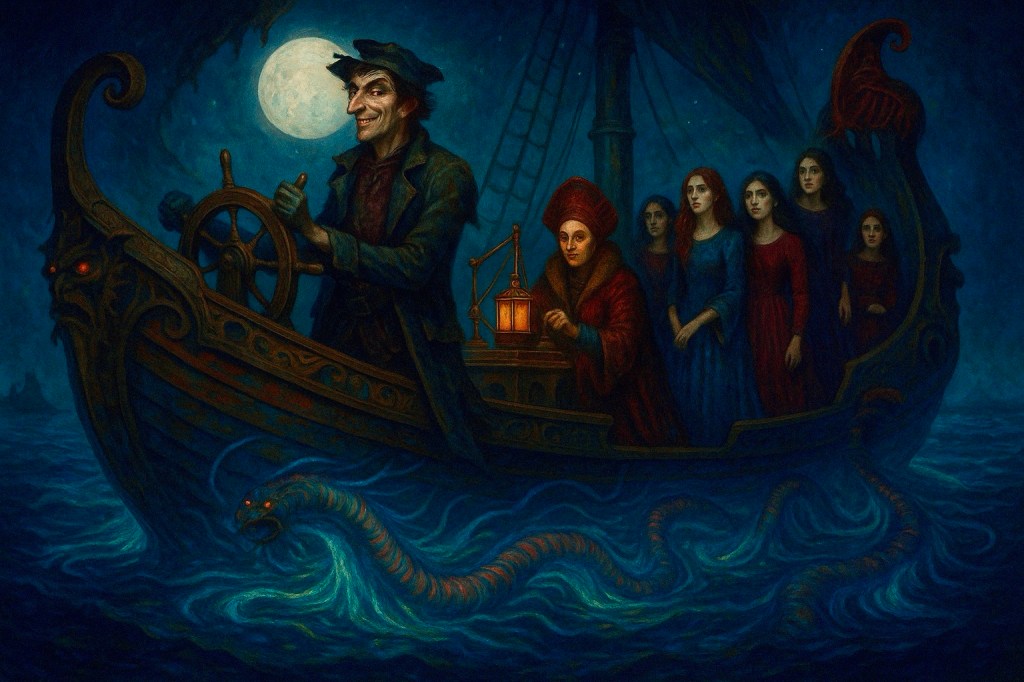
At the nearby port of Saskervoy, Cugel takes employment as a “worminger” aboard the ship Galante, a position that involves the unpleasant task of maintaining the giant marine worms that propel the vessel. When he learns he’s to be replaced and stranded, Cugel hijacks the ship, kidnapping the owner’s wife and three daughters. This leads to one of the novel’s most amusing sequences, as Madame Soldinck, whom Cugel naively entrusts with night navigation duties, secretly turns the ship in the opposite direction each night while Cugel is distracted by her daughters.
As Cugel continues his journey, he encounters a remarkable variety of strange societies. In the village of Tustvold, he meets Nisbet, a quarryman who builds stone columns upon which the idle husbands of industrious village women sun themselves. The height of these columns serves as a status symbol, leading the women to compete by paying for taller columns. Cugel devises a scheme to secretly remove the bottom segments of each column to resell them to the women, a ruse that is eventually discovered, forcing him to flee.
Later adventures include a narrow escape from the magician Faucelme; stealing an airship called the Avventura using Nisbet’s gravity-repellent boot dressing; joining a caravan across the desert; and serving as a night watchman for a caravan transporting seventeen supposed virgins to the temple city of Lumarth. In Lumarth, when it’s discovered that only two of the seventeen are actually virgins, Cugel is sent to the temple of the demon Phampoun as punishment. Through clever manipulation of Pulsifer, a homunculus growing on Phampoun’s tongue, Cugel escapes and inadvertently causes the light-sensitive demon to run amok, destroying the city.
Throughout his adventures, Cugel remains gloriously, spectacularly self-serving. He abandons companions to certain death, swindles innocents, and betrays benefactors—yet Vance’s genius makes him endlessly entertaining. There’s something almost refreshing about Cugel’s complete lack of moral growth; unlike most fantasy protagonists, he learns nothing, changes nothing about himself, and remains committed to his personal advantage above all else.
Cugel’s Saga showcases Vance’s baroque prose at its finest:
“I do not care to listen; obloquy injures my self-esteem and I am skeptical of praise.”
I distinctly remember my third reading of this book occurring during a particularly difficult period in my life. The absurdity of Cugel’s travails, the elaborate verbal sparring, and the wry fatalism of Vance’s world provided a peculiar comfort—a reminder that adversity can be faced with sardonic humor and stubborn perseverance.
Rhialto the Marvelous (1984)
The final Dying Earth book is the most difficult, the most uneven, and yet in some ways the most ambitious. Structured as three novellas, it shifts focus away from roguish adventurers to the powerful magicians who represent the pinnacle of the Dying Earth’s society.
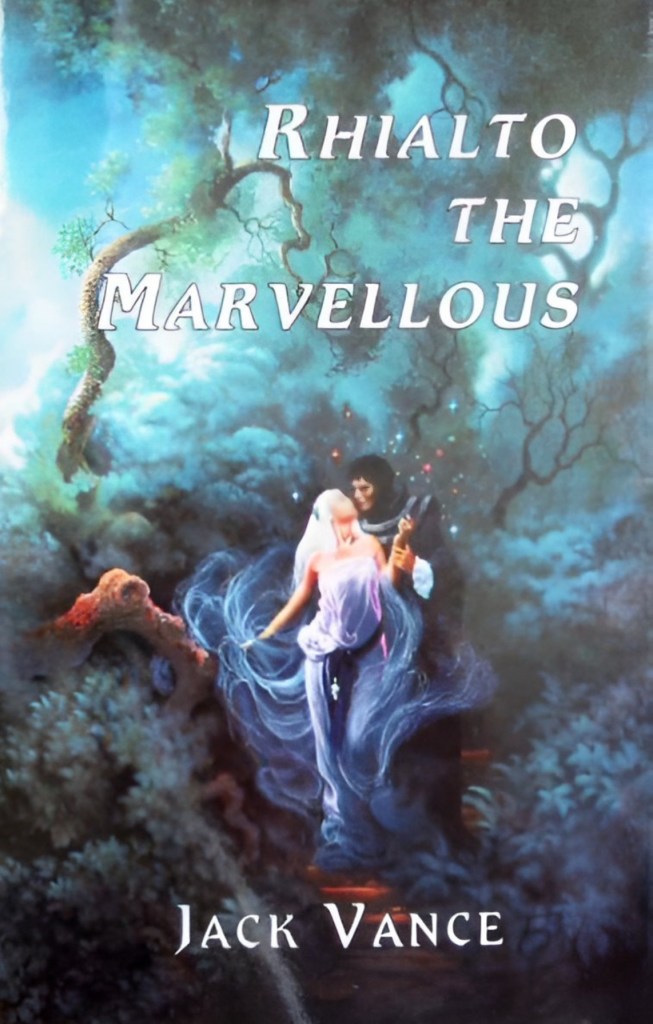
Set in the 21st Aeon, the book follows Rhialto the Marvellous and his interactions with a conclave of two dozen magicians of Ascolais and Almery who have formed a loosely knit association governed by the “Blue Principles.”
Rhialto himself is a fascinating character—a wealthy and powerful wizard who rules an opulent estate called Falu. He earned the title “The Marvellous” due to his reputation as a dandy who wears ostentatious clothing and is popular with women. Though generally agreeable and carefree, his fellow wizards regard him as somewhat supercilious and aloof.
Unlike the amoral Cugel, Rhialto displays moments of courtesy, patience, and even kindness beneath his vain exterior.
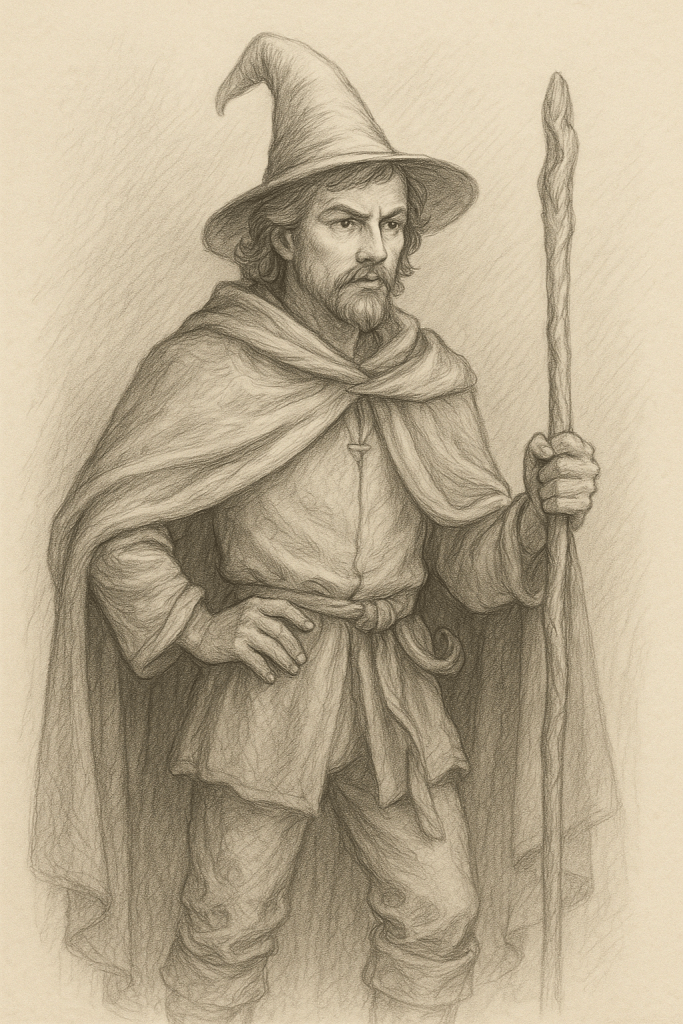
The book consists of three interconnected stories:
In “The Murthe,” Rhialto and his closest friend among the wizards, Ildefonse (the elected “Preceptor” of their compact), face a powerful female witch from the past who has traveled to their time. The Murthe attempts to transform the all-male magicians into women through a process called “ensqualmation” so they will become female witches under her control. When most of the magicians fall victim to her spell (an early symptom being “the habit of darting the tongue rapidly in and out of the mouth”), only Rhialto and Ildefonse remain to stop her nefarious plot.
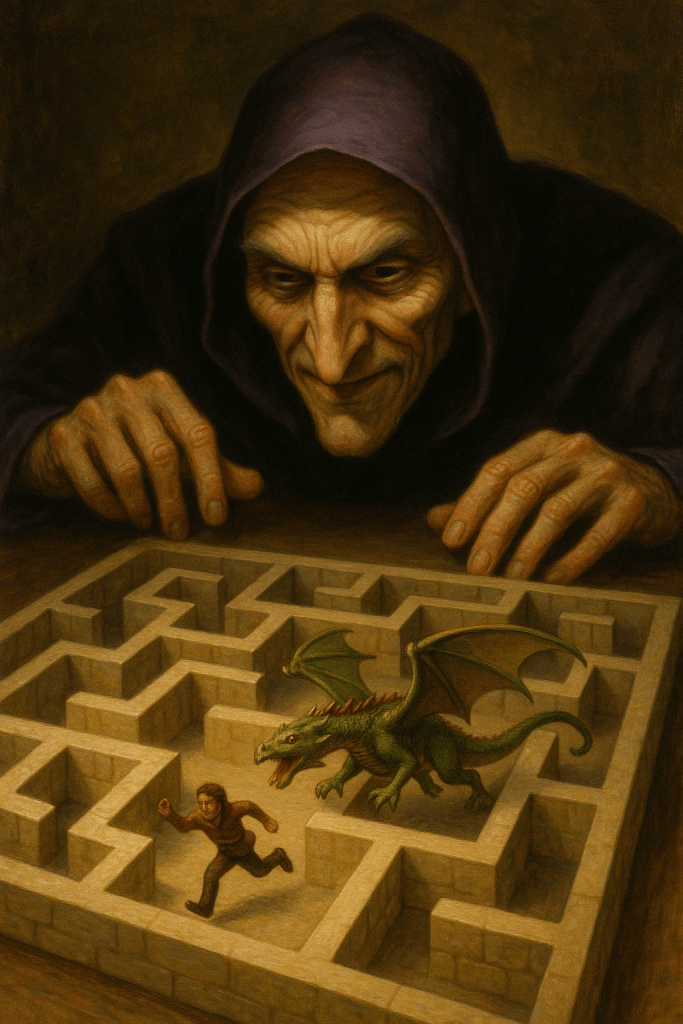
“Fader’s Waft,” the longest piece in the collection, details how Rhialto becomes the victim of political machinations within the magicians’ conclave. His rival Hache-Moncour, motivated by envy of Rhialto’s elegant style, orchestrates a scheme that results in Rhialto being censured by his fellow wizards and stripped of his magical possessions, including his precious IOUN stones. Accused of violating the Blue Principles, Rhialto must travel through time to recover the original Perciplex (which contains the true version of their laws) and prove his innocence while contending with several temporally-based plots and counter-plots.
In “Morreion,” the final tale, Rhialto joins his fellow wizards on an expedition to the literal edge of the universe—an actual wall, as it turns out—to seek their erstwhile colleague Morreion, who was sent away in the distant past. Though none of the magicians genuinely care about Morreion’s fate, they suspect he may know the location of the mysterious IOUN stones, which they all covet.
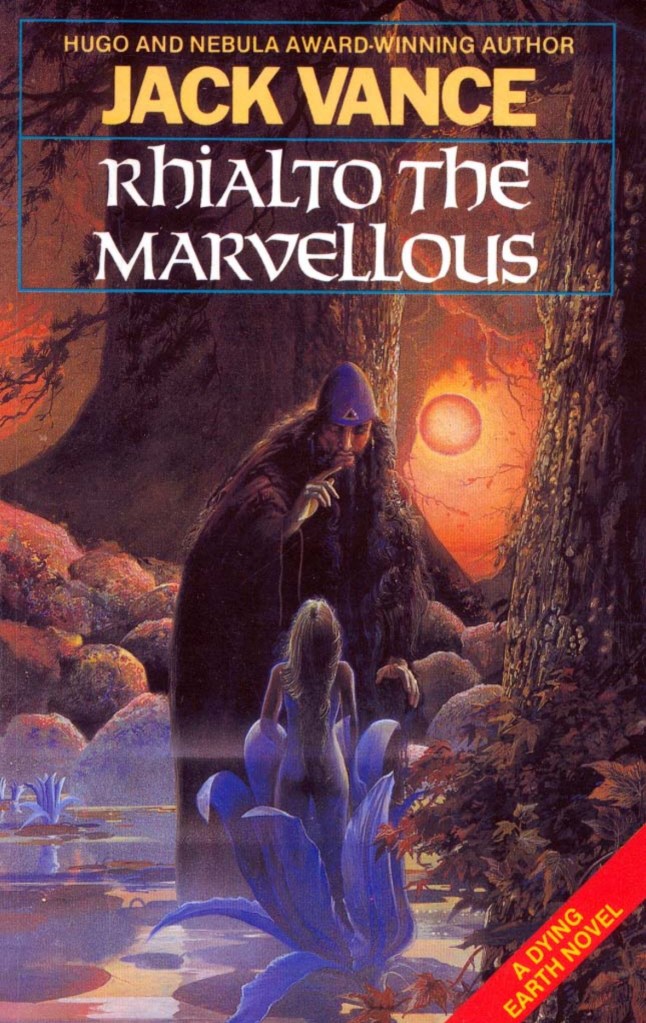
I confess this is the volume I’ve returned to least often—perhaps a dozen times versus scores of readings for the others. The tales are more remote, the characters less immediately engaging than Cugel. Yet even as the “weakest” of the quartet, Rhialto the Marvelous contains moments of such brilliance that I find myself periodically drawn back, discovering new appreciation for its complexity and ambition with each reading.
The Lingering Enchantment
What is it about these four slender volumes that has captured my imagination for thirty years? Why have I returned to them when countless other books have been read once and forgotten?
Part of their appeal lies in Vance’s unique prose—flowery yet precise, mannered yet muscular. His characters speak in a stylized fashion that should feel artificial but instead creates a sense of otherworldliness perfect for the setting. The dialogue is simultaneously absurd and profound, often hiding sharp observations about human nature behind elaborate verbiage.
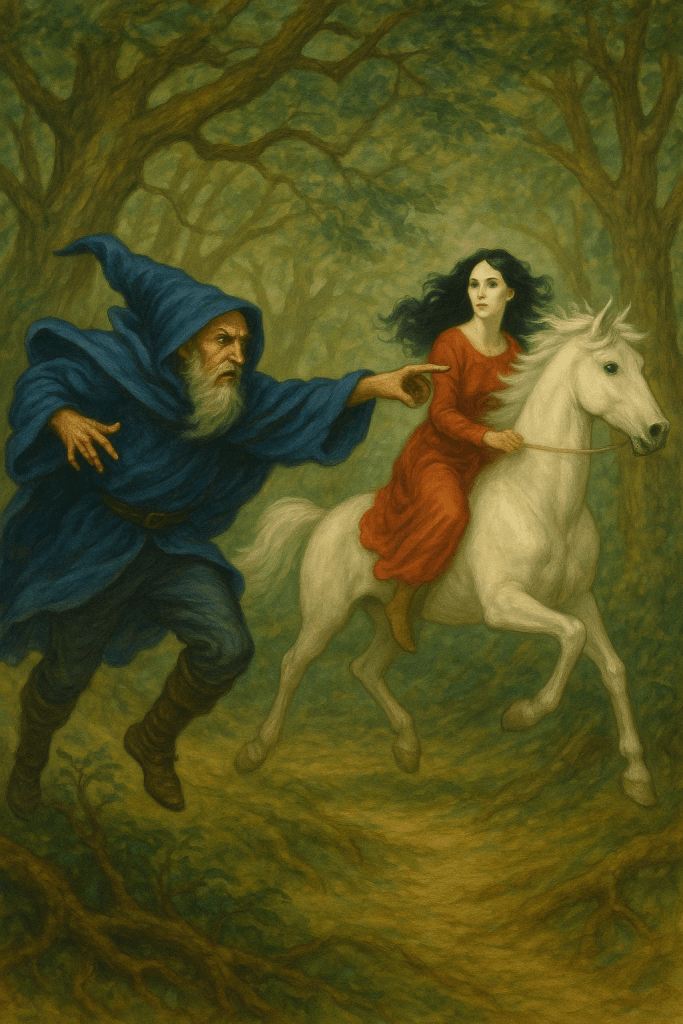
The setting itself is endlessly fascinating—a world so ancient that countless civilizations have risen and fallen, leaving their remnants scattered across a landscape grown strange and perilous. Science and magic have merged; distinctions between natural and supernatural have eroded. The impending death of the sun creates an atmosphere of elegant fatalism that permeates every story.
But perhaps most compelling is Vance’s moral ambiguity. His characters are rarely heroic in any conventional sense. They are selfish, vain, often cruel—yet portrayed with such wit and complexity that they remain captivating. There’s something liberating about stories that make no pretense to moral instruction, that present human foibles with amused detachment rather than judgment.
Every time I revisit these books, I discover something new—a turn of phrase I’d overlooked, a philosophical observation hidden in florid dialogue, a satirical jab at human institutions. They are inexhaustible texts, endlessly rereadable precisely because they operate on so many levels simultaneously.

If you’ve never visited the Dying Earth, I envy you the discovery. If you’re already a fellow traveler beneath its ancient crimson sun, you understand why some literary landscapes become not just stories we’ve read, but places we’ve lived.
Discover more from Into the Weird
Subscribe to get the latest posts sent to your email.

Some of my favourite novels of all time!
LikeLiked by 1 person
Like me, you’ve got excellent taste, Jeroen ;)
LikeLiked by 1 person