
The Day I Discovered Comic Book Failure Could Be Art
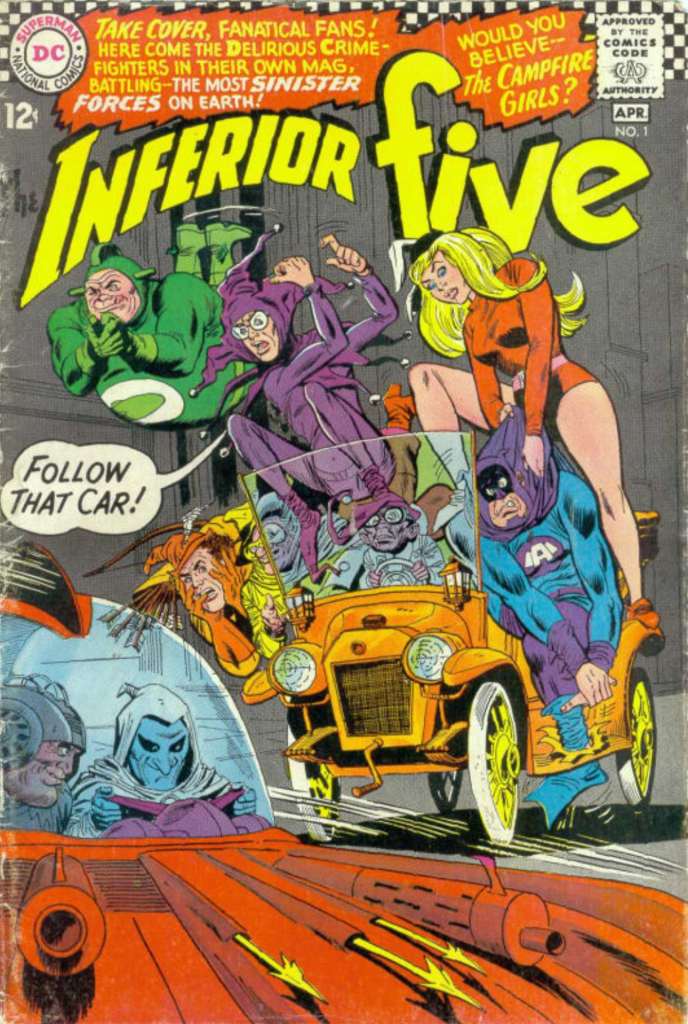
I still remember stumbling across a beat-up copy of Showcase #62 in a dusty longbox at my local comic shop. The cover promised “The Inferior Five” – heroes who were, and I quote, “not quite ready for prime time.” My first thought? This has to be terrible. My second thought, after flipping through those pages? This is genius disguised as garbage.
Back in 1966, while Marvel was riding high on Stan Lee’s bombastic soap opera heroics and DC was desperately trying to make their squeaky-clean icons feel modern, E. Nelson Bridwell and Joe Orlando snuck something subversive onto the shelves. They created superheroes designed to fail – and in doing so, they accidentally invented a whole new way of looking at the genre.

Meeting the Magnificent Misfits
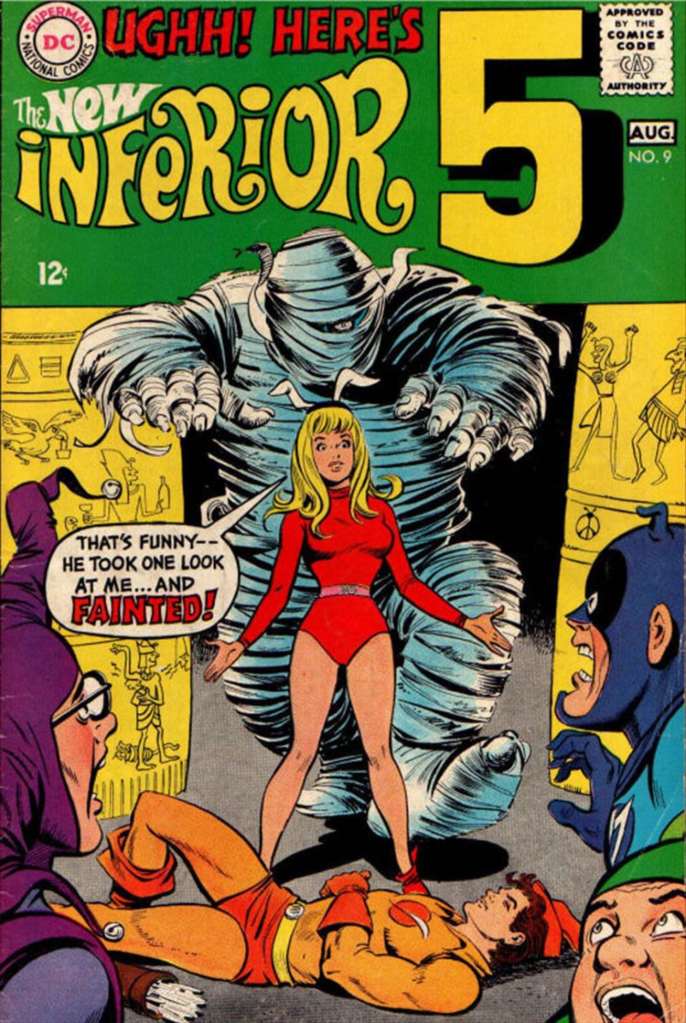
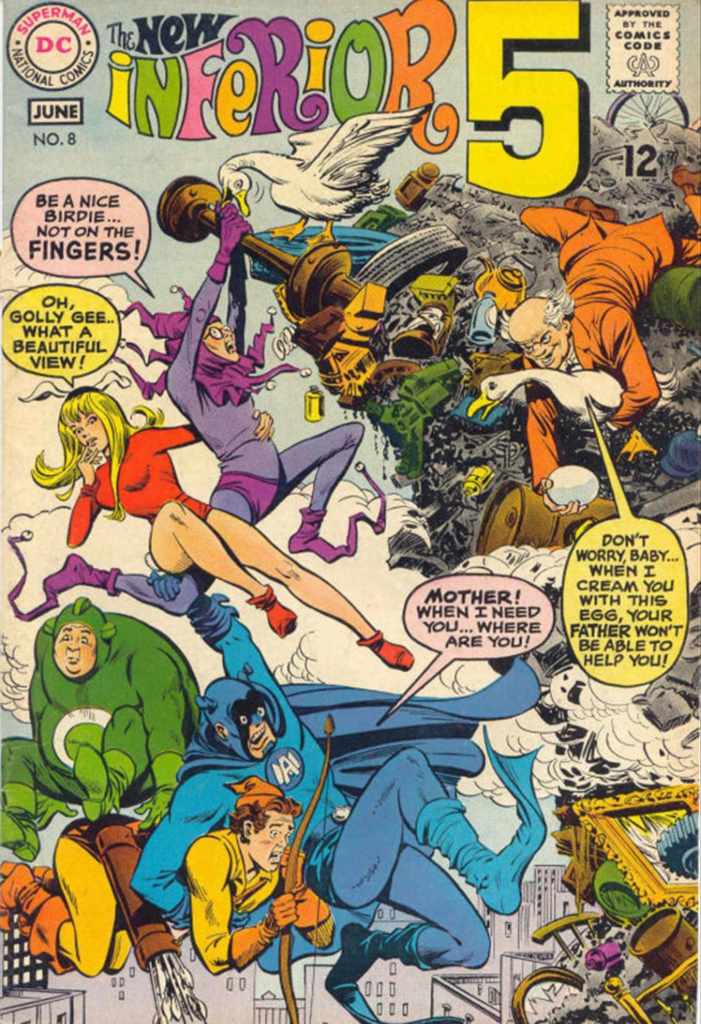
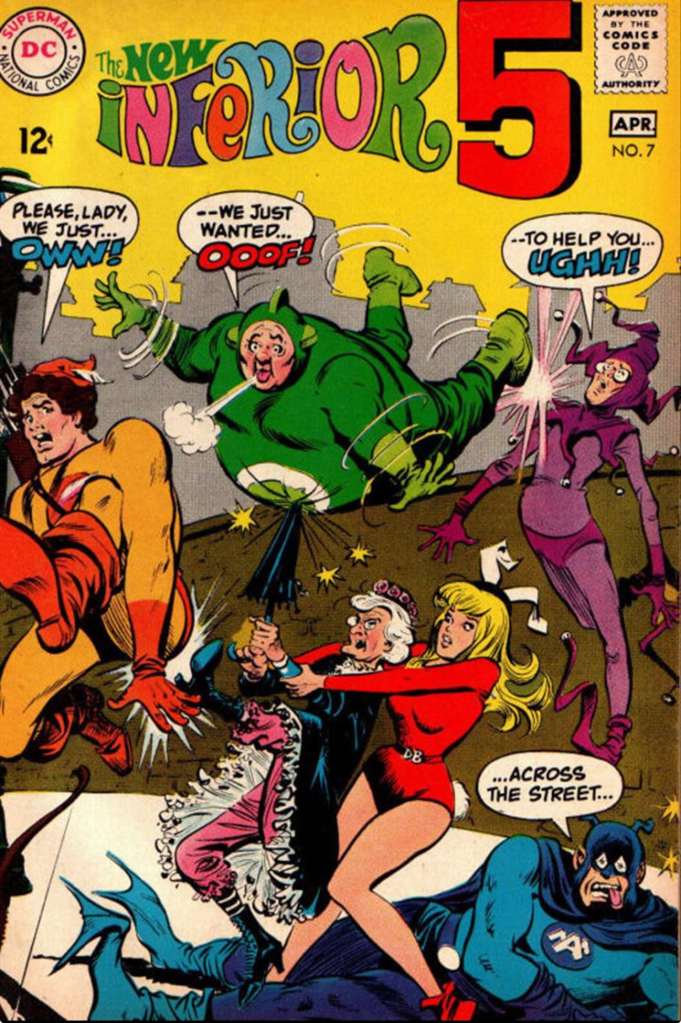
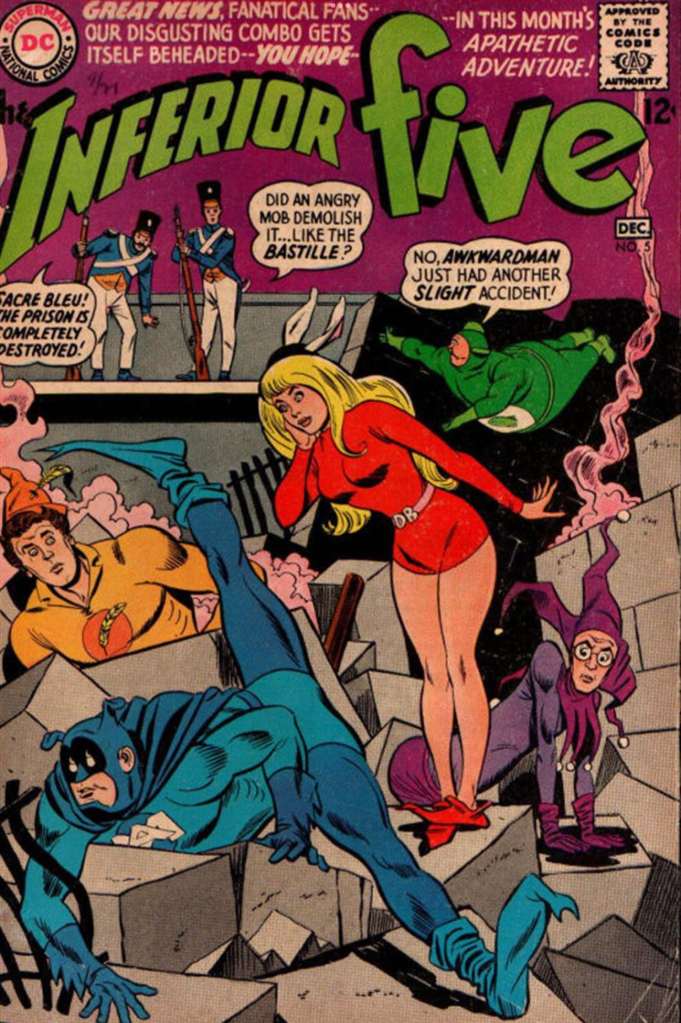
Let me paint you a picture of dysfunction that somehow works. Imagine if the Justice League had kids who inherited all their powers but none of their competence. That’s the Inferior Five in a nutshell, and each one is a masterclass in how to turn superhero tropes inside out.
Merryman leads this ragtag bunch, and I use “leads” loosely. Here’s a guy whose parents were basically Uncle Sam and Lady Liberty, but instead of patriotic might, he got… strategic brilliance trapped in a body that makes pre-serum Steve Rogers look buff. His solution? Dress like a jester because, as he puts it, if you’re gonna make a fool of yourself, might as well look the part. That’s some next-level self-awareness right there.
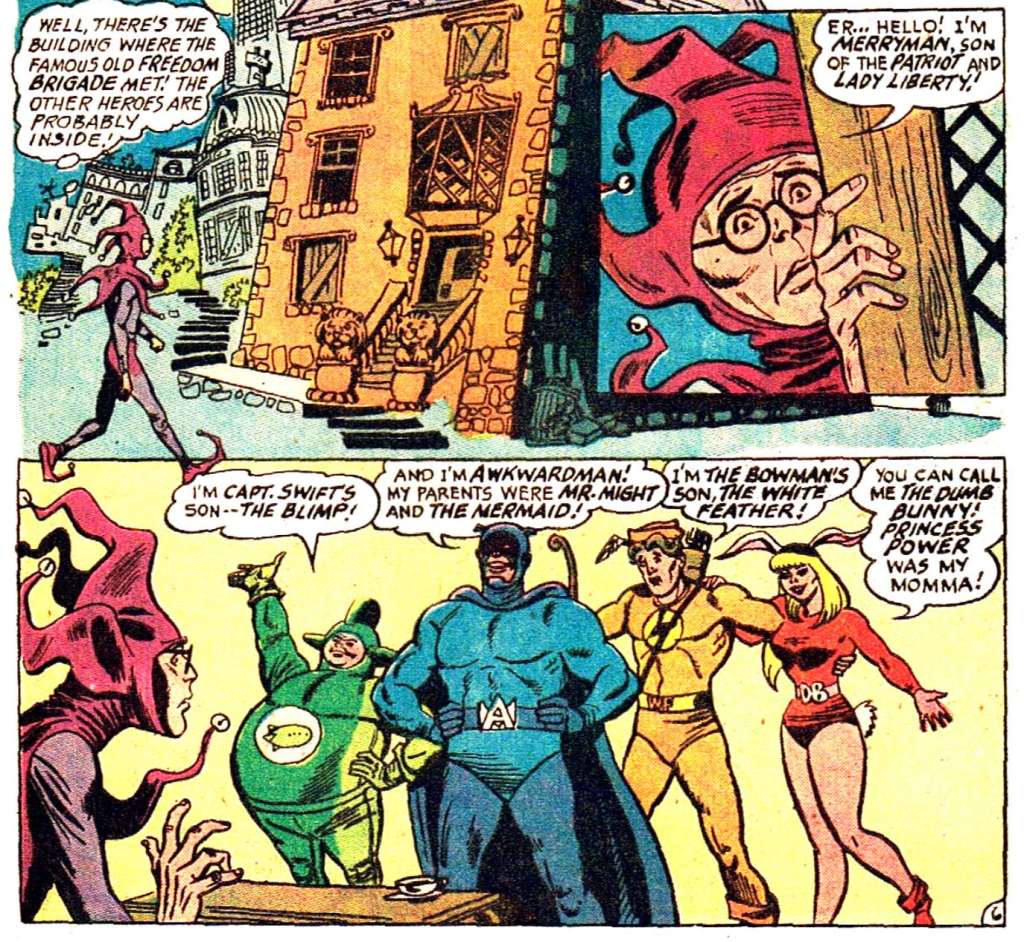
Then there’s Dumb Bunny – and before you get offended, remember this was the ’60s. Athena Tremor (yes, named after the goddess of wisdom) has all of Wonder Woman’s strength with none of the brains. She’s literally “strong as an ox and almost as intelligent,” which sounds cruel until you realize Bridwell was satirizing how female characters were often reduced to either beauty or brains, never both.
Awkwardman might be my personal favorite. This poor guy’s dad was Superman-lite and his mom was female Aquaman, so naturally he can fly and breathe underwater. The catch? He’s so clumsy on land that he carries a watering can around to stay hydrated. A WATERING CAN. If that’s not a perfect metaphor for trying to live up to impossible parental expectations, I don’t know what is.
The Blimp can fly like his speedster dad, Captain Swift, but at the pace of a leisurely stroll. His obesity makes him “faster than a speeding snail,” which – look, body shaming aside – creates this brilliant visual gag of a flying hero who’s constantly being outpaced by pedestrians.
Rounding out the team is White Feather, an archer with perfect aim and paralyzing cowardice. His name literally means coward, and his last name “King” parallels Green Arrow’s Oliver Queen. It’s layers upon layers of satirical goodness.

The Stories That Proved Failure Could Succeed
Here’s where things get really interesting. These weren’t just one-note joke characters. Over 13 issues (3 in Showcase, 10 in their own series), Bridwell and the rotating art team crafted stories that were simultaneously love letters to and brutal takedowns of superhero comics.
My absolute favorite has to be issue #4, “Valhallaballoo!” Picture this: the team gets dragged to Valhalla because Odin needs heroes. Except he gets… them. What follows is this brilliant mashup of actual Norse mythology (Bridwell did his homework) and devastating Thor parody that somehow manages to be educational AND hilarious. Marvel’s Thor never looked so pompous as when viewed through the Inferior Five’s incompetent lens.

The series didn’t just mock Marvel, though. They went after everyone. The Kookie Quartet (Fantastic Four), Man-Mountain (Hulk), the Egg’s Men (X-Men) – no one was safe. But here’s the kicker: these weren’t mean-spirited potshots. Bridwell clearly loved these characters enough to understand what made them absurd.
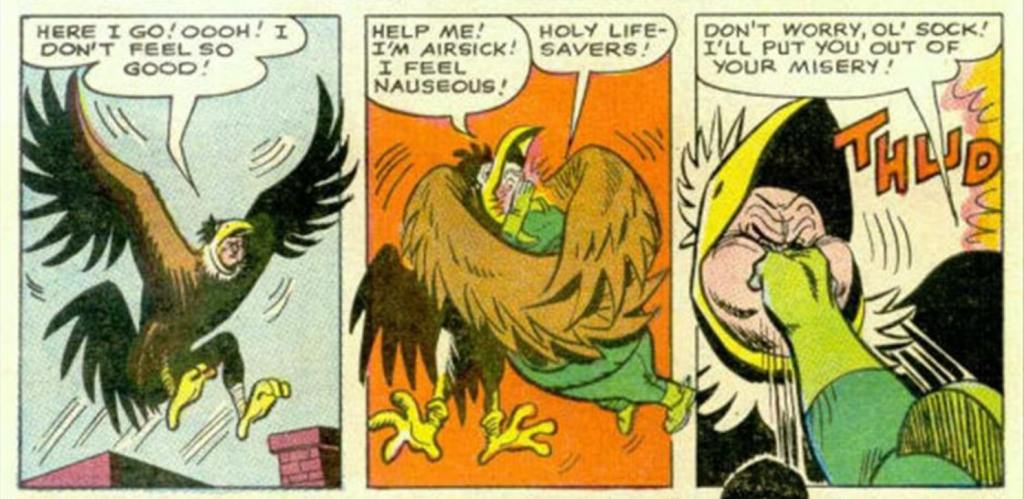
Issue #6 blew my mind when I first read it. The team visits DC’s actual offices. Not a fictional version – the ACTUAL DC Comics offices, complete with editor cameos. They literally broke through the fourth wall decades before Deadpool made it cool. Some readers hated it, calling it too weird, but I saw it for what it was: comics becoming self-aware, questioning their own existence.
Why a “Failed” Series Achieved Immortality
Here’s the thing about the Inferior Five that keeps me coming back: they failed successfully. The series only lasted 10 original issues, got canceled, came back briefly with reprints, then vanished. By any metric, they were inferior to their contemporaries. And yet…
Grant Morrison gets it. When they needed a metaphor for forgotten comic characters in Animal Man #25, guess who showed up? Our boys and girl, living in “Comic Book Limbo” – a place for characters waiting to be remembered. Merryman even became the self-proclaimed “King of Limbo” in Final Crisis, leading an army of obscure characters against cosmic threats while begging Superman to remember them.
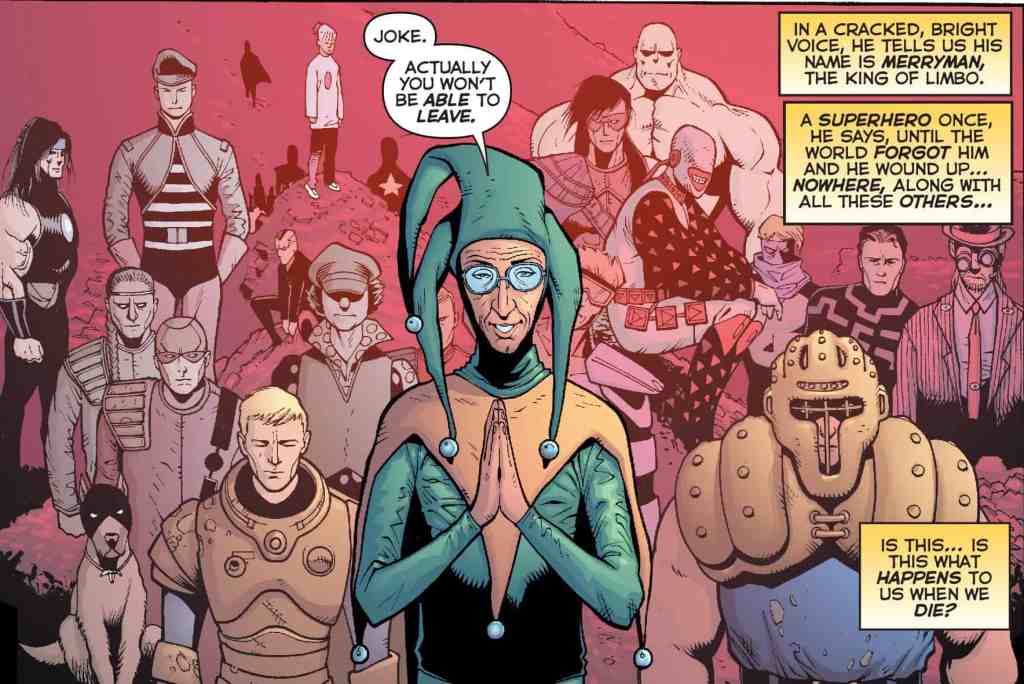
That’s heavy stuff for characters created as jokes. But it works because the Inferior Five were always about more than just laughs. They were about what happens when you can’t live up to expectations, when your best isn’t good enough, when you’re living in shadows too big to escape.
The Modern Misfire That Proved the Point
I’ll be honest – when I heard Keith Giffen and Jeff Lemire were reviving the team in 2019, I got excited. Then I read it. Set in 1988 Arizona, featuring kids being experimented on by aliens… it was ambitious, meta-textual, and completely different from the original. It was also canceled after 6 issues instead of the planned 12.

But here’s the beautiful irony: the final issue had the characters themselves complaining about being canceled early. A series about failure… failed. And somehow that felt perfect. It was like the universe itself was in on the joke.
What Makes Inferior Superior
When comics get too serious and I realize I need a breather, I turn to the Inferior Five. They’re not just parodies – they’re the entire superhero genre viewed through a cracked lens. Every time a new legacy character debuts, every time someone takes up a famous mantle, every time a hero’s kid appears, I think about Merryman and his watering-can-carrying buddy.
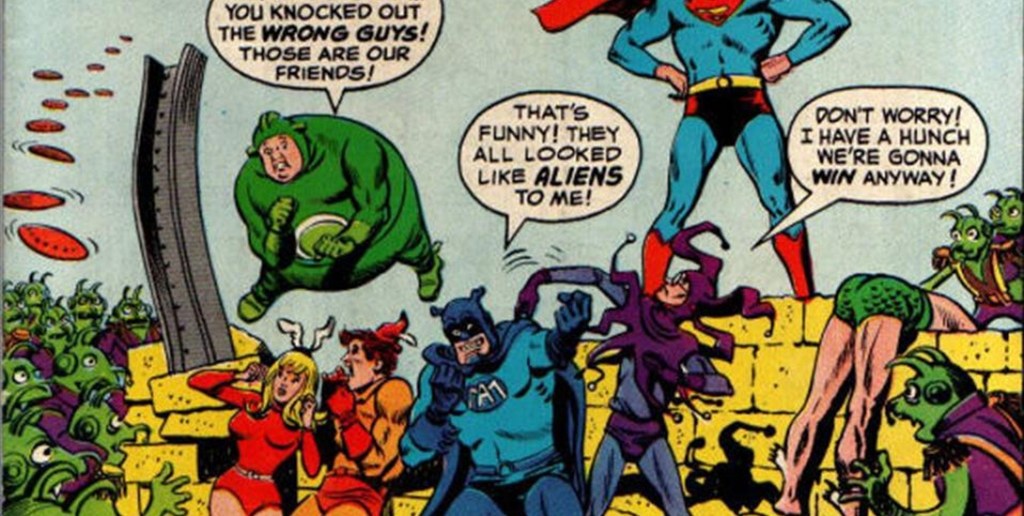
They proved that powers don’t make heroes! They showed that living up to legendary parents is impossible! They demonstrated that failure can be more interesting than success! But most importantly, they made me laugh at the things we love without making us love them less.
Compared to today’s comics, where every character gets deconstructed and reconstructed, where parodies are everywhere, where self-awareness is mandatory, the Inferior Five feel almost quaint. But they were the first. They established that superhero comics could laugh at themselves and survive.
The Legacy of Lovable Losers
Every time I see a new “incompetent superhero” story – The Tick, Mystery Men, The Boys in its own twisted way – I see the Inferior Five’s DNA. They proved that superhero parody could have heart, that making fun of something didn’t mean hating it.
Their transformation from simple joke characters to symbols of comic book memory and forgotten potential is maybe the most superheroic journey of all. They went from being inferior copies of greater heroes to becoming something unique and irreplaceable in comic history.

So here’s to Merryman, Dumb Bunny, Awkwardman, The Blimp, and White Feather. They might not have saved the world, but they saved superhero comics from taking themselves too seriously. In my book, that makes them pretty damn super.
And if you ever find yourself in a comic shop, dig through those dollar bins. Look for that jester costume, that watering can, those characters who were designed to fail. Because sometimes, the best heroes are the ones who remind us that it’s okay to be inferior. We all are, in our own ways. The trick is making it work anyway.
Now if you’ll excuse me, I need to petition DC to bring them back again. Third time’s the charm, right? Even for perpetual failures, hope may spring eternal.


Discover more from Into the Weird
Subscribe to get the latest posts sent to your email.

Failure is always an option
LikeLiked by 1 person
😂 So true!
LikeLike