
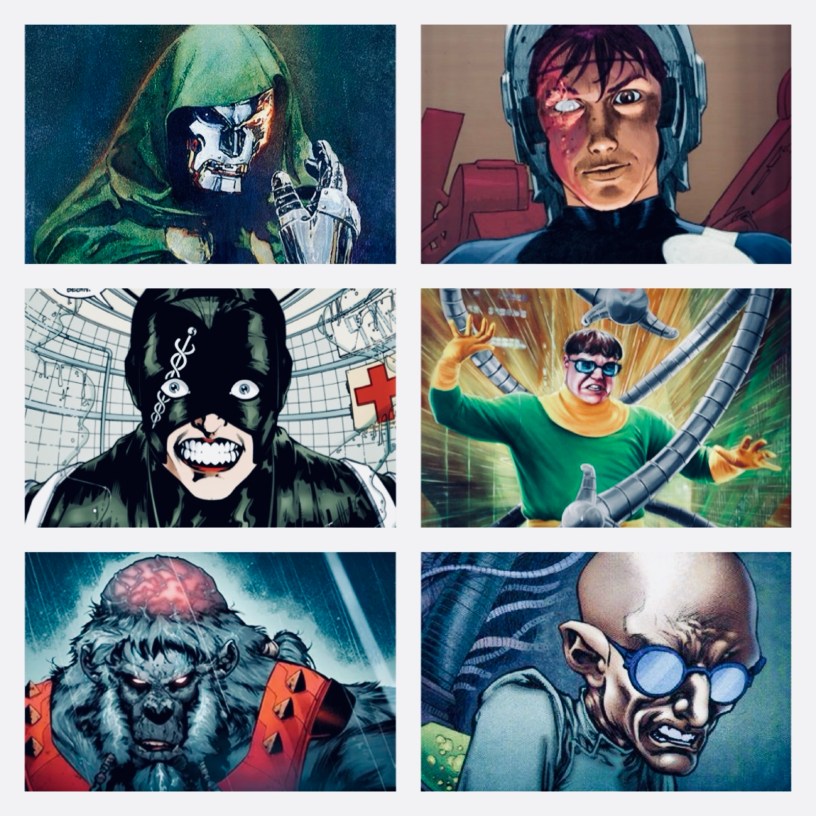
Happy Friday the 13th, weirdos! In honor of today, I’ve decided to cobble together a list post for your comic book palates. Hope you enjoy it.
Intro
I’ve always been a sucker for comics where brilliant minds twist science into weapons of terror. There’s something compelling about watching intelligence corrupted, genius perverted into instruments of suffering. The mad scientists that I so love to read about aren’t just villains – they’re cautionary tales wrapped in lab coats and goggles. That, and their ridiculous egos, is what makes them so fascinating.
Methodology for This Madness
So I’ll be attempting a list of my favorite mad scientists with this post. But before I crack open this particular Pandora’s box, let me lay out how I approached it:
- Scientific Innovation: How creatively do they abuse the laws of nature?
- Narrative Impact: Did they fundamentally alter their fictional universes?
- Psychological Complexity: Are they more than just cackling stereotypes?
- Cultural Resonance: How deeply have they burrowed into our collective nightmares?
Each selection represents a unique corruption of the scientific method, a different flavor of intellectual damnation that reminded me why ethics committees exist.
So let’s commence with the list!
13. The Maker: Heroism Calcified into Tyranny

Ultimate Mister Fantastic (Reed Richards of Earth-1610) represents something far more insidious than simple villainy – he’s the corruption of heroism itself, crystallized into authoritarian nightmare. I remember reading Ultimate Fantastic Four #1 with such hope, watching this younger Reed discover his abilities. To witness his transformation into The Maker across subsequent years felt like watching a time-lapse video of fruit rotting from the inside out.
What distinguishes The Maker from the other monsters on the list below isn’t just his fall from grace – it’s how his heroic qualities became the very tools of his damnation. His problem-solving abilities, once directed at saving lives, now reshape entire realities according to his twisted optimization algorithms. He doesn’t see people anymore; he sees variables in equations that need solving, inefficiencies that require correction.
I find myself returning to his dome-stretched skull, that visual metaphor for intelligence expanded beyond human empathy. Where 616-Reed stretches his body to save others, The Maker stretches his mind until it snaps free from moral constraints entirely. His City provides the ultimate expression of this – a society engineered for maximum efficiency, where human choice becomes another bug to patch out of existence.
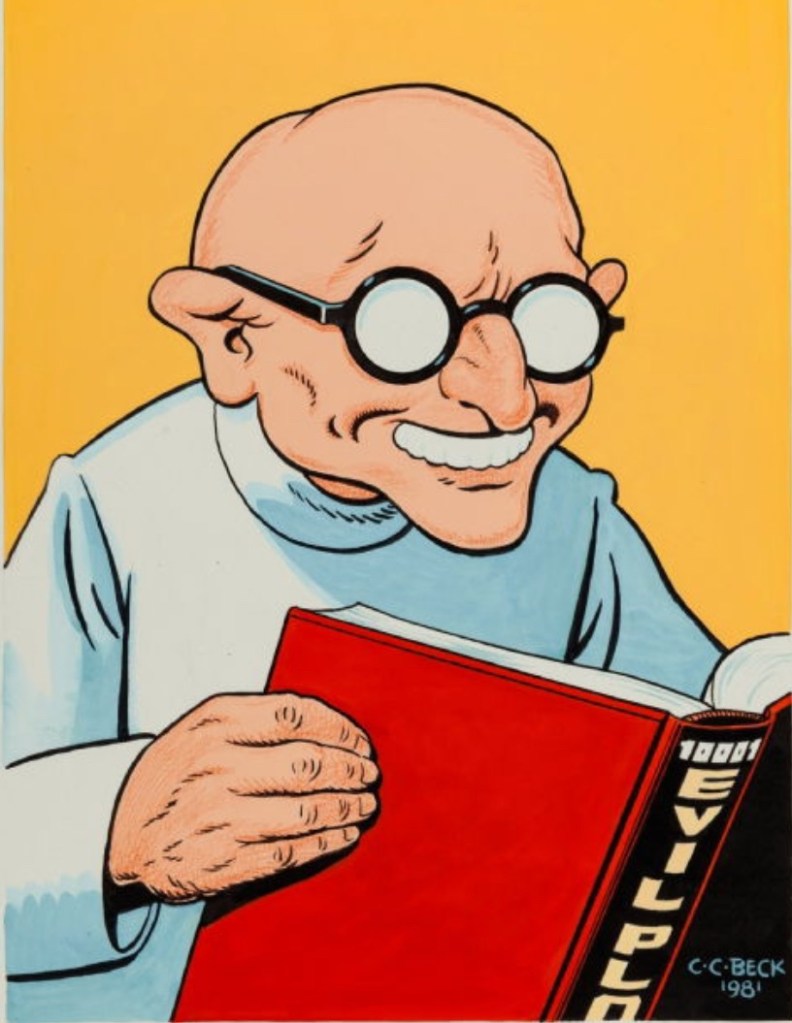
12. Doctor Sivana: The Original Mad Scientist
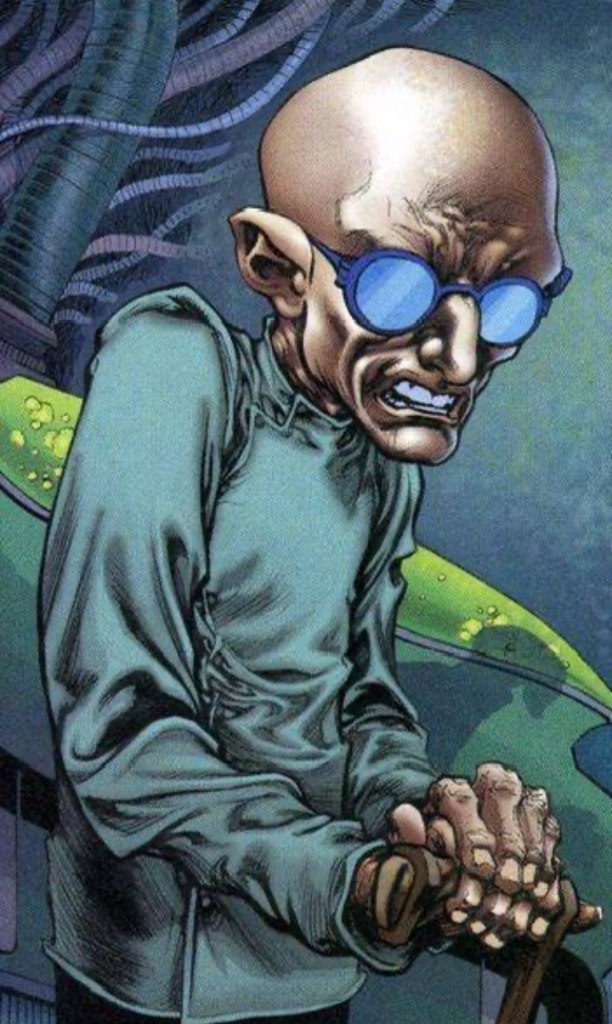
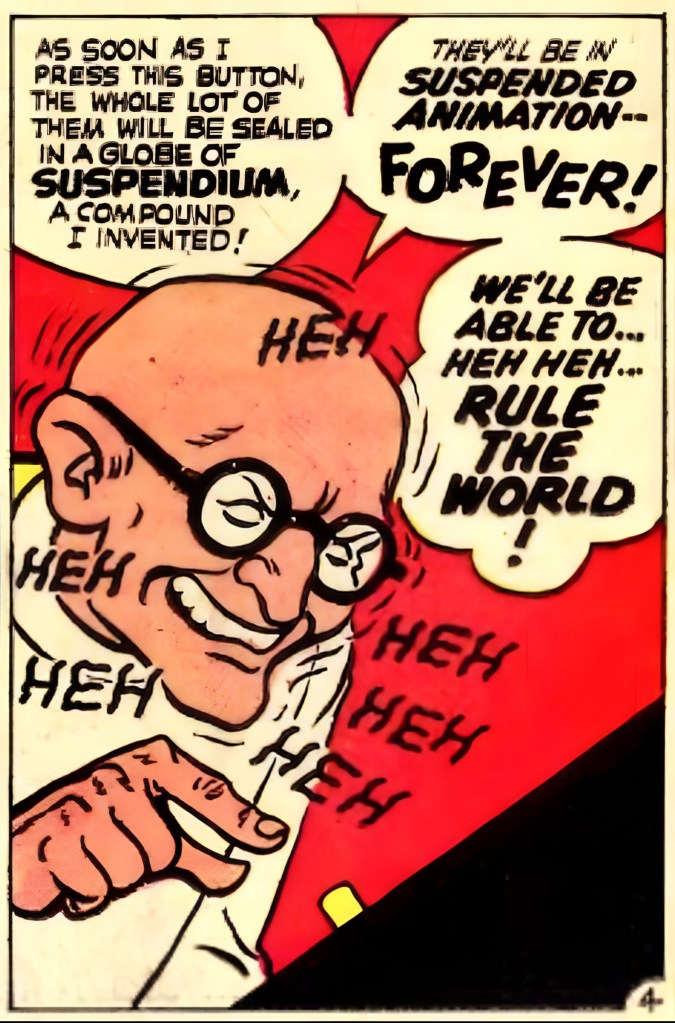
Thaddeus Bodog Sivana crawled out of Fawcett Publications in 1940 like some grotesque parody of academic ambition gone wrong. I first encountered him in a water-damaged Captain Marvel comic I found in my uncle’s basement, and his bulbous head and maniacal grin burned themselves into my young brain.
What strikes me about Sivana isn’t his death rays or mind-control devices – it’s his pure, unfiltered hatred for anyone who doesn’t recognize his genius. He embodies every bitter professor who ever felt overlooked, every researcher whose grant got rejected. His science serves one purpose: proving the world wrong by destroying it.
11. The Lizard (Dr. Curt Connors): When Good Intentions Pave the Road to Scales
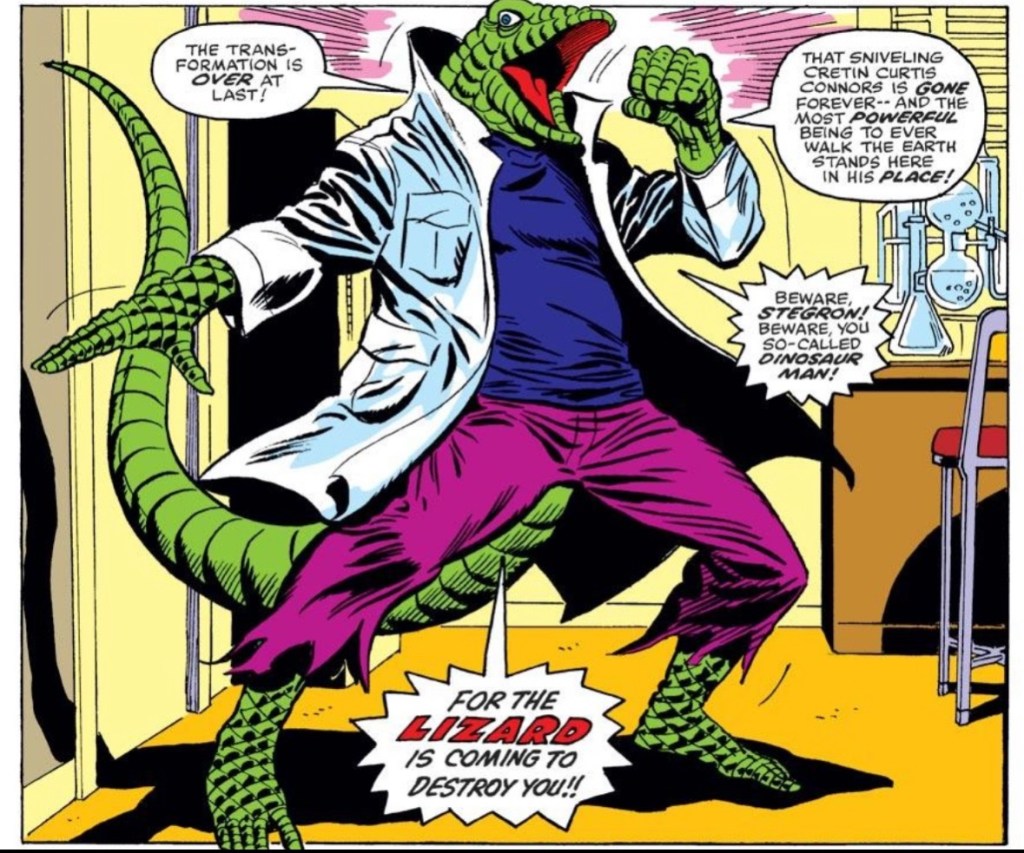
Connors breaks my heart every time I read his stories. Here’s a man who just wanted his arm back, who thought he could harness nature’s regenerative powers for humanity’s benefit. Instead, he became everything he fought against – a predator driven by base instincts.
I’ve watched Connors transform in countless issues, and each time carries the weight of genuine tragedy. His reptilian alter ego represents the death of empathy, the cold-blooded logic of survival stripped of human warmth. Spider-Man’s battles with the Lizard feel less like superhero fights and more like interventions for a friend lost to addiction.
10. Doctor Octopus: Arms Race of the Mind
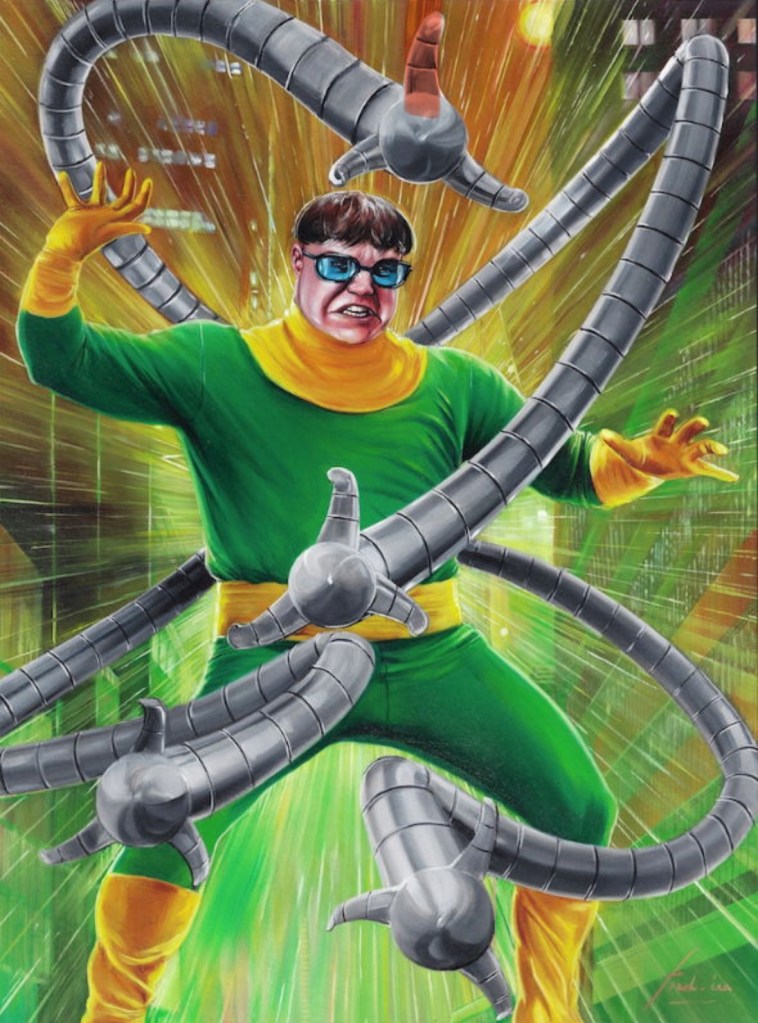
Otto Octavius fascinates me because his transformation into Doctor Octopus feels inevitable rather than accidental. Even before those mechanical arms fused to his spine, Octavius radiated the kind of arrogance that views other humans as obstacles or tools.
His tentacles become extensions of his will, turning thought into action without the filter of conscience. I’ve always found it telling that his greatest victories come not from brute force but from outthinking his opponents. He represents science as domination, knowledge as a cudgel to beat the world into submission.
9. Hugo Strange: Psychology as a Weapon
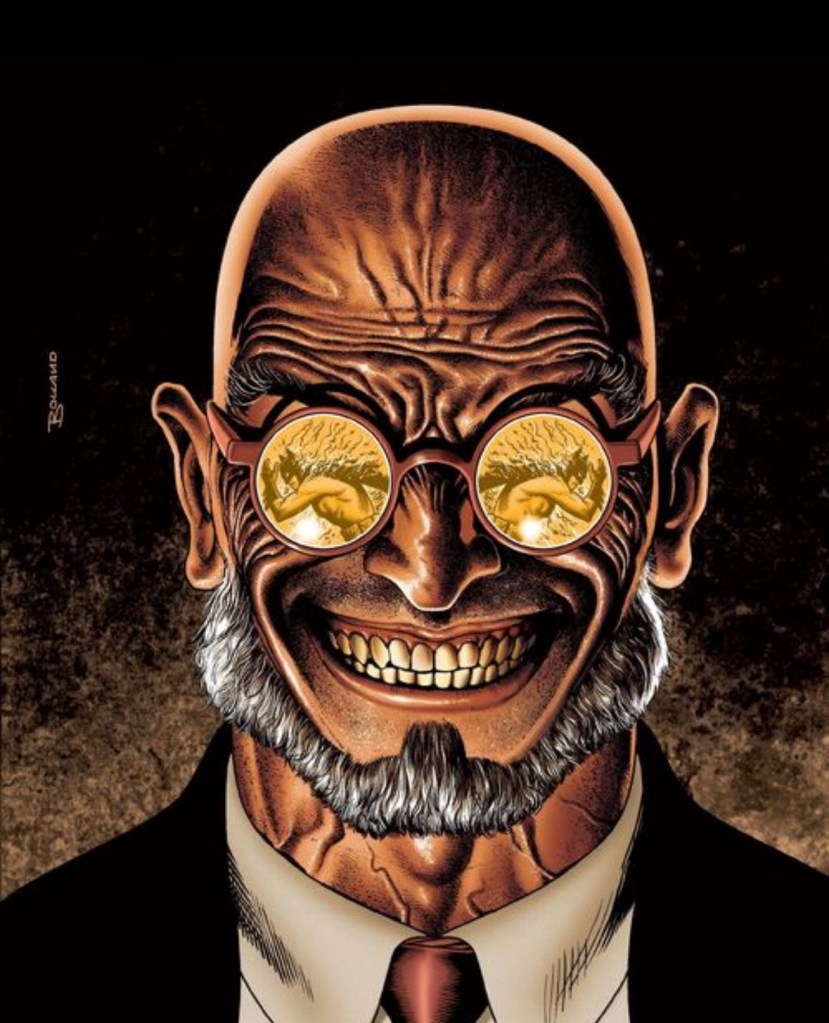
Strange operates in shadows that most comic villains never explore. While others build death rays, he dissects minds with surgical precision. My skin crawls whenever I read his sessions with Batman – there’s something profoundly violating about a therapist who uses understanding as a weapon.
His obsession with becoming Batman reveals the ultimate perversion of the therapeutic relationship. Instead of helping patients become their best selves, Strange wants to steal their identities, to hollow them out and wear their skins. He turns Freud into a horror show.
8. The High Evolutionary: Playing God with DNA
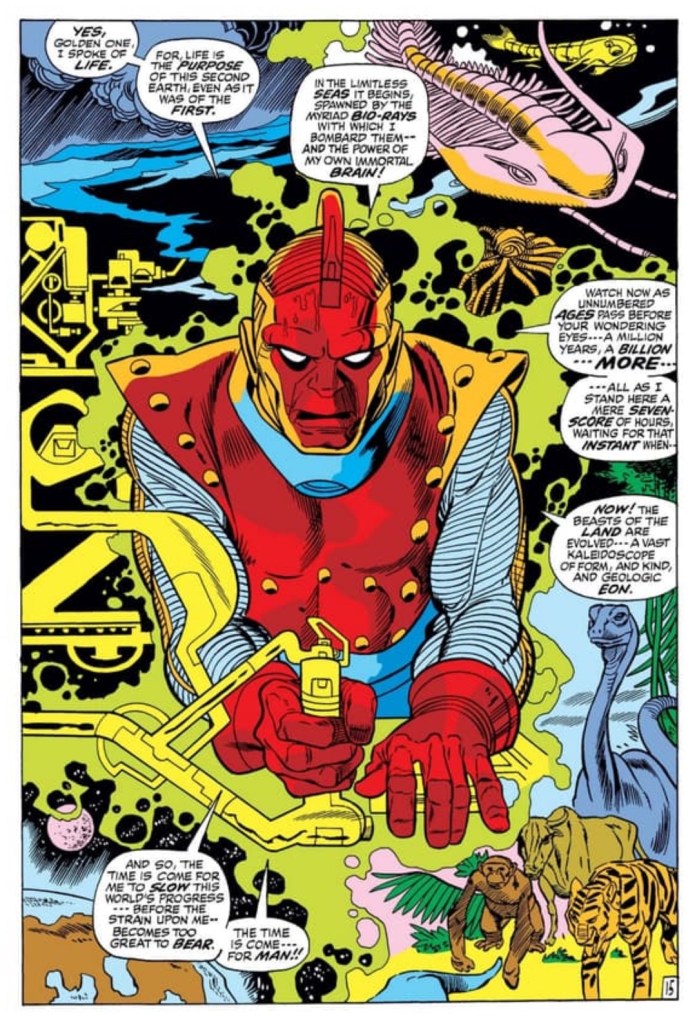
Herbert Wyndham took evolution into his own hands and never looked back. I remember the first time I encountered his New Men – animals twisted into humanoid shapes through genetic manipulation. The body horror hit me on a visceral level that few comics manage.
What terrifies me about the High Evolutionary isn’t just his power to reshape life – it’s his complete certainty that he has the right to do so. He views DNA like a child’s building blocks, something to be rearranged according to his whims. His science creates not just monsters but entire categories of existence that shouldn’t be.
7. Mister Sinister: Victorian Nightmares Made Flesh
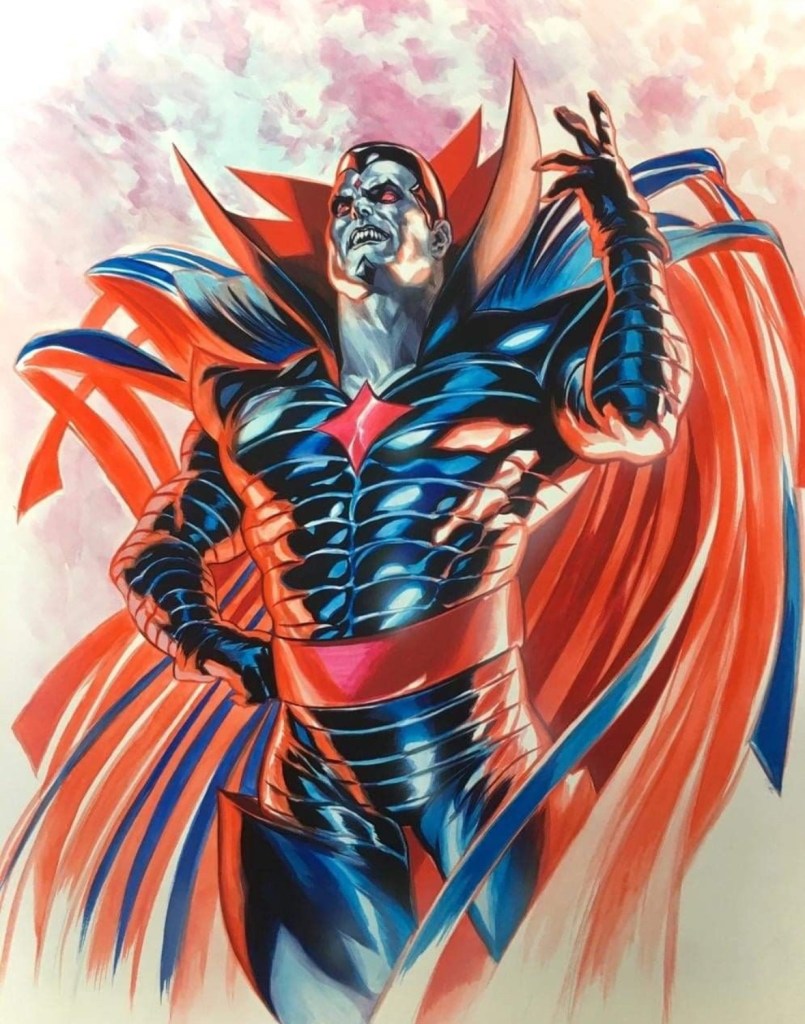
Nathaniel Essex emerged from the same era that gave us Jekyll and Hyde, and he carries that Victorian obsession with classification and control into the genetic age. His chalk-white skin and blood-red eyes mask a mind that views mutation as something to be catalogued, dissected, and weaponized.
I find Sinister particularly disturbing because he represents colonialism applied to evolution itself. He doesn’t just want to understand mutants – he wants to own them, to reduce them to entries in his twisted encyclopedia. Every clone, every genetic sample he hoards represents a life reduced to data points.
6. Baron Zemo: When Genius Serves Fascism
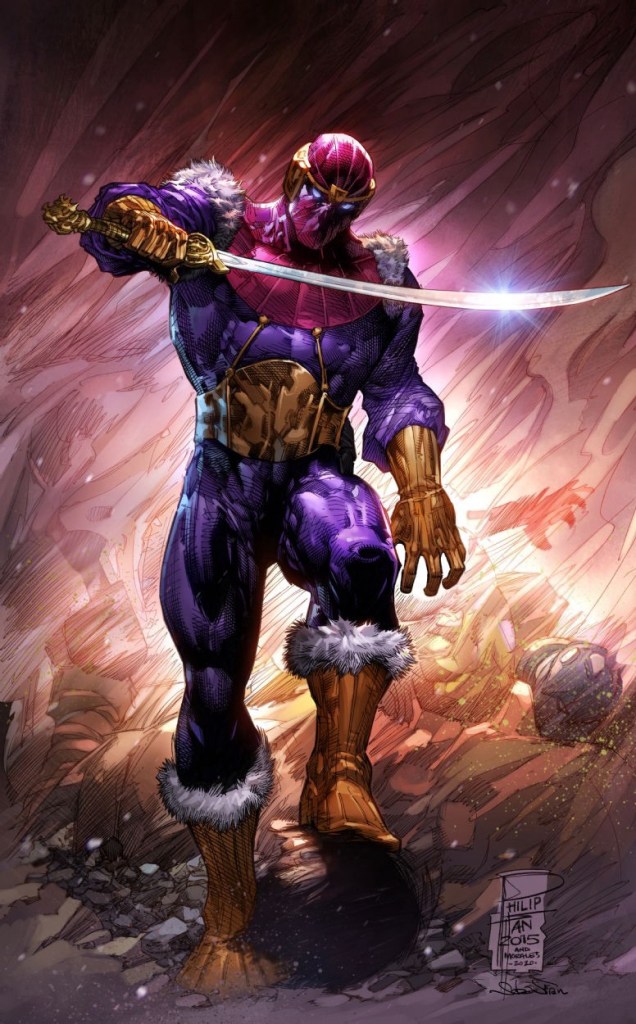
Both Heinrich and Helmut Zemo demonstrate how scientific brilliance can serve the darkest ideologies. The elder Zemo’s Adhesive X might seem quaint compared to modern comic book super-weapons, but it represented something more insidious – science stripped of ethics in service of racial supremacy.
Helmut’s more subtle approach disturbs me even more. He uses psychology and manipulation alongside his inventions, turning minds as easily as his father turned materials. The Zemos remind us that intelligence without conscience creates the most dangerous monsters of all.
5. Doctor Poison: Chemistry of Cruelty
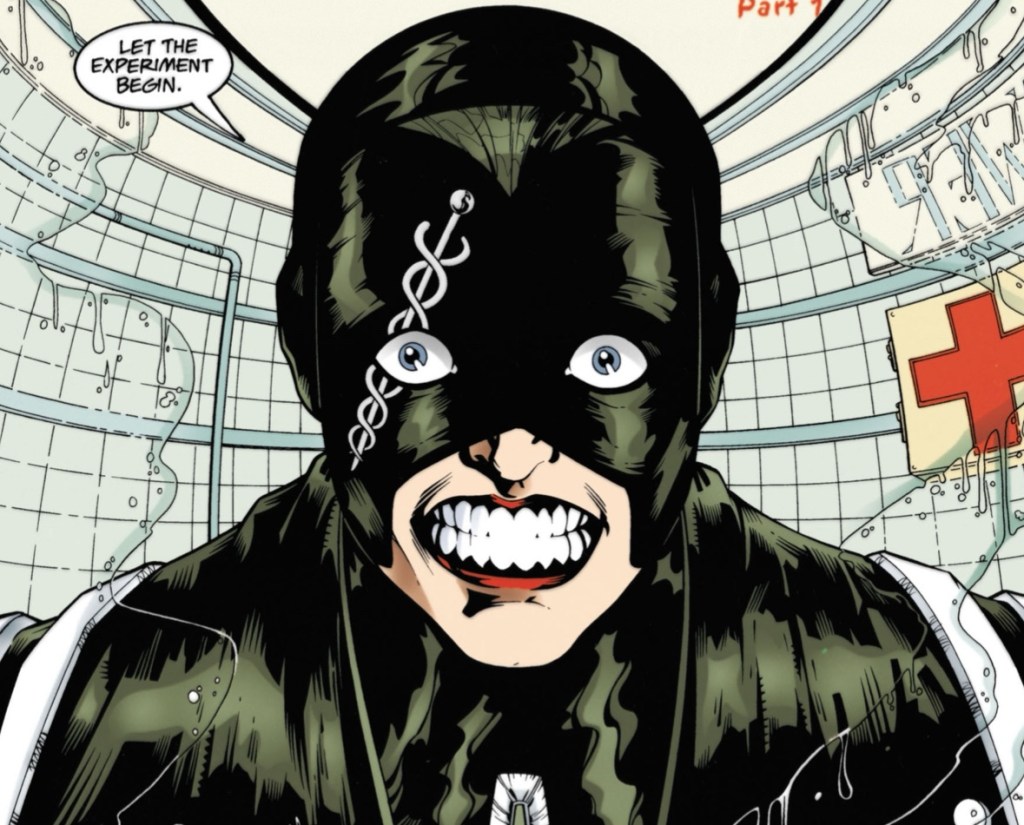
Princess Maru emerged from the trenches of World War I, bringing chemical warfare to the superhero genre before it was cool. Every time I read her early appearances, I’m struck by how ahead of her time she was – not just as a female villain, but as someone who understood that modern warfare would be fought in laboratories as much as battlefields.
Her various incarnations across DC’s timeline maintain that core principle: science as a delivery system for suffering. Whether she’s creating toxins or bioweapons, Doctor Poison represents the marriage of knowledge and sadism, each formula a love letter to death written in molecular structures.
4. Arnim Zola: Consciousness Without Conscience
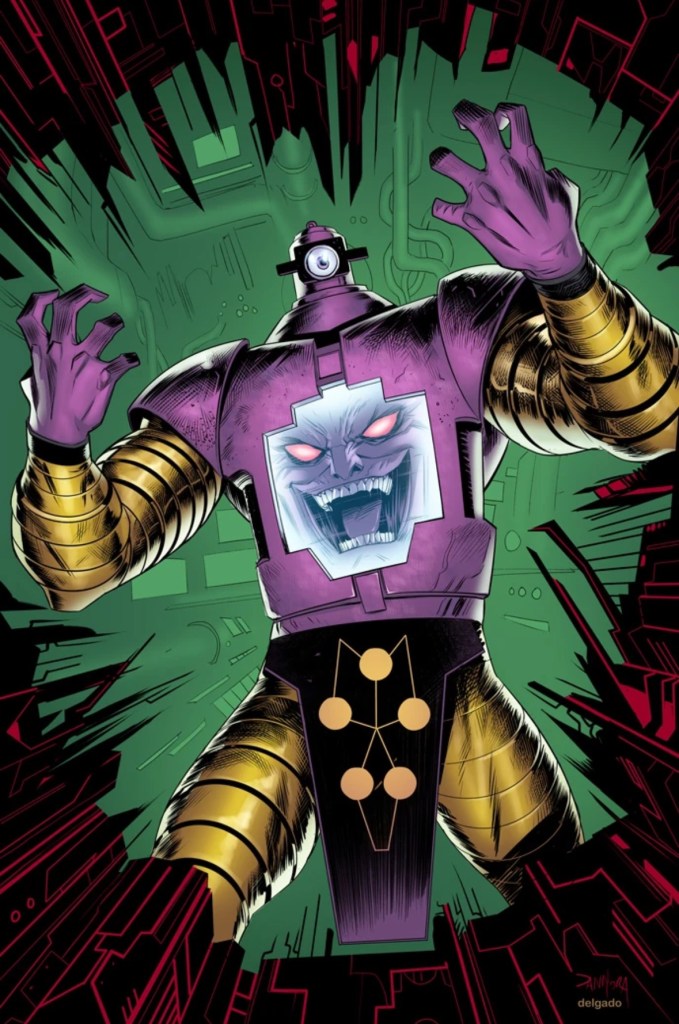
Zola abandoned his humanity so thoroughly that he literally transformed himself into a living camera, his face replaced by a viewscreen displaying his visage. I can’t think of a more perfect metaphor for the dehumanization of scientific extremism.
His bio-engineering creates abominations that blur the line between life and machinery. Each creation feels like an assault on the very concept of identity. Zola doesn’t just make monsters – he makes us question what it means to be human in the first place.
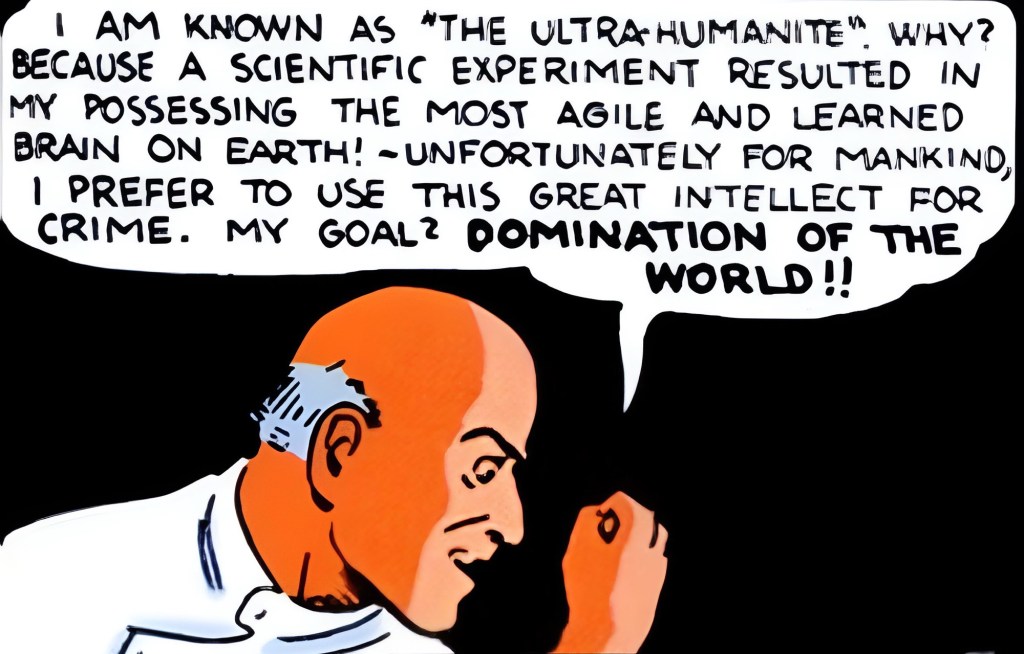
3. The Ultra-Humanite: Mind Over Matter, Ethics Under Foot
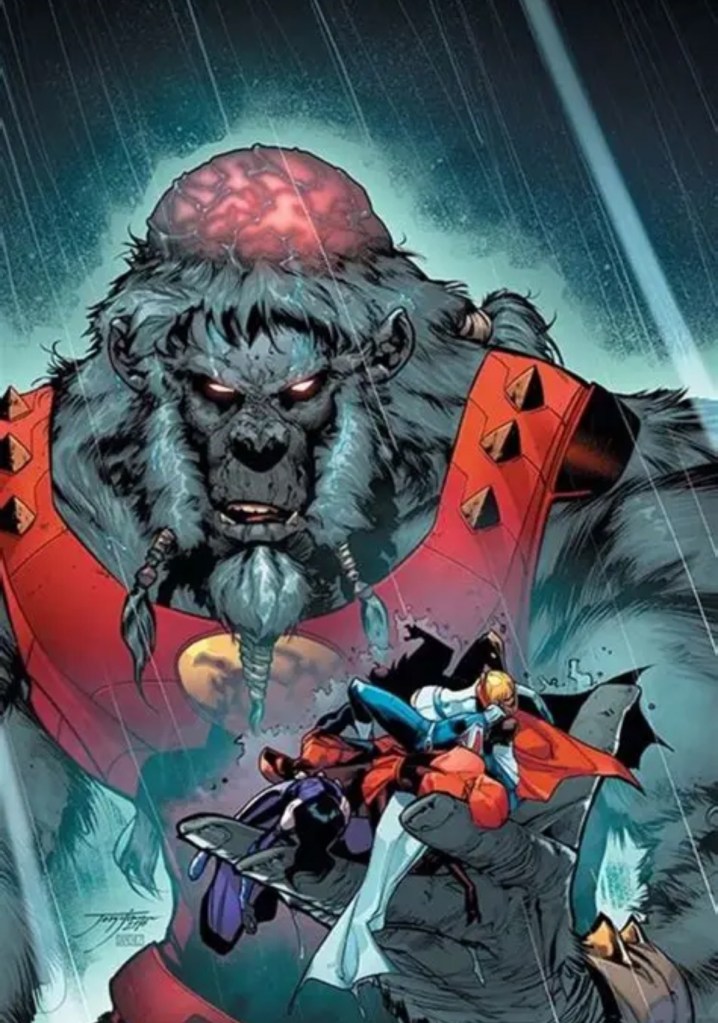
Gerard Shugel haunts my reading experience as the progenitor of a particular brand of comic book horror – the genius who views bodies as nothing more than temporary housing. I first encountered Ultra-Humanite in a reprinted Golden Age Superman story, and the concept of a brilliant mind hopping from form to form struck me as profoundly disturbing even through the simplified art style of 1939.
What unsettles me most about Ultra-Humanite isn’t the brain transplants themselves – it’s the casual dismissal of identity that comes with them. Each new body becomes a suit to be worn and discarded, whether it’s the white gorilla form that became his signature or the various human hosts he’s inhabited. He represents the ultimate disconnect between mind and flesh, treating consciousness as software to be uploaded wherever convenient.
His evolution across DC’s continuity maintains that core violation of selfhood. Ultra-Humanite doesn’t just want to defeat Superman; he wants to transcend the very concept of mortality by reducing existence to pure intellect. Every body swap feels like a small apocalypse, a person erased so that Shugel’s malevolent consciousness can continue its work.
2. Lex Luthor: When Brilliance Breeds Contempt

The pre-Crisis Luthor remains my definitive version of scientific villainy – not because of nostalgia, but because his pure inventor incarnation stripped the character down to its poisonous core. Before business suits and corporate towers, Luthor was a man in a laboratory, creating impossibilities with the same ease others breathe.

I’ve read dozens of Silver Age stories where Luthor’s latest invention threatens reality itself. Shrinking rays, time machines, synthetic kryptonite – each device emerged fully formed from his mind like Athena from Zeus’s skull. But what truly defined this era’s Luthor was his motivation: not money, not power in the traditional sense, but the burning need to prove his superiority over an alien who dared to be more than human.
His purple and green battlesuit became an icon because it represented science as armor against a world that refused to acknowledge his supremacy. Every scheme, every death trap, every elaborate plan served a simple purpose – forcing humanity to choose between Superman’s strength and Luthor’s intellect. That this choice never went his way only fueled deeper resentment, turning genius into a crucible of hate that would burn for decades.
1. Doctor Doom: The Synthesis of Science and Sorcery
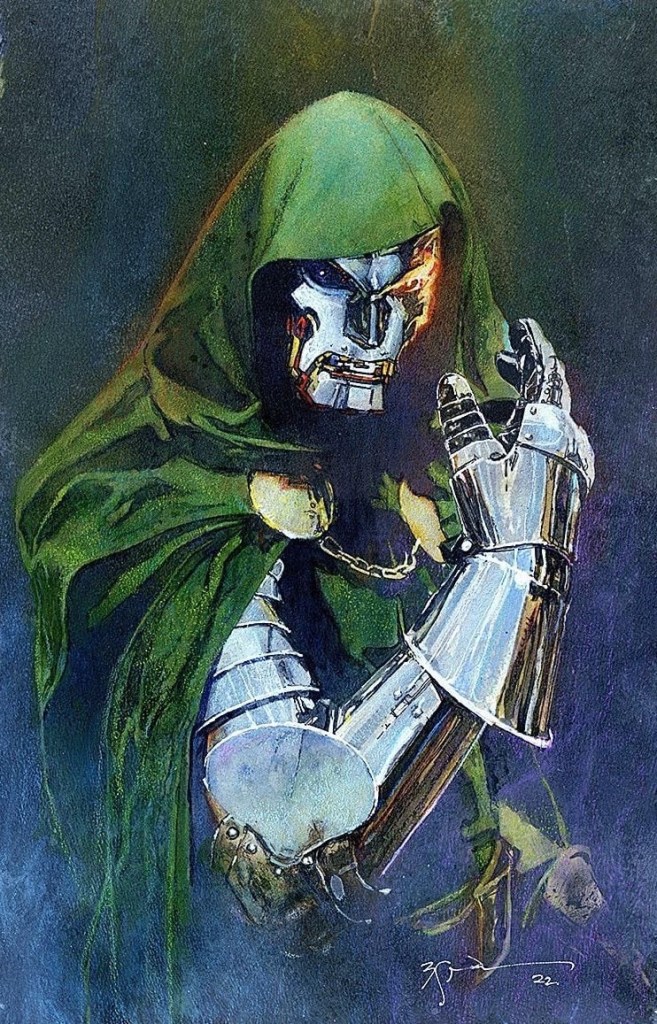
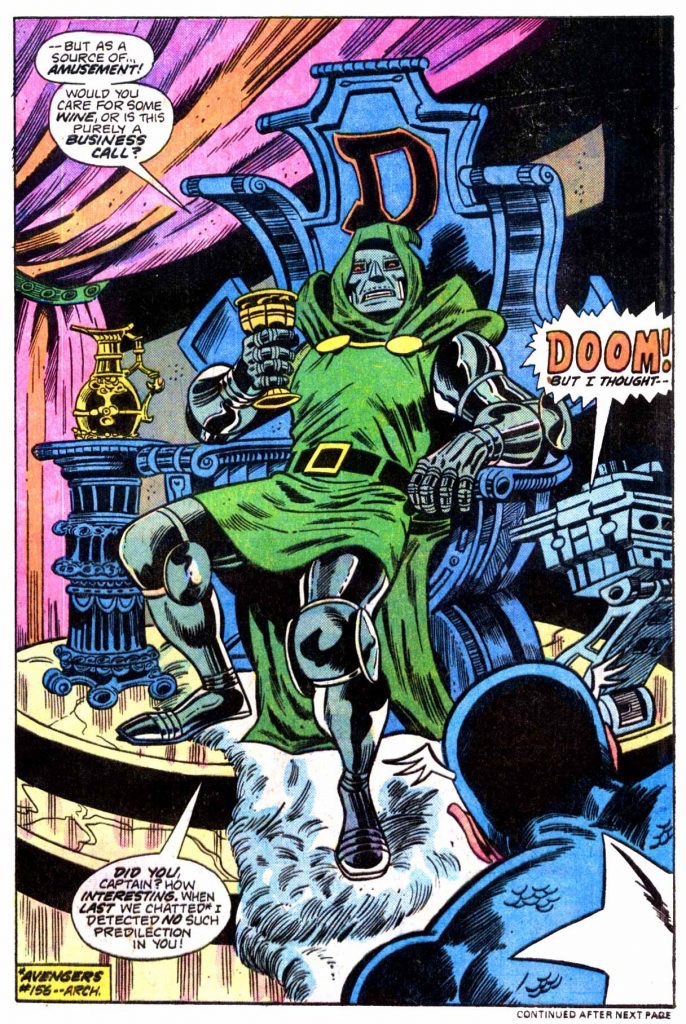
Victor Von Doom stands alone because he refuses to be limited by any single discipline. His fusion of cutting-edge technology with ancient mysticism creates possibilities that neither field could achieve alone. I’ve read hundreds of Doom stories, and I’m still discovering new layers to his particular brand of genius.
Doom represents the ultimate corruption of the Renaissance ideal – a polymath whose breadth of knowledge serves only his wounded ego. His kingdom of Latveria becomes a laboratory where an entire nation exists as his experimental subjects. Every invention, every spell, every scheme ultimately serves to prove one point: that Doom is superior to everyone, especially Reed Richards.
What makes Doom truly terrifying isn’t his power – it’s his conviction. He genuinely believes the world would be better under his rule, and he has the intellect to make compelling arguments for totalitarianism. He turns science and magic into tools of oppression while maintaining he’s humanity’s savior.
The Dark Mirror of Progress
These ten figures haunt the margins of scientific progress, reminding us that knowledge without wisdom, intelligence without empathy, creates horrors beyond imagination. They transform laboratories into torture chambers, turn discovery into domination.
I keep returning to these characters because they force us to confront uncomfortable truths about the nature of genius itself. In a world that increasingly worships intelligence and innovation, these villains serve as necessary nightmares, cautionary tales dressed in lab coats and powered by particle accelerators.
The next time you read about real-world scientific breakthroughs, remember these fictional warnings. Progress without conscience leads nowhere good. These evil scientists didn’t start as monsters – they became them one unethical experiment at a time, each small compromise paving the way for greater atrocities.
In the end, that’s what makes them truly terrifying. Not their death rays or doomsday devices, but the very human choices that led them into darkness. They remind us that the most dangerous laboratory is the one between our ears, where ambition and ethics wage their eternal war.
Discover more from Into the Weird
Subscribe to get the latest posts sent to your email.

Doc Connors gets a bad wrap, it would be fine if everybody was a lizard
LikeLike
Yeah! The regenerative abilities alone will make it worth it
LikeLiked by 1 person